2020 December. Another outstanding contribution from Lord Monckton: an open letter to the editor of the Lancet:
The Lancet, once a respected medico-scientific journal and now just another me-too mouthpiece for theusual suspects, ran an editorial this week on climate change – on which subject it has neither expertise nor a missio canonica to pronounce. Here is a letter to the editor in response:
Sir, – Your notion of a “climate crisis” (editorial, December 2), though fashionable among the classe politique, is misplaced. That notion sprang from an elementary error of physics perpetrated in the 1980s by climate scientists who had borrowed feedback formulism from control theory, another branch of physics, without quite understanding it. Interdisciplinary compartmentalization delayed its identification until now.
After correcting the error, anthropogenic global warming will be only one-third of current midrange projections, well within natural variability and net-beneficial to life and health. CO2 fertilization (for CO2 is plant food) has assisted in steadily increasing crop yields – this year’s global harvest has set yet another record – and in improving drought resistance (Hao et al., 2014) and greening the planet.
Your suggestion that warmer worldwide weather has caused net loss of life, particularly among the world’s fast-declining population of poor people, is fashionable but misplaced. Cold is a bigger killer than warmth. Research conducted three years ago for the European Commission found that, for this reason, even if there were 5.4 C° global warming from 2020-2080, there would be 100,000 more Europeans than with no warming at all.
[See the link below for the full letter and the illustrations in it]
....
Your advocacy of “low-carbon diets” is fashionable but misplaced. Like it or not, we have evolved over 2 million years to eat meat, which can provide all necessary energy, nutrients and vitamins. Yet ill-informed official guidelines on both sides of the Atlantic recommend low-fat, high-carbohydrate diets. Those recommendations have demonstrably been the chief cause of the surge in obesity and diabetes in both the UK and the USA. They were abandoned by court order a decade ago in Sweden at the instance of a brave doctor whom the medical authorities had attempted to prosecute because she cured all her diabetes patients by ignoring the guidelines and recommending a high-fat, low-carb diet.
Your advocacy of “renewable” energy is fashionable but misplaced. Using 14th-century technology to address a 21st-century non-problem would be silly enough in itself. What is worse, however, is that “renewables” have not only quadrupled the price of electricity but have also added to CO2 emissions. The chief reason for this apparent paradox is that the more windmills and solar panels are connected to the grid the more grossly-inefficient, CO2-emitting spinning reserve must be maintained in the often vain hope of preventing blackouts when the wind stops or the night falls.
Besides, the trillions that have been squandered on fashionable but misguided attempts to abate greenhouse-gas emissions have made no difference at all. The radiative forcing from anthropogenic greenhouse gases has increased in a fashion very close to a straight line (the dotted line above) for 40 years.
With respect, The Lancet should study more science and economics, however unfashionable, and peddle less totalitarian politics, however fashionable and profitable – and deadly.
Yours faithfully,

(and thousands of WUWT readers)
2020 February. A good speech in the Australian parliament by Queensland Senator Malcolm Roberts deserves noting here, in full:
'Greta Thunberg:
2019 October. This is an interesting letter because it undermines the facile 'oil companies bad' of the eco-fanatics and their youthful followers. Turns out they have been doing ok out of the fanatics, and often help them along with funding of the academic centres where the threads of panic may begin before being amplified/hyped/distorted by pressure groups, the media, and in due course the eco-fanatics of all stripes not least the young, ill-informed, highly impressionable ones:
'LETTER TO A YOUNG COUNTER-CONTRARIAN
2019 October. A 'Realist Catholic Climate Declaration' is launched. Here it is in full:
'The Magisterium of the Catholic Church makes no mention of earth’s optimal climate, or the best rate of change of the climate, nor should it. Neither optimum is known to anybody.
The earth’s climate has always changed, is changing now, and will never cease changing. The extent to which man is responsible for climate change is not known, only surmised. There is no earthly force capable of stopping climate change.
Extreme caution, even skepticism, is warranted in any statement about the climate given the decades of failed and overreaching forecasts and hyperbole from official and interested sources. Beyond individual prudent stewardship, no Catholic is obliged to support any environmental measure.
The salvation of souls is of more pressing concern than the air temperature. Pray to God and pray for your neighbor, not to the planet.'
See: https://realclimate.wixsite.com/declaration
Hat-tip: https://wattsupwiththat.com/2019/10/13/realist-catholic-climate-declaration/
2019 September. 'High-school student Jamie Margolin testified recently before Congress. She was horrified that climate change, unless addressed by destroying the energy supply of the West, will essentially soon annihilate the world.
'If you are worried about rising sea levels, don’t be. The smartest and richest people in the world are still buying property on the beach. They don’t see the problem. And if sea levels do rise, it will happen slowly enough for people to adjust.
2019 September. 'There is No Climate Emergency'. An open letter to the UN from hundreds of scientists:
'Your Excellencies, There is no climate emergency A global network of more than 500 knowledgeable and experienced scientists and professionals in climate and related fields have the honor to address to Your Excellencies the attached European Climate Declaration, for which the signatories to this letter are the national ambassadors. The general-circulation models of climate on which international policy is at present founded are unfit for their purpose. Therefore, it is cruel as well as imprudent to advocate the squandering of trillions of dollars on the basis of results from such immature models. Current climate policies pointlessly and grievously undermine the economic system, putting lives at risk in countries denied access to affordable, reliable electrical energy. We urge you to follow a climate policy based on sound science, realistic economics and genuine concern for those harmed by costly but unnecessary attempts at mitigation...'
Full text is here: https://clintel.nl/wp-content/uploads/2019/09/ecd-letter-to-un.pdf
More background here:
https://clintel.nl/prominent-scientists-warn-un-secretary-general-guterres/
2019 15 August. Open letter to Nature Communications
'Nature Communications
National Association of Scholars'
2019 05 August. Open letter to the Washington Post.
American journalism seems to be in a bad way these days, not least for being so biased in favour of socialist causes, not least the global warming scaremongering. The relentless promotion of this scare has helped sustain it, but here in a W-Post article we have the addition of a scurrilous attack on an individual scientist who has had the temerity to criticise the frail foundations of the scare. That doughty viscount, Lord Monckton has come to his defence:
' Sir,
2019 02 July. Open letter to politicians, from Italian academics
The climate always changes
Nature governs the climate'
Update 04 July: English translation published at No Tricks Zone:
https://notrickszone.com/2019/07/04/90-leading-italian-scientists-sign-petition-co2-impact-on-climate-unjustifiably-exaggerated-catastrophic-predictions-not-realistic/ Extract: 'The anthropic responsibility for climate change observed in the last century is therefore UNJUSTIFIABLY EXAGGERATED and catastrophic predictions ARE NOT REALISTIC.

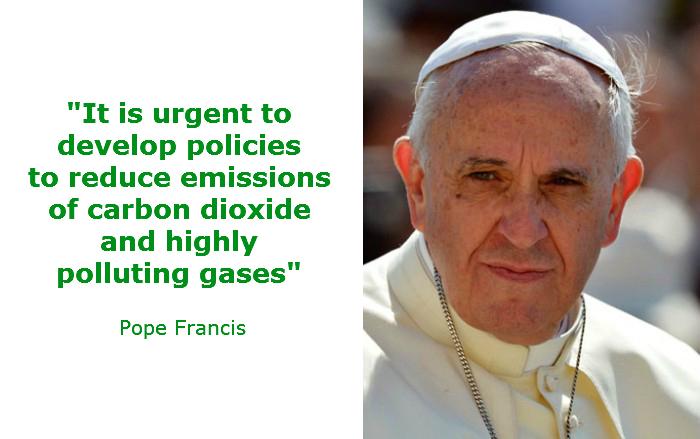
- Pope begs ‘climate deniers’ to listen to science
- Pope Francis Urges Carbon Tax to Avert Climate ‘Catastrophe’
- Pope calls for carbon tax to fight ‘climate emergency’

2019 May. Open letter to the London Times
…Australia has just endured its hottest ever summer and storms and dengue fever are turning up in new locations……The coalition – which has been, to say the least, inactive on climate change……It appears that the coalition attempt to portray climate change as a series of economic losses has paid off……There is no question that climate change is a serious issue confronting Australia and little doubt either that the coalition government is not taking it seriously……Mr Morrison recently responded with casual dismissiveness to a report from the United Nations which concluded that the world was sleepwalking towards an extinction crisis. Australia is does not meet its share of reducing global emissions and it is deflating to see a prime minister rewarded for such a short-sighted position…
Bullying works in public, but people vote alone.
https://wattsupwiththat.com/2019/05/24/an-open-letter-to-the-editor-of-the-times-uk/
2019 March. Open letter to the President of the USA:
2019 March. Another open letter to the child demonstrators:
' By Brian Dingwall, New Zealand
2019 March. A rejoinder to the boilerplate alarmism of the so-called children's open letter:
'We, the living, are deeply concerned about our young. You currently ignore reason, evidence and science and the global political system is on the brink of a catastrophe. The devastating effects of your ignorance are felt by millions of people around the globe for we are far from reaching a common understanding of the climate. Yet this can change.
2019 January. A grandfather's letter to all high school and other students:
'As you once again head back to high school, college, and graduate school, it seems appropriate to give you a few facts that might help you ward off silly indoctrination that unfortunately sometimes accompanies valid instruction especially in areas concerning Earth’s environment and our country’s energy production. Accordingly, below is your New Year’s gift, a very brief set of fundamental facts that you may find helpful in evaluating comments you may hear in various classrooms concerning energy and our environment. Hopefully these snippets will help stimulate critical thinking in areas that, unfortunately, have become hot beds of unrelenting propaganda in academia.'
http://wiseenergy.org/Energy/PR/Energy_And_Environmental_Facts_For_Students.pdf
(hat-tip: https://www.masterresource.org/alliance-for-wise-energy-decisions/energy-environmental-newsletter-january-21-2019/ )
2017 December. A letter to school pupils in Denmark from Ken Haapala of SEPP:
'Letter to Dr Singer from students in Denmark asking important questions:
- What can we do to prevent global warming? Nothing. The main cause is natural variation, which we cannot prevent.
- If we don't do anything about it, how does it affect us and our descendants? You and your descendants will live in a world richer in carbon dioxide, which is a benefit to plants, the environment, and humanity.
- What will happen in the future, and what are the alternatives for us, if the Earth becomes unlivable? Life began on earth with the atmosphere many times richer in carbon dioxide than today. The earth will not become unlivable from carbon dioxide-caused warming.
- How can we save Earth if it isn't too late? The earth does not need saving, but it needs good stewards. You can help by not polluting with trash, not wasting energy, and living healthy lives.
2017 February. ' More than 300 scientists have urged President Trump to withdraw from the U.N.’s climate change agency, warning that its push to curtail carbon dioxide threatens to exacerbate poverty without improving the environment.
The text of the petition in full is 'We urge the United States government, and others, to withdraw from the United Nations Framework Convention on Climate Change (UNFCCC). We support reasonable and cost-effective environmental protection. But carbon dioxide, the target of the UNFCCC is not a pollutant but a major benefit to agriculture and other life on Earth. Observations since the UNFCCC was written 25 years ago show that warming from increased atmospheric CO2 will be benign -- much less than initial model predictions.'
For text and signees , see: http://www.eenews.net/assets/2017/02/23/document_gw_07.pdf
Update 09 March 2017: Lindzen enlarges upon his case in a 2nd letter: https://wattsupwiththat.com/2017/03/09/lindzen-responds-to-the-mit-letter-objecting-to-his-petition-to-trump-to-withdraw-from-the-unfcc/
"Calls to limit carbon dioxide emissions are even less persuasive today than 25 years ago. Future research should focus on dispassionate, high-quality climate science, not on efforts to prop up an increasingly frayed narrative of “carbon pollution.” Until scientific research is unfettered from the constraints of the policy-driven UNFCCC, the research community will fail in its obligation to the public that pays the bills."
2017 Will Happer interview. This is not an open letter, nor is it a petition, but it contains so much good sense that it belongs here:
https://www.propublica.org/article/a-physicist-and-possible-adviser-to-trump-describes-his-love-of-science-co2
Extract:
'Q: So you really do see global warming as a non-problem, not as something worth investing in?
2017 2nd Feb. Forthcoming anniversary of the Heidelberg Appeal
'June 2, 2017 (four months from today) will be the 25 year anniversary of the Heidelberg Appeal. This historical document, signed by more than 4,000 distinguished scientists, including 70 Nobel Laureates, was released in the beginning of the infamous “Earth Summit” (Rio de Janeiro, 1992) to oppose environmental obscurantism, including climate alarmism.'
https://defyccc.com/heidelberg-appeal-anniversary/
2016 25th Sep. Open Letter in response to climate fanatics' open letter: 'Therefore, the signatories hereto repudiate the letter issued by the 375 activists as reflecting not scientific truth but quasi-religious dogma and totalitarian error; we urge the voters to disregard that regrettable and anti-scientific letter; and we invite every citizen to make up his or her own mind whom to elect to the nation’s highest office without fear of the multifarious bugaboos conjured into terrifying but scientifically unjustifiable existence by the totalitarian activists who have for decades so disrespected, disgraced and disfigured climate science.' See the link below for the informative and hard-hitting text which precedes this.
2016, 25th April. UK. Open letter to the BBC. A superb piece of work in compiling a dossier of BBC transgressions in climate, and a fine letter to the Director General:
Alex Henney
Paul Homewood
Source: https://notalotofpeopleknowthat.wordpress.com/2016/04/25/major-new-complaint-submitted-to-bbc-over-climate-bias/#comment-67905
A full copy of the 163-page complaint is here: https://notalotofpeopleknowthat.files.wordpress.com/2016/04/bbc-trust-complaint-4541.pdf
2016, 25 January. USA - letter from 300 scientists and others to Chairman of House Science Committee:
Chairman Lamar Smith
Committee on Science, Space and Technology
House of Representatives
Congress of the United States
Dear Chairman Smith,
http://climateaudit.org/2011/10/04/epa-the-endangerment-finding-was-not-a-highly-influentialscientific-
assessment/ ).
(List of signatories and tag lines)
2015, 24 October. Open letter to the editor of Physics Today from Joseph Bast and others:
'In his September 15 article in Physics Today, “Climate Change Impacts: The growth of understanding,” Spencer Weart presented a decidedly one-sided and incomplete history of the intersection of climate science and climate policy.[1] Since he refers dismissively to a publication (actually, a series of books under the title Climate Change Reconsidered [2]) that we contributed to, we have asked for this opportunity to present an opposing view. We are grateful for this opportunity to share our perspective with Physics Today readers.
2015, 21 October, Open letter to the new IPCC chairman from Drieu Godefridi:
2015, October 12. Open letter to the Governor of the Bank of England.
The Governor, a Mark Carney, recently made a complete fool of himself in a speech about climate (for discussion see here and here, for example). A letter trying of help him see his serial blunders has been penned by Alex Henney. It is good. Here is how it begins:
'Dear Mr. Carney,
2015, October 12. Open letter to the BBC
For the context, see: http://www.bishop-hill.net/blog/2015/10/6/unchaperoned-views.html
The letter from Peter Lilley MP begins:
'Dear Lord Hall,
Peter Lilley: No, I studied physics at Cambridge, so I accept the basic thesis that … a lot more CO2 in the atmosphere, will marginally warm up the Earth. But I'm what's known as a "lukewarmist", one who thinks that there won't be much warming as a result of it, and that's the scientifically proven bit of the theory - anything going on the alarmist scale is pure speculation.
2015, April. Open letter to Pope Francis
'Your Holiness:
2015, April. Letter to Chief Justice John Roberts,
Supreme Court of the United States
1 First Street NE
Washington DC 20543
22 April 2015
Dear Chief Justice Roberts:
Recent misconduct by senior managers at the Harvard-Smithsonian Center for Astrophysics We are some 500 friends, colleagues, or supporters of Dr Willie Soon, an award-winning solar physicist of international standing who has been a researcher at the Smithsonian Astrophysical Observatory, part of the Harvard-Smithsonian Center for Astrophysics, for a quarter of a century. Recently, with three of us, Dr Soon co-authored a paper in the Science Bulletin of the Chinese Academy of Sciences that led to widespread but false allegations by the Smithsonian, echoing various advocacy groups, that he had improperly failed to disclose a source of his funding for his work on the paper.
When those allegations were proven false, the political advocacy group originally responsible for them circulated further false allegations that in 11 earlier papers Dr Soon had acted improperly in not having disclosed the source of his funding. However, the Smithsonian had negotiated a contract with the funder in question by which the funder’s identity was not to be published. The only papers in which Dr Soon had not disclosed his funders’ identity were those papers covered by that contractual obligation of confidentiality, for which obligation the Smithsonian, not Dr Soon, was entirely responsible.
The Smithsonian, however, unlawfully and publicly issued a series of statements intended to blame Dr Soon.
His three co-authors of the Science Bulletin paper have investigated the allegations by the Smithsonian and various political advocacy groups against their colleague. A syllabus of their findings is set out in the first two pages of their report to the Regents, attached hereto, followed by the evidence.
We now ask you –
1. To instruct the Inspector-General of the Smithsonian to investigate the co-authors’ findings (pages 3-4) and the evidence in support of the findings (pages 5-14) as part of his investigation of this matter;
2. To investigate Dr Alcock’s malicious and dishonest interview (overleaf) with the Chronicle of Higher Education; his refusal to make any correction of his falsehoods upon request by Dr Soon and separately by Dr Soon’s lead author; and his failure to forward to the Smithsonian’s general counsel the lead author’s freedom of information request;
3. To request the Attorney-General of Massachusetts to investigate those aspects of the conduct of the Smithsonian in general and of Dr Alcock in particular that constitute a criminal campaign of intentional, connected and co-ordinated deceptions, persisted in despite requests to cease and desist and, therefore, intended to cause not only reputational harm but also financial loss to Dr Soon; and
4. If the report’s findings be found in substance correct, to order the Smithsonian to apologize publicly to Dr Soon and to make just and full restitution to him for the loss and damage it and its senior management have intentionally caused.
Yours sincerely,
Monckton of Brenchley; Professor David Legates; Dr Matt Briggs for themselves as Dr Soon’s co-authors and for the approximately 500 signatories listed at pages 15-22
https://www.heartland.org/sites/default/files/soon-regents-without.pdf
2015 Letter to the President and officers of the American Physical Society (APS) now made public. Bishop Hill reports the following, received in his email:
Laurence I. Gould Past Chair (2004) New England Section of the American Physical Society
William Happer Cyrus Fogg Professor of Physics, Emeritus Princeton University
May 8, 2015
President, American Physical Society
One Physics Ellipse College Park, MD 20740-3844
Laurence I. Gould
William Happer
Malcolm R. Beasley, Past President
Laura Greene, Vice President
Homer Neal, President Elect
2015 Open Reply to US Museums
Click here to view a pdf file of the signatories of this letter.
2015 Open Letter to Lord Hall of the despicable BBC from R C E Wyndham
- Routinely ignores its own Editorial Standards (as it happens, legal requirements), that is an ethical issue;
- Proceeds in the comforting knowledge that its political masters will not hold it to account, that is an ethical issue;
- Subverts the accepted meaning of language in order to generate a spurious justification for institutional bias, that is an ethical issue;
- Claims that its much vaunted impartiality has been ‘calibrated’ on the advice of a specially convened assembly of experts, that is an ethical issue;
- Subsequently spends large quantities of licence fee payers’ money seeking to avoid disclosing the composition of that convocation, that is an ethical issue;
- Has, as it later transpires, lied repeatedly about the accreditation of attendees, that is an ethical issue;
- Is in possession of information indicating gross malfeasance within the climate change community, which for weeks it deliberately suppresses, that is an ethical issue;
- Rejects the findings of an independent committee, set up by itself, to rule on its own impartiality, that is an ethical issue;
- Later, in order to justify its propagandist line, accepts on demonstrably spurious grounds the opposing verdict of a paid lapdog scientist, that is an ethical issue;
- Subsequently, and for years, deliberately and willfully ignores rivers of evidence and reports from unimpeachable sources which run counter to its prevailing orthodoxy, that is an ethical issue;
- Continues to give currency to demonstrable misinformation generated by vested interests, that is an ethical issue;
- By silent acquiescence lends its authority to false and defamatory slurs aimed at eminent scientists who question its prevailing orthodoxy, that is an ethical issue;
- Establishes a complaints procedure which, on artificial and synthetic grounds, is carefully designed to reject all objections to its prevailing orthodoxy, however well attested, that is an ethical issue.
- When scientists, or those claiming to be, concoct evidence, that is an ethical issue.
- When they ‘homogenise’ data, that is an ethical issue.
- When they refuse to expose their data to verification by the wider scientific community, that is an ethical issue.
- When they refuse to make available details of their methodology to the wider scientific community, that is an ethical issue.
- When they refuse to engage in debate with their peers, that is an ethical issue.
- When they willfully skirt contra-indications to an improbable hypothesis, that is an ethical issue.
- When they actively collude to conceal inconsistencies in their own findings, that is an ethical issue.
- When they collude to misrepresent evidence, that is an ethical issue.
- When they invoke the authority of ‘peer review’ but only allow their work to be assessed by those of like mind, that is an ethical issue.
- When they are in a position to select their own ‘peer reviewers’, that is an ethical issue.
- When they invoke the supposed authority of ‘consensus’ in preference to evidence, that is an ethical issue.
- When they deliberately exaggerate and misrepresent the scale of that alleged consensus, that is an ethical issue.
- When they deliberately exaggerate the scale or frequency of observed natural/climatic phenomena, that is an ethical issue.
- When they defame and willfully denigrate the motives of any who have the temerity to question their fraudulent orthodoxy, that is an ethical issue.
- When they threaten the careers and livelihoods of unpersuaded scientific practitioners, that is an ethical issue.
- When they monopolise finite resources at the expense of vastly more important areas of scientific investigation, that is an ethical issue.
- When they subvert the integrity not only of scientific method but of intellectual rectitude itself, that is an ethical issue.
- When the supposed repository of the UN’s collective wisdom on climate change, namely the IPCC, is exposed as a practised and persistent liar, that is an ethical issue.
- When its Summaries for Policy Makers persistently conflict with their underlying scientific Working Group I conclusions, that is an ethical issue.
2014 Cornwall Alliance. 'Protect the Poor: Ten Reasons to Oppose Harmful Climate Change Policies'
- As the product of infinitely wise design, omnipotent creation, and faithful sustaining (Genesis 1:1–31; 8:21–22), Earth is robust, resilient, self-regulating, and self-correcting. Although Earth and its subsystems, including the climate system, are susceptible to some damage by ignorant or malicious human action, God’s wise design and faithful sustaining make these natural systems more likely—as confirmed by widespread scientific observation—to respond in ways that suppress and correct that damage than magnify it catastrophically.
- Earth’s temperature naturally warms and cools cyclically throughout time, and warmer periods are typically more conducive to human thriving than colder periods.
- While human addition of greenhouse gases, particularly carbon dioxide (CO2), to the atmosphere may slightly raise atmospheric temperatures, observational studies indicate that the climate system responds more in ways that suppress than in ways that amplify CO2’s effect on temperature, implying a relatively small and benign rather than large and dangerous warming effect.
- Empirical studies indicate that natural cycles outweigh human influences in producing the cycles of global warming and cooling, not only in the distant past but also recently.
- Computer climate models, over 95% of which point toward greater warming than has been observed during the period of rapid CO2 increase, do not justify belief that human influences have come to outweigh natural influences, or fears that human-caused warming will be large and dangerous.
- Rising atmospheric CO2 benefits all life on Earth by improving plant growth and crop yields, making food more abundant and affordable, helping the poor most of all.
- Abundant, affordable, reliable energy, most of it now and in the foreseeable future provided by burning fossil fuels, which are the primary source of CO2 emissions, is indispensable to lifting and keeping people out of poverty.
- Mandatory reductions in CO2 emissions, pursued to prevent dangerous global warming, would have little or no discernible impact on global temperatures, but would greatly increase the price of energy and therefore of everything else. Such policies would put more people at greater risk than the warming they are intended to prevent, because they would slow, stop, or even reverse the economic growth that enables people to adapt to all climates. They would also harm the poor more than the wealthy, and would harm them more than the small amount of warming they might prevent.
- In developed countries, the poor spend a higher percentage of their income on energy than others, so rising energy prices, driven by mandated shifts from abundant, affordable, reliable fossil fuels to diffuse, expensive, intermittent “Green” energy, will in effect be regressive taxes—taxing the poor at higher rates than the rich.
- In developing countries, billions of the poor desperately need to replace dirty, inefficient cooking and heating fuels, pollution from which causes hundreds of millions of illnesses and about 4 million premature deaths every year, mostly among women and young children. To demand that they forgo the use of inexpensive fossil fuels and depend on expensive wind, solar, and other “Green” fuels to meet that need is to condemn them to more generations of poverty and the high rates of disease and premature death that accompany it.
- We call on Christians to practice creation stewardship out of love for God and love for our neighbors—especially the poor.
- We call on Christian leaders to study the issues and embrace sound scientific, economic, and ethical thinking on creation stewardship, particularly climate change.
- We call on political leaders to abandon fruitless and harmful policies to control global temperature and instead adopt policies that simultaneously reflect responsible environmental stewardship, make energy and all its benefits more affordable, and so free the poor to rise out of poverty.
2014 The mass media is notorious for mindlessly relaying the spins of those who want to see widespread alarm about our impact on climate. Partly, one supposes because alarms make good headlines. Partly, one supposes further, because the political left-wing have adopted such alarm as a stepping-stone for achieving some of their goals. Partly, perhaps, because the alarmed viewpoint is now the basic position of some important establishments. But what it cannot be due to is respect for science or respect for civilised debate. Here is an open letter from a David Hoffer, and published on WUWT in response to a tv news anchor, Carol Costello, declaring the climate change debate was over:
2014 UK. Lord Monckton writes to a man who closed down an entire journal because one sentence in one paper of it dared question the core dogma of the IPCC. The poor chap got such a fright that he just closed it down. What awful establishment forces does he live in fear of? We may never know, but we do know the good viscount knows no such fear:
published approaching 600 papers in the reviewed and general scientific literature, is an
internationally-renowned expert on sea level and is one of the most gifted instructors of
students I have ever had the pleasure to work with, has copied me in on your sad and,
indeed, bizarre decision to bring to an end the excellent learned journal Pattern Recognition
in Physics, less than a year after its first publication in March 2013.
furious not so much at your decision to axe this promising journal, which was already
galloping towards the forward frontiers of research in the physical sciences, as at the
extraordinary reason you have given for your decision.
Space Climate Conference in Oulu in June 2013 and realized that the hypothesis that the
relative positions of the major planets of the solar system influence solar activity in
accordance with a detectable pattern was now ready to be elevated to a theory. In his own
specialism, sea-level rise, the question was of more than purely academic significance, since
the influence of the major planets not only influences the Sun but causes perceptible
variations in the period of the Earth’s rotation (i.e. the length of the day) and hence, via the
Coriolis force over time, in global sea level.
between variations in the positions of the major planets and in solar activity was gaining
recognition, realized that the topic was an ideal instance of pattern recognition in
astrophysics. He proposed to the editor of the new Copernicus journal Pattern Recognition
in Physics that a special issue should be devoted to the subject so that a collection of papers
could examine the issue from every angle and, as the ancient Chinese philosophers used to
say, “in the round”. The editor, understandably, leapt at the opportunity with expressions of
delight, and invited Professor Mörner to edit the special issue. No one more competent or
suitable guest editor could have been chosen.
leave him just a few months to produce the special issue. What he describes as “a very, very
intensive editorial work” started at once. To save time, the 19 authors of the 12 papers – all of
them pre-eminent in their various fields – reviewed each other’s contributions, though
additional reviewers were also consulted. The process of peer review was thorough and
meticulous.
by Copernicus in 2013. An image of the front cover is below. In the Professor’s view – and he
has had more experience than almost anyone – the quality of the 12 papers was excellent.
Professor Mörner tells me that the key general conclusion, co-authored by the 19 researchers
of undoubted eminence, was to the effect that the planetary beat indeed influences solar
variability, whereupon two further conclusions followed: first, the central conclusion that the
long-considered hypothesis had now been elevated to a firm theory and perhaps even to a
paradigm, and secondly, a subsidiary conclusion that extrapolation of the thus-explained
pattern of solar variability over the coming century “sheds serious doubts on the issue of a
continued, even accelerated, warming as claimed by the IPCC project”.
disagree, but only on scientific grounds – is that this last conclusion is a logical, necessary
and scientific result properly following from all 12 papers published in the special issue,
though in the context of the overall finding it was a subsidiary conclusion, and was expressed
as such.
Pattern Recognition in Physics to an end. Aside from your suggestion that inviting as many
as 19 pre-eminent researchers with varying opinions and in widely different fields to review
each other’s papers was “nepotism” (which is such obvious, desperate nonsense that I shall
speak no more of it), the reasons you give for your shameful decision are merely
restatements of a single, monstrous pretext in varying forms.
2014 to Professor Mörner, arranged in accordance with the sequence of events you describe:
Physics (PRP) in March 2013. The journal idea was brought to Copernicus’ attention
and was taken rather critically in the beginning, since the designated
Editors-in-Chief were mentioned in the context of the debates of climate
skeptics.” And why should taking part in scientific debate debar an editor?
aim of the journal was to publish articles about patterns recognized in the full
spectrum of physical disciplines. PRP was never meant to be a platform for
climate sceptics.” It should be a platform for science, wherever it leads.
planetary origin and terrestrial impacts”. Besides papers dealing with the observed
patterns in the heliosphere, the special issue editors ultimately submitted their
conclusions in which they “doubt the continued, even accelerated, warming
as claimed by the IPCC project” (Pattern Recogn. Phys., 1, 205–206, 2013).” On
what scientific ground, if any, do you dare to dispute their scientific conclusion?
their planetary origin and terrestrial impacts”, we read through the general
conclusions paper published on 16 December 2013. We were alarmed by the
authors’ second implication stating “This sheds serious doubts on the
issue of a continued, even accelerated, warming as claimed by the IPCC
project”. And why were you alarmed? What scientific reason for alarm was there?
which can then be discussed within the scientific community. However, the recent
developments including the expressed implications (see above) have led us to
this drastic decision.” How dare you censor a legitimate scientific conclusion?
originally agreed aims & scope of PRP and decided today to cease the
publication. This decision must come as a surprise for you, but under the given
circumstances we were forced to react.” On what scientific ground do you “distance
yourselves” from the scientific conclusion that the IPCC’s predictions should be
doubted? What scientific reviewers did you consult? Did you put your reviewers’
concerns to the authors of the conclusion you presume to dispute? If not, why not?
your two emails of 17 January 2014 to Professor Mörner.
It must be concluded that personally you have – for whatever reason – adopted so fervent a
position on the catastrophist side of the climate science debate that you (or, more probably,
the shadowy figures behind you) are regrettably intolerant even of the mildest, passing
question – however well supported scientifically by the very latest evidence from outside the
climate sciences – as to whether the IPCC’s previous predictions of very rapid and potentially
catastrophic global warming may perhaps be incorrect.
field only peripherally connected with the climate because you have decided – or you have
cravenly obeyed others unknown who have decided – to take a lamentably unscientific and
aprioristic stance on the global warming question, a stance so uncompromising that you will
not countenance even a single, passing question about whether the IPCC’s previous
predictions are likely to prove correct, and you will not – indeed, cannot – offer a single
shred of scientific justification for your viewpoint.
doubt about the IPCC’s predictions is not itself expressed in the usual scientific manner by a
reviewed paper or comment responding to the scientific conclusion that – on no stated
ground – you purport to dispute, but by a petulant decision to shut the entire journal down.
This decision of yours, taken without the slightest regard for the scientific method or for the
usual canons of disciplined enquiry, logical discourse or peer review, is one too many of its
kind. It is not acceptable. I do not propose to accept it or to tolerate it.
journal for a nakedly political reason and without offering anything that even makes a
serious pretense at being a scientific justification.
shall invite all of the contributors to the special edition to participate with me in a relaunch
of Pattern Recognition in Physics, to take effect immediately. If you or Copernicus object to
this course of action on copyright or any other ground, you will no doubt be sure to let me
know within the next seven days. Otherwise, you will be presumed to have forfeited all
interest in producing scientific journals and you will leave the journal to me. I shall invite
Professor Mörner to be the lead editor. The journal will be published online and, I hope, will
also be taken under the wing of one of the scientific publishing houses with which I have
connections. For the sake of avoiding a public humiliation of you until you have had an
opportunity to rethink your position, I am not contacting any other scientific publishing
houses until the seven days have passed.
why Copernicus decided to try (unsuccessfully, as you will by now have realized) to kill the
journal. You will come in for some justifiably severe personal criticism in this editorial, for
on any view you have not behaved as a senior executive of a reputable scientific publishing
house should have behaved. You have taken a corrupt, anti-scientific decision.
you have also, through ignorance, put yourself outside the emerging mainstream of climate
science. For that mainstream is now flowing in a far less catastrophist direction than ever
before.
me, has been forced to abandon its former naïve and imprudent faith in the expensive
computer models that have so relentlessly failed to predict global temperature with sufficient
conservatism since the 1980s.
of global warming by almost half, from 0.7 Cº over the next 30 years to about 0.4 Cº. That
rate is equivalent to 0.13 Cº/decade, or little more than a third of the 0.3 Cº/decade near-
term warming predicted by the IPCC in 1990.
prediction of 0.13 Cº/decade entails no acceleration in global warming over the next 30
years. And that, as you will no doubt realize, is in line with the scientific conclusion to which
you object so strongly on partisan grounds that you have attempted (and failed) to shut down
this promising new journal of rational thought.
accelerated, warming as claimed by the IPCC project”. The IPCC itself, though it still predicts
a “continued” warming, is now, in effect, no longer predicting an “accelerated” warming for
at least the next 30 years.


predictions with those of the models is shown above, together with its heavily-revised graph
from the final, published draft, where you will see that it has abjectly climbed down and
substituted its “expert judgment” for the models’ extravagant and discredited predictions.
You will see just how drastic has been the IPCC’s downward revision of its previous
projections: indeed, its current best estimate of near-term warming, at 0.13 Cº/decade, is its
lowest ever, by a comfortable margin. Inch by inch, the skeptics against whom you show such
hateful prejudice are being shown to have been correct all along. For they, unlike the canting
profiteers of doom, have no financial or other vested interest in maintaining and peddling a
lie.
political view to dominate the editorial decision-making at Copernicus, I shall send out
worldwide a warning that Copernicus is not henceforth to be regarded as a scientific
publishing house at all, but merely as a malodorous joke: a putrid arm of the international
political and environmental-extremist academic cabal, unworthy to be considered a truly
scientific publishing house at all. Copernicus will henceforth be boycotted by all serious
scientists, who will snigger at it behind their hands, and will regard it as a publisher not of
science but of children’s comics.
attempt to stop the journal – a decision that is the modern equivalent of book-burning – has
been rethought and withdrawn, copies of this letter will be circulated widely. This is not the
early Middle Ages: it is the 21st century. Your failed attempt at shoddy, Soviet-era scientific
censorship will, therefore, be widely publicized and universally condemned.
recipients of Professor Mörner’s email to me. After seven days, however, I shall without
hesitation circulate it widely. Furthermore, I shall then be entitled to assume that neither
you nor Copernicus have any objection to my taking over the journal without fee, whereupon
it will be administered and edited on scientific principles only, and not on the basis of any
mere superstitious, anti-scientific, catastrophist, Druidical credo.
Reason. Get used to it, and withdraw your silly and intellectually immature decision to shut
down Pattern Recognition in Physics on the most fatuously insubstantial ground ever
advanced by even the most vicious of dictators for suppressing the freedom to think.
You should be thoroughly ashamed of yourself.

Viscount Monckton of Brenchley
2013 Australia. The Australian Broadcasting Corporation (ABC) is, like the UK's BBC, notorious for its blatant promotion of climate alarmism. Here is an open letter by two Australian citizens challenging an ABC director to renounce the alarmist claims that are part and parcel of this awful track record:
Climate gate Emails 2009 (their content reveals scientific misconduct. The various investigations that found no misconduct BUT found that those scientists had refused to share their supporting data which shows a lack of transparency inconsistent with good science) http://en.wikipedia.org/wiki/Climatic_Research_Unit_email_controversy
2013 USA. Open letter from Bob Tisdale re the IPCC SPM
'September 30, 2013
Secretary of State
Washington D.C. 20520
This isn’t a run of the mill report to be dumped in a filing cabinet. This isn’t a political document produced by politicians.It’s science.
The Climate Issue: Widespread agreement and the choice of a moral policy.
2013 England. An open letter to Prof Belcher, head of the UK Met Office Hadley Centre.
Dear Professor Belcher
There has been no net warming since 1997 with CO2 up over 8%, The warming trend peaked in about 2003 and the earth has been cooling slightly for the last 10 years . This cooling will last for at least 20 years and perhaps for hundreds of years beyond that.. The Met office and IPCC climate models and all the impact studies depending on them are totally useless because they are incorrectly structured. The models are founded on two irrationally absurd assumptions.First that CO2 is the main driver - when CO2 follows temperature .The cause does not follow the effect. Second piling stupidity on irrationality the models add the water vapour as a feed back to the CO2 in order to get a climate sensitivity of about 3 degrees. Water vapour follows temperature independently of CO2 and is the main GHG.
Furthermore apart from the specific problems in the Met- IPCC models ,models are inherently useless for predicting temperatures because of the difficulty of setting the initial parameters with sufficient precision.Why you think you can iterate more than a couple of weeks ahead is beyond my comprehension.After all you gave up on seasonal forecasts.
For a discussion of the right way to approach forecasting see
http://climatesense-norpag.blogspot.com/2013/05/climate-forecasting-basics-for-britains.html
and several other pertinent posts also on http://climatesense-norpag.blogspot.com.
Here is a summary of the conclusions.
"It is not a great stretch of the imagination to propose that the 20th century warming peaked in about 2003 and that that peak was a peak in both the 60 year and 1000 year cycles.On that basis the conclusions of the post referred to above were as follows.
1 Significant temperature drop at about 2016-17
2 Possible unusual cold snap 2021-22
3 Built in cooling trend until at least 2024
4 Temperature Hadsst3 moving average anomaly 2035 - 0.15
5Temperature Hadsst3 moving average anomaly 2100 - 0.5
6 General Conclusion - by 2100 all the 20th century temperature rise will have been reversed,
7 By 2650 earth could possibly be back to the depths of the little ice age.
8 The effect of increasing CO2 emissions will be minor but beneficial - they may slightly ameliorate the forecast cooling and help maintain crop yields .
9 Warning !! There are some signs in the Livingston and Penn Solar data that a sudden drop to the Maunder
Minimum Little Ice Age temperatures could be imminent - with a much more rapid and economically disruptive cooling than that forecast above which may turn out to be a best case scenario.
For a discussion of the effects of cooling on future weather patterns see the 30 year Climate Forecast 2 Year update at
http://climatesense-norpag.blogspot.com/2012/07/30-year-climate-forecast-2-year-update.html
How confident should one be in these above predictions? The pattern method doesn't lend itself easily to statistical measures. However statistical calculations only provide an apparent rigour for the uninitiated and in relation to the climate models are entirely misleading because they make no allowance for the structural uncertainties in the model set up.This is where scientific judgement comes in - some people are better at pattern recognition than others.A past record of successful forecasting is a useful but not infallible measure. In this case I am reasonably sure - say 65/35 for about 20 years ahead. Beyond that, inevitably ,certainty drops."
It is way past time for someone in the British scientific establishment to forthrightly say to the government that the whole CO2 scare is based on a mass delusion and try to stop Britain's lunatic efforts to control climate by installing windmills.
As an expat Brit I watch with fascinated horror as y'all head lemming like over a cliff. I would be very happy to consult for the Met on this matter- you certainly need to hear a forthright skeptic presentation to reconnect with reality.
Best Regards Norman Page.
2013 USA/UK
Open Letter to the Royal Meteorological Society Regarding Dr. Trenberth’s Article “Has Global Warming Stalled?”
2013 New Zealand. This is an open letter from a climate blogger in New Zealand. It is civil, gentle, and thoughtful, and ought to reflect the views of all people who share those virtues alongside a decent grasp of the climate debate. It is to newspaper editors everywhere.
'I start this letter with a simple point. The success of your newspaper is entirely dependent upon your credibility. I do not mean whether celebrity ‘x’ really had an affair with celebrity ‘y’, but on the substantive issues in the news. For the former, no doubt, the public are forgiving but, for the latter, they will be less so.
Many years ago, a group of scientists started making startling claims that humans were warming the planet due to emissions of carbon dioxide. They made predictions for temperature rises and, along with the rise in temperature, started predicting catastrophe. It was a hot news story. It was a story which could energise people into the ever so noble cause of ‘saving the planet’. With such a noble cause, it was inevitable that the cause would create passionate advocacy. Governments were caught up with the passion too, and commenced a flood of new and often expensive legislation to ‘save the planet’. Passions were raised, and you were part of that process.
We can now jump forwards to the present. The predictions of the scientists are not working out. The warming has stopped. There are also worrying evidence that the climategate scandal was revealing of a simple truth; the feet of the alarmist climate scientists are made of clay. Most recently, another hockey stick temperature chart was produced, and was hailed as a new ‘smoking gun’ for humans driving the climate into oblivion. It did not take long for the claims of the paper and the authors’ claims to the press to be dissected. It seems that they grossly manipulated the data, and the work could be characterised as grossly incompetent at best or fraudulent at worst. It is just the latest in a long line of scandals. You are not reporting on this, or the pause in temperature rise, or the implications of the pause for the climate models on which climate alarmism is founded.
I now return to the point with which I started this letter. Your reporting of climate alarmism has stoked passions, and has played a part in pressuring politicians to act to ‘save the planet’. If this alarm is a false alarm, what will this do to your credibility with your readers?
In particular, there have been a large number of credible scientists who have, for many years, either been questioning the idea of catastrophic global warming, or asking that the science of climate change acknowledge the many uncertainties in the science. As the predictions of catastrophic warming are failing to materialise, these sceptical scientists are starting to be vindicated. Up until now, you have ignored them, or in the worst case, called them ‘deniers’ of the science.
You can continue to promote the alarmism, as you have done up until now. If you do so, and the evidence of the real world continues to contradict the models of climate science alarmism, you are going to look very silly. You see, the trouble is this. It seems that some of the outlets that have previously promoted alarmism (e.g. the Economist) are starting to backtrack a little already. In doing so, they have started the process of protecting their credibility. Just as the tide of climate alarmism rapidly rose, it might just as quickly recede. To use a metaphor borrowed from a financier; you do not want to be the person who is wearing no swimsuit when the tide goes out.
You should start to now think about retaining your credibility. A first step, for those media outlets that do so, is to stop using terms such as ‘denier’. A second step is to acknowledge the uncertainties in climate science, with Professor Judith Currie as an exemplar of this position. You need to acknowledge that there is no consensus on the science. In particular, start reporting the IPCC as what it actually is, which is a fundamentally political institution. You do not have to take a sceptical stance, but simply started restoring balance to your reporting. In doing so, if the tide does indeed go back out, you will not be left exposed as wearing no swimsuit.'
Source: http://newzealandclimatechange.wordpress.com/2013/04/09/editors-and-policy-on-climate-change-an-open-letter/
2013 Australia. That land has had more than its fair share of unhinged eco-extremists winning power and influence, but some of the natives are striking back. Here is an open letter from one of them, John Happs. It was published at Quadrant Online.
An open letter to David Attenborough
ATTENTION: Sir David Attenborough
Dear Sir David,
I have written to you previously to congratulate you on the excellence of your wildlife documentaries. There is no doubt that your dedication and professionalism have brought pleasure, information and awareness to millions of viewers around the world.
On a more critical note, I expressed to you my concern about public comments you have made about catastrophic anthropogenic global warming (CAGW).
I provided ample documented evidence to show that:
(b) The Intergovernmental Panel on Climate Change (IPCC) process and findings cannot be trusted;
(c) The broader scientific and political communities are now seriously questioning the alarmist message of CAGW.
When challenged about this, the BBC indicated that the claim of a 3.5oC rise over 20 years was sourced from a Christian Aid report. The BBC acknowledged that the 3.5oC claim, based on that NGO source, had no basis in fact and the statement would be removed when the program was repeated. To its credit, the BBC honoured that commitment.
I am concerned when you, Sir David, lend your reputation and authority to bolster alarmist messages about dramatic Arctic sea ice retreat and, by unsubstantiated association, the threat to polar bear populations (2)
The Oasis Nature Channel has presented a series of programs entitled Extinctions, about animals under threat. The first of the series was about polar bears, which they referred to as the canaries in the global-warming coalmine, ignoring the fact that polar bear numbers are actually the highest since records began. (3)
Spreading unwarranted alarmism about CAGW and the demise of polar bears appears to be the hallmark of a number of radical environmentalists and other vested interest groups. For instance, in his book We are the Weather Makers (4) Australia’s Chief Climate Commissioner, Professor Tim Flannery writes:
The alarmist World Wildlife Fund (WWF) claimed that polar bears with triplet cubs have been declining, yet recent sightings from Arctic guides report "frequent sightings of polar bear mothers with triplets.” (6)
Serial alarmist Dr Andrew Derocher from the World Conservation Union, also knows how to make exaggerated and emotive statements about global warming and subsequent threats to polar bears. He says:
If the public were to take seriously such alarmist messages about dangerous global warming and the plight of the polar bear they could be led to believe that:
(b) Polar bears will be isolated from their food supplies;
(c) Polar bears are already starving;
(d) Polar bears are endangered. Soon they will only be found in zoos.
There is little doubt that, several decades ago, polar bears were under threat. In the 1950’s their numbers were down to around 5,000 although they were not threatened by climate change. Rather they were facing threats from high-powered rifles and few restrictions on hunting.
Today, about 450 polar bears are legally killed and skinned annually in Canada, essentially by Inuit hunters in Nunavut. Polar bear pelts can fetch a minimum of 1,750 USD. (9)
Thanks to the introduction of the 1972 Marine Mammal Protection Act and the 1974 International Agreement for the Conservation of Polar Bears, hunting is now restricted and numbers now exceed 25,000.Arctic biologist Dr Mitchell Taylor is currently studying 13 populations. He says:
Dycka et al. (2007) reported:
Crockford adds:
Armstrong et al. (2008) noted that the U.S. Government, prompted by environmentalists, had commissioned studies to support the listing of polar bears as a threatened or endangered species. Their research concluded that the “best available science” does not support such a listing and that government forecasts were based on false assumptions. They indicated that the U.S. Government polar bear population forecasts contravened a number of principles for scientific forecasting. (16)
A 2012 aerial survey by the Government of Nunavut along the western shore of Hudson Bay showed that the “most threatened” bear sub-population, stands at 1,013 and could be even higher. This number is 66% higher than that provided by pessimistic forecasters who said the numbers would fall because of global warming and melting ice. (17)
Harry Flaherty, chair of the Nunavut Wildlife Management Board in the capital of Iqaluit, says the polar bear population in the region, along the Davis Strait, has doubled during the past 10 years. Gabriel Nirlungayuk, director of wildlife for Nunavut Tuungavik agrees. He says that 40 years ago, people living around Hudson Bay were lucky to see a polar bear: “Now there are bears living as far south as James Bay” and the growing population has become “a real problem” especially over the last 10 years.
Nirlungayuk points out that, during the summer and fall, families enjoying outdoor activities must be on the lookout for bears. In fact many locals take hunters with them for protection. (18)
Alex Ishalook says there are far more bears around Arviat than ever before, and considers the coast south of Churchill, Manitoba to be unsafe for camping:
Dr. Matthew Cronin is a research professor at the School of Natural Resources and Agricultural Sciences at the University of Alaska Fairbanks. He says:
It is clear that, despite rising levels of atmospheric carbon dioxide, global temperature has remained in stasis over the last 17 years. This should put to rest the unsubstantiated alarmism of catastrophic anthropogenic global warming. Even the Chairman of the IPCC, Dr Rajendra Pachauri admitted, in a speech at Deakin University in Melbourne, we have now had 17 years without global temperature rise. (26)
There is no evidence that the planet is warming dangerously. Nor is there any evidence that Arctic ice and polar bears are about to vanish. There is ample evidence to show that polar bears are not under threat. What is under threat is scientific integrity and the public’s access to accurate scientific information. The media must shoulder some of the responsibility for the misinformation and exaggeration that has been promoted about catastrophic anthropogenic global warming and a bleak future for polar bears.
Dr Dave Summers agrees. He says:
Sincerely,
Dr John Happs
Dr John Happs has an academic background in the geosciences. He has been a science educator at several universities in Australia and overseas
REFERENCES:
(1) http://www.guardian.co.uk/environment/blog/2013/feb/08/bbc-global-warming-attenborough-africa
(2) http://www.telegraph.co.uk/earth/environment/globalwarming/9934109/Sir-David-Attenborough-should-check-his-facts-on-polar-bears.html?oo=102541
(3) http://www.paulmacrae.com/?p=140
(4) Flannery, T. (2007). We are the Weather Makers. Text Publishing, Melbourne.
(5) http://www.cbsnews.com/2100-205_162-3243272.html
(6) http://stevengoddard.wordpress.com/2010/10/16/wwf-caught-in-another-big-lie-polar-bears-doing-just-fine/
(7) http://news.ualberta.ca/newsarticles/2013/february/preparenowtosavepolarbears
(8) http://stevengoddard.wordpress.com/2011/03/12/wwf-2004-polar-bears-to-be-infertile-by-2014/
(9) http://news.nationalpost.com/2012/01/03/n-w-t-ups-price-paid-for-polar-bear-pelts-to-1750-as-demand-for-the-fur-rises/
(10) http://polarbearscience.com/
(11) http://www.forbes.com/sites/jamestaylor/2012/08/15/good-news-for-polar-bears-is-bad-news-for-global-warming-alarmists/
(12) http://news.bbc.co.uk/2/hi/science/nature/7132220.stm
(13) http://www.pnas.org/content/109/36/E2382
(14) http://scienceandpublicpolicy.org/images/stories/papers/originals/climate_issues_RF.pdf
(15) http://www.forbes.com/sites/jamestaylor/2012/08/15/good-news-for-polar-bears-is-bad-news-for-global-warming-alarmists/
(16) http://www.forecastingprinciples.com/index.php?option=com_content&view=article&id=79&Itemid=109
(17) http://www.theglobeandmail.com/news/national/healthy-polar-bear-count-confounds-doomsayers/article4099460/
(18) http://www.freerepublic.com/focus/f-news/2427367/posts
(19) http://www.uphere.ca/node/850
(20) http://www.opednews.com/articles/opedne_mike_kuy_071208_drudge_denies_polar_.htm
(21) http://www.spiegel.de/international/germany/biologist-josef-reichholf-on-global-warming-we-are-children-of-the-tropics-a-481707.html
(22) http://www.canadafreepress.com/index.php/article/1626
(23) http://judithcurry.com/2012/12/21/never-look-a-polar-bear-in-the-eye/
(24) http://www.aksenateminority.com/archives/date/2007/03/29
(25) http://www.ncpa.org/pub/ba551
(26) http://tomnelson.blogspot.com.au/2013/02/pachauri-would-not-admit-over-decade.html
(27) http://bishophill.squarespace.com/blog/2013/3/3/dave-summers-on-everything.html
2013 Australia. This open letter to the latest in a series of profoundly disappointing leaders of the Royal Society was published at Jo Nova. It is a response to a letter from Paul Nurse to Lord Lawson.
" 31 March 2013
- decline to publish empirical evidence;
- usually with insolence, refuse to offer their raw data, their algorithms and their methodology to the scrutiny of the scientific community at large;
- manipulate and misrepresent the data they claim to possess;
- refuse to validate or have validated their general circulation models, even though these are known to be flawed;
- decline to engage in any form of debate which might expose them even to questioning, let alone to constructive criticism;
- who, in substitution thereof, prefer instead to smear and defame any who challenge their dogmatic orthodoxy, with many amongst the dissenters being scientists of immense distinction, equal at least to your own, and often experts in disciplines far more directly relevant than yours to matters in hand.

2013 Sweden. This is not a great letter. It has some weaknesses re Arctic ice for example, and suffers from a naive view of the IPCC. But what makes it stand out is that it seems to be from the climate establishment in Sweden, and is attacking alarmism in public in a land known to be saddled with leftwing conformance pressures. It may be that so many poorly informed people, here the World Bank leadership, are getting carried away with their enjoyment of a climate crisis that informed commentators can readily tear to shreds their flimsily-based claims. That alarms the climate scientists who have become so politicised in recent decades that they can see a funding-threat and a credibility-threat rearing up in front of them. So, here we see an attack not just on the World Bank, but also on one of the most un-hinged of the European centres for climate scaremongering - the Potsdam Institute who applied the old alarmist wheeze of presenting their speculations about what the world might be like under Condition X as if that were evidence that Condition X is likely to occur. Almost all of the scientists associated with the IPCC for example are concerned with climate impact speculations, and not with studying the possible causes of climate variation. There is also, in the letter below, a refreshing reference to the decidedly un-alarming observations in recent decades of temperatures, of sea levels, and of tropical storms. Source: http://notrickszone.com/2013/02/05/four-top-swedish-climate-scientists-publish-critical-letter-slamming-potsdam-institute-climate-alarmism/
Misinterpreted climate report threatens the credibility of scientists
The World Bank’s recent climate report was not saying that we necessarily face an extreme global temperature increase – but was about the potential consequences of such. It is one of several examples of how climate information can be misinterpreted and ultimately damage the credibility of researchers, writes leading climate scientists.Recently, the World Bank published a report entitled ‘Turn down the heat: Why a 4° C warmer world must be avoided’.The report received wide media exposure with its dramatic title, and in that it was the World Bank, which published it. The Bank had commissioned a German institute in Potsdam to write the report. It does not contain an analysis of the Earth’s climate, but primarily deals with the consequences of a supposed global temperature rise of 4°C.
No detailed analysis was made of the probability of such a change. This was not clear in the Swedish debate.As a warming of 4°C during this century is extremely worrying, it is important to try to assess how reasonable such a strong warming is. Individual model simulations have calculated global warming by 2100 of +6°C or more, but these have been deemed highly unlikely by the UN climate panel (IPCC 2007). The slow global warming, especially over the past 15 years, has reinforced this view.
Since the 1800s, the concentration of carbon dioxide along with other greenhouse gases have increased by about 75 per cent. Meanwhile, the earth’s average temperature has increased by about 0.8°C. Such a temperature increase is much smaller than the model calculations provide and only takes into account the increase in greenhouse gases as the cause. There may be compensatory cooling from aerosol particles, but systematic errors in the model calculations can not be excluded.
There is great uncertainty over how sensitive the climate system is to human influence and thus how high the carbon content must be to provide a warming of 4°C. Even with a high climate sensitivity a level of at least 1000 ppmv is probably required. This would require annual carbon emissions significantly higher than today.
An increase in temperature leads to an increase of the amount of water vapour in the atmosphere. This leads to a climate with more extreme precipitation with a tendency for increased precipitation at high latitudes and in the equatorial region and reduced rainfall in many parts of the areas just outside the tropics. One exposed area is the Mediterranean region. Given the dominant natural variations in the weather from year to year, it is not yet possible to reliably determine whether a systematic change in precipitation has occurred. T
The increase in sea level is a result of ocean thermal expansion and mass contribution from melting of mountain glaciers and land ice. The increase based on recent satellite measurements amount to an average of about 3 mm/year (approximately 2 mm/year due to water mass addition, about half from mountain glaciers and the other half from land ice).
During the past 20 years, no acceleration of the increase of the sea level occurred. No apparent relationship between sea levels and global temperature changes during the 1900s appears to exist.
Extreme weather events create a great deal of attention because of the loss of life and extensive economic damage. With a generalized global warming, one can expect more extreme high temperatures, but also fewer extremely low temperatures, for which there are now indications.
Tropical storms are often attributed to global warming. Current examples include Hurricane Sandy that plagued parts of the U.S. East Coast in late October 2012 and the typhoon Bopha that hit the Philippines a month later.
The mass media conveyed in many cases the perception that these tropical hurricanes were a result of the greenhouse effect. But there are no indications of an increasing trend in the intensity or number of tropical hurricanes. The large increase in damage caused by severe storms in different parts of the world is caused mainly by people increasingly living and working in more exposed locations.
The most obvious consequences of climatic change during the last decades is the melting of mountain glaciers over most of the earth and of summer sea ice in the Arctic.
Although it is not entirely inconceivable that similar reductions may have occurred in previous centuries, it is likely that the reduction of summer sea ice in the Arctic is unique. Model calculations support the view that this is linked to an increasing greenhouse effect.
In summary, we believe that a temperature increase of as much as 4° C during this century is very unlikely. Nor is there any basis for claims that tropical hurricanes have become more extreme and more frequent.
We believe that the media, instead of blowing up the results of individual publications should give special attention to the specific international organization – IPCC – which by the international community has been charged with the continuous and comprehensive synthesis of a large body of research on the climate thus putting individual reports like the The World Bank’s in a larger perspective. The next IPCC assessment will be published in September 2013.
We want to use this article in no way to detract from the problem of global warming and its possible consequences. We only want to warn that misguided information may have the effect that the credibility of scientists can be questioned and that measures to deal with climate change may receive the wrong priorities. The Royal Swedish Academy of Sciences has in their analysis of energy issues assumed that reducing carbon emissions will have high priority in global politics and that very large investments over time are needed to replace fossil fuels with sustainable alternatives.
Society must also be prepared for climatic changes in order to protect the population against extreme weather events and systematic changes in climate, whether as a result of global warming or not.
Signed by the following four climatology scientists and members of the Royal Swedish Academy of Sciences: Lennart Bengtsson, Deliang Chen, Marie-José Gaillard, Henning Rodhe.
[Published here: http://www.dn.se/debatt/misstolkad-klimatrapport-hotar-forskares-trovardighet]
2013 UK A member of the House of Lords writes a great deal of sense about climate. Published in the UK Financial Times, January 30, 2013 11:27 pm:
Evidence counts against climate change alarmists
From Lord Turnbull.
Sir, Edward Luce (“Obama must make up for his carbon omissions”, January 21) writes that “the reality of global warming is starker than four years ago – in most respects alarmingly so”. The evidence points in the opposite direction. Since the Intergovernmental Panel on Climate Change produced its last report in 2007, global temperatures, as measured by the HadCRUT3 series, have not increased but have moved sideways, extending the standstill in temperature to more than a decade.
Since carbon dioxide concentrations, seen as the driving force of global warming, have continued unabated, it suggests that something else is at play: the link between CO2 and temperature may not be as strong as assumed in the IPCC model, or other factors such as the sun, oceans or clouds are having a greater influence. Either way, it must call into question the confident assertions based on the prevailing assumptions. As for Arctic ice, its coverage is now back almost exactly to where it was in January 2007.
All this suggests that our climate continues to warm gradually, as it has done since early in the 19th century (which is long before CO2 concentrations started to rise). It may be more plausible to conclude that global warming is around 1°C per century with periods of faster and slower growth fluctuating around the trend, rather than the 3°C predicted by the IPCC. If so, what is happening is interesting but it hardly justifies the epithet alarming.
Andrew Turnbull, House of Lords, UK
Hat-tip: http://hockeyschtick.blogspot.co.uk/2013/01/evidence-counts-against-climate-change.html
2013 UK In response to a radio programme during which two psychoanalysts displayed a shocking ignorance of the reality that there are substantial arguments against climate alarmism, Ben Pile wrote this on his blog:
Dear Laurie,
Your feature frames the problem of a failure to recognise what one of your guests called ‘the reality of climate change’, which moved on to a discussion about ‘types of denial’. However, if psychoanalysis has anything to say in the climate debate, it must speak to climate sceptics as much as their counterparts.
Sally Weintrobe lets the cat out of the bag when she claims that we are ‘increasingly aware’ of ‘weird weather’, citing hurricane Sandy and the UK’s recent wet weather. Yet there was nothing remarkable about the weather last year. The IPCC’s recent special report on extreme weather found that there is no evidence of increased frequency or intensity of storms, floods or droughts, or losses caused by them attributable to anthropogenic climate change.
So psychoanalysis must have something to say about Sally Weintrobe’s misconception of the ‘reality’ of climate change represented by the IPCC. Her views on climate seem to be as far out of kilter with the scientific consensus as any “denier’s”.
Further to her misconception of the reality of climate change is Weintrobe’s misconception of climate sceptics’ arguments. There are many forms of climate scepticism. Some sceptics object to environmental ethical or political philosophy. Some object to environmental economics. Some object to the attempt to mobilise political action through the use of fear. And of course, some sceptics object to some of the claims that seem to emerge from climate science. Your guests would have us believe that sceptics contest the claim that ‘global warming is happening’, whereas the question that most sceptics of climate science ask is about the role of feedback mechanisms that are believed to amplify the global warming effect — a subject on which there is far less consensus that your guests will admit.
For a programme with the title, ‘thinking allowed’, this is a problem. Rather than doing justice to the debate, a psychopathology of climate scepticism is proposed. Thus thinking is not allowed: to think differently about climate change is to have a broken mind, requiring the intervention of psychoanalysts.
There is a dark history of psychoanalysts and psychiatrists being recruited by the state to elicit the obedience of the public. Your guests seem to want to continue that tradition. That desire for control is what this climate sceptic objects to.
The recruitment of headshrinkers to a political campaign is a far more concerning phenomenon than people living in ‘denial’ of ‘the reality of climate change’. Your guests would rather construct elaborate theories about the pathology of climate sceptics than speak to them. Thus, their theories stand as a demonstration of only what is happening inside their own heads, rather than in society at large. This in turn speaks about the nature of environmental politics and the anti-democratic tendency of environmentalism.
2012 UK. The GWPF throws down a gauntlet before the new director-general of the BBC:
LETTER TO LORD HALL FROM GWPF TRUSTEES (hat-tip: Bishop Hill)
The Global Warming Policy Foundation – 14 December 2012
Dear Lord Hall,
As Trustees of the all-Party and non-Party Global Warming Policy Foundation, we would like to wish you every success in your new and important post of Director General of the BBC. It is clear that you have a number of urgent matters to attend to in your post. But when you have done that, we hope you will find time to turn your attention to a matter which, although not urgent, is of considerable importance: the BBC’s treatment of global warming and climate change issues.
That the BBC recognises the importance of these issues is clear from the lecture given at Oxford University last month by your predecessor but one, Mark Thompson, who opened with an extensive quotation from the Director of this Foundation, Dr Benny Peiser, which he then proceeded to discuss at considerable length. While he was, of course, speaking in a personal capacity, it is reasonable to suppose that his lecture reflected the present view of the BBC on how it should treat climate change issues; and since it is the fullest statement of that view currently available it merits close attention.
We wish to be fair to Mr Thompson. In places his discussion betrays a welcome acknowledgment that perhaps the BBC has not got its treatment of global warming and climate change issues quite right. And he does seem grudgingly to concede that the Global Warming Policy Foundation has a point when it insists that these issues need to be fully and openly debated.
However, against this have to be set a number of less commendable aspects of the lecture. His account of what the Global Warming Policy Foundation is and does is a travesty, wholly ignoring the fact that (as our name clearly implies) our principal focus is the policy response rather than the science. He refers, in patronising terms, to the detailed analysis by Christopher Booker of the BBC’s coverage of climate change issues which we published last year, a fully-documented and peer-reviewed report, without deigning to address any of the serious charges it made.
He also shows (as, it must be said, does the BBC as a whole) considerable ignorance of many of the issues he discusses. In particular, he seems to imagine that the issue is a simple yes-no question, namely, whether man-made carbon emissions are likely to warm the planet. He shows no awareness of the fact that there has been no recorded global warming for the past 15 years or so (despite an accelerated rise in carbon dioxide emissions), no awareness that climate scientists are deeply divided over how great or small any future warming is likely to be, and no awareness of the complexity of what the impact, for good or ill, of any such warming might be.
Above all, he shows no awareness of the crucial question of what the most cost-effective response might be, a matter on which economists are divided and on which scientists have no expertise to bring to bear. Nor, incidentally, does he recognise that what might be a sensible policy for the world as a whole may not be sensible for the UK on its own. These are all distinct issues deserving the most careful scrutiny and debate; yet the BBC appears to maintain that there is one single issue which is no longer a matter for debate at all.
The lamentable report to the BBC Trust, earlier this year, by Professor Steve Jones fell into precisely this error, arguing that the BBC should in future allow even less airtime to dissenters from the conventional wisdom, on the grounds that “For at least three years, the climate change deniers (sic) have been marginal to the scientific debate, but somehow they continued to find a place on the airwaves”.
Curiously, since he was in post when the event occurred, but perhaps revealingly in the light of recent events, Mr Thompson fails to mention what has come to be known as ‘28gate’. We refer to the now notorious seminar on global warming held in 2006, involving 28 senior BBC staff and 28 outsiders. As the BBC Trust subsequently explained, “The BBC has held a high-level seminar with some of the best scientific experts, and has come to the view that the weight of evidence no longer justifies equal [ie more than derisory] space being given to the opponents of the consensus [on climate change and climate change policies]“. Ever since then, the BBC has fought tooth and nail, at considerable public expense, to keep secret the identity of “the best scientific experts”.
As you may be aware, it now emerges that, of the 28 present, there were only two (hand-picked) climate scientists; and the bulk of the rest were either green activists (including two from Greenpeace alone) or non-scientists with a vested interest in promoting renewable energy. So the BBC stands convicted not only of culpable imbalance, but also of rank dishonesty.
We hope that, once you have grappled with the more immediate challenges facing the BBC, you will revisit this important issue. We suggest that you might start by convening a new high-level seminar, this time a more balanced one, whose non-BBC participants would be qualified climate scientists, energy and environmental economists, and experienced policy-makers – whose names, incidentally, would be made known. The Global Warming Policy Foundation would be happy to be represented in any such seminar.
In the light of the public interest in this issue, we shall be posting this letter on the Foundation’s website.
Signed
Lord Lawson (Chairman) (Conservative)
Lord Donoughue (Labour)
Baroness Nicholson (Liberal Democrat)
2012 International. Tom Harris found 125 signatories for this over just 3 days:
OPEN CLIMATE LETTER TO UN SECRETARY-GENERAL: Current scientific knowledge does not substantiate Ban Ki-Moon assertions on weather and climate, say 125 scientists.

On November 9 this year you told the General Assembly: “Extreme weather due to climate change is the new normal … Our challenge remains, clear and urgent: to reduce greenhouse gas emissions, to strengthen adaptation to … even larger climate shocks … and to reach a legally binding climate agreement by 2015 … This should be one of the main lessons of Hurricane Sandy.”
On November 13 you said at Yale: “The science is clear; we should waste no more time on that debate.”
The following day, in Al Gore’s “Dirty Weather” Webcast, you spoke of “more severe storms, harsher droughts, greater floods”, concluding: “Two weeks ago, Hurricane Sandy struck the eastern seaboard of the United States. A nation saw the reality of climate change. The recovery will cost tens of billions of dollars. The cost of inaction will be even higher. We must reduce our dependence on carbon emissions.”
We the undersigned, qualified in climate-related matters, wish to state that current scientific knowledge does not substantiate your assertions.
The U.K. Met Office recently released data showing that there has been no statistically significant global warming for almost 16 years. During this period, according to the U.S. National Oceanic and Atmospheric Administration (NOAA), carbon dioxide (CO2) concentrations rose by nearly 9% to now constitute 0.039% of the atmosphere. Global warming that has not occurred cannot have caused the extreme weather of the past few years. Whether, when and how atmospheric warming will resume is unknown. The science is unclear. Some scientists point out that near-term natural cooling, linked to variations in solar output, is also a distinct possibility.
The “even larger climate shocks” you have mentioned would be worse if the world cooled than if it warmed. Climate changes naturally all the time, sometimes dramatically. The hypothesis that our emissions of CO2 have caused, or will cause, dangerous warming is not supported by the evidence.
The incidence and severity of extreme weather has not increased. There is little evidence that dangerous weather-related events will occur more often in the future. The U.N.’s own Intergovernmental Panel on Climate Change says in its Special Report on Extreme Weather (2012) that there is “an absence of an attributable climate change signal” in trends in extreme weather losses to date. The funds currently dedicated to trying to stop extreme weather should therefore be diverted to strengthening our infrastructure so as to be able to withstand these inevitable, natural events, and to helping communities rebuild after natural catastrophes such as tropical storm Sandy.
There is no sound reason for the costly, restrictive public policy decisions proposed at the U.N. climate conference in Qatar. Rigorous analysis of unbiased observational data does not support the projections of future global warming predicted by computer models now proven to exaggerate warming and its effects.
The NOAA “State of the Climate in 2008” report asserted that 15 years or more without any statistically-significant warming would indicate a discrepancy between observation and prediction. Sixteen years without warming have therefore now proven that the models are wrong by their creators’ own criterion.
Based upon these considerations, we ask that you desist from exploiting the misery of the families of those who lost their lives or properties in tropical storm Sandy by making unsupportable claims that human influences caused that storm. They did not. We also ask that you acknowledge that policy actions by the U.N., or by the signatory nations to the UNFCCC, that aim to reduce CO2 emissions are unlikely to exercise any significant influence on future climate. Climate policies therefore need to focus on preparation for, and adaptation to, all dangerous climatic events however caused.
Signed by:
- Habibullo I. Abdussamatov, Dr. Sci., mathematician and astrophysicist, Head of the Selenometria project on the Russian segment of the ISS, Head of Space Research of the Sun Sector at the Pulkovo Observatory of the Russian Academy of Sciences, St. Petersburg, Russia
- Syun-Ichi Akasofu, PhD, Professor of Physics, Emeritus and Founding Director, International Arctic Research Center of the University of Alaska, Fairbanks, Alaska, U.S.A.
- Bjarne Andresen, Dr. Scient., physicist, published and presents on the impossibility of a “global temperature”, Professor, Niels Bohr Institute (physics (thermodynamics) and chemistry), University of Copenhagen, Copenhagen, Denmark
- J. Scott Armstrong, PhD, Professor of Marketing, The Wharton School, University of Pennsylvania, Founder of the International Journal of Forecasting, focus on analyzing climate forecasts, Philadelphia, Pennsylvania, U.S.A.
- Timothy F. Ball, PhD, environmental consultant and former climatology professor, University of Winnipeg, Winnipeg, Manitoba, Canada
- James R. Barrante, Ph.D. (chemistry, Harvard University), Emeritus Professor of Physical Chemistry, Southern Connecticut State University, focus on studying the greenhouse gas behavior of CO2, Cheshire, Connecticut, U.S.A.
- Colin Barton, B.Sc., PhD (Earth Science, Birmingham, U.K.), FInstEng Aus Principal research scientist (ret.), Commonwealth Scientific and Industrial Research Organisation (CSIRO), Melbourne, Victoria, Australia
- Joe Bastardi, BSc, (Meteorology, Pennsylvania State), meteorologist, State College, Pennsylvania, U.S.A.
- Franco Battaglia, PhD (Chemical Physics), Professor of Physics and Environmental Chemistry, University of Modena, Italy
- Richard Becherer, BS (Physics, Boston College), MS (Physics, University of Illinois), PhD (Optics, University of Rochester), former Member of the Technical Staff – MIT Lincoln Laboratory, former Adjunct Professor – University of Connecticut, Areas of Specialization: optical radiation physics, coauthor – standard reference book Optical Radiation Measurements: Radiometry, Millis, MA, U.S.A.
- Edwin X. Berry, PhD (Atmospheric Physics, Nevada), MA (Physics, Dartmouth), BS (Engineering, Caltech), Certified Consulting Meteorologist, President, Climate Physics LLC, Bigfork, MT, U.S.A.
- Ian Bock, BSc, PhD, DSc, Biological sciences (retired), Ringkobing, Denmark
- Ahmed Boucenna, PhD, Professor of Physics (strong climate focus), Physics Department, Faculty of Science, Ferhat Abbas University, Setif, Algéria
- Antonio Brambati, PhD, Emeritus Professor (sedimentology), Department of Geological, Environmental and Marine Sciences (DiSGAM), University of Trieste (specialization: climate change as determined by Antarctic marine sediments), Trieste, Italy
- Stephen C. Brown, PhD (Environmental Science, State University of New York), District Agriculture Agent, Assistant Professor, University of Alaska Fairbanks, Ground Penetrating Radar Glacier research, Palmer, Alaska, U.S.A.
- Mark Lawrence Campbell, PhD (chemical physics; gas-phase kinetic research involving greenhouse gases (nitrous oxide, carbon dioxide)), Professor, United States Naval Academy, Annapolis, Maryland, U.S.A.
- Rudy Candler, PhD (Soil Chemistry, University of Alaska Fairbanks (UAF)), former agricultural laboratory manager, School of Agriculture and Land Resources Management, UAF, co-authored papers regarding humic substances and potential CO2 production in the Arctic due to decomposition, Union, Oregon, U.S.A.
- Alan Carlin, B.S. (California Institute of Technology), PhD (economics, Massachusetts Institute of Technology), retired senior analyst and manager, U.S. Environmental Protection Agency, Washington, DC, former Chairman of the Angeles Chapter of the Sierra Club (recipient of the Chapter’s Weldon Heald award for conservation work), U.S.A.
- Dan Carruthers, M.Sc., Arctic Animal Behavioural Ecologist, wildlife biology consultant specializing in animal ecology in Arctic and Subarctic regions, Turner Valley, Alberta, Canada
- Robert M. Carter, PhD, Professor, Marine Geophysical Laboratory, James Cook University, Townsville, Australia
- Uberto Crescenti, PhD, Full Professor of Applied Geology, Università G. d’Annunzio, Past President Società Geologica taliana, Chieti, Italy
- Arthur Chadwick, PhD (Molecular Biology), Research Professor of Geology, Department of Biology and Geology, Southwestern Adventist University, Climate Specialties: dendrochronology (determination of past climate states by tree ring analysis), palynology (same but using pollen as a climate proxy), paleobotany and botany; Keene, Texas, U.S.A.
- George V. Chilingar, PhD, Professor, Department of Civil and Environmental Engineering of Engineering (CO2/temp. focused research), University of Southern California, Los Angeles, California, U.S.A.
- Ian D. Clark, PhD, Professor (isotope hydrogeology and paleoclimatology), Dept. of Earth Sciences, University of Ottawa, Ottawa, Ontario, Canada
- Cornelia Codreanova, Diploma in Geography, Researcher (Areas of Specialization: formation of glacial lakes) at Liberec University, Czech Republic, Zwenkau, Germany
- Michael Coffman, PhD (Ecosystems Analysis and Climate Influences, University of Idaho), CEO of Sovereignty International, President of Environmental Perspectives, Inc., Bangor, Maine, U.S.A.
- Piers Corbyn, ARCS, MSc (Physics, Imperial College London)), FRAS, FRMetS, astrophysicist (Queen Mary College, London), consultant, founder WeatherAction long range weather and climate forecasters, American Thinker Climate Forecaster of The Year 2010, London, United Kingdom
- Richard S. Courtney, PhD, energy and environmental consultant, IPCC expert reviewer, Falmouth, Cornwall, United Kingdom
- Roger W. Cohen, B.S., M.S., PhD Physics, MIT and Rutgers University, Fellow, American Physical Society, initiated and managed for more than twenty years the only industrial basic research program in climate, Washington Crossing, Pennsylvania, U.S.A.
- Susan Crockford, PhD (Zoology/Evolutionary Biology/Archaeozoology), Adjunct Professor (Anthropology/Faculty of Graduate Studies), University of Victoria, Victoria, British Colombia, Canada
- Walter Cunningham, B.S., M.S. (Physics – Institute of Geophysics And Planetary Sciences, UCLA), AMP – Harvard Graduate School of Business, Colonel (retired) U.S. Marine Corps, Apollo 7 Astronaut., Fellow – AAS, AIAA; Member AGU, Houston, Texas, U.S.A.
- Joseph D’Aleo, BS, MS (Meteorology, University of Wisconsin), Doctoral Studies (NYU), CMM, AMS Fellow, Executive Director – ICECAP (International Climate and Environmental Change Assessment Project), College Professor Climatology/Meteorology, First Director of Meteorology The Weather Channel, Hudson, New Hampshire, U.S.A.
- David Deming, PhD (Geophysics), Professor of Arts and Sciences, University of Oklahoma, Norman, Oklahoma, U.S.A.
- James E. Dent; B.Sc., FCIWEM, C.Met, FRMetS, C.Env., Independent Consultant (hydrology & meteorology), Member of WMO OPACHE Group on Flood Warning, Hadleigh, Suffolk, England, United Kingdom
- Willem de Lange, MSc (Hons), DPhil (Computer and Earth Sciences), Senior Lecturer in Earth and Ocean Sciences, The University of Waikato, Hamilton, New Zealand
- Silvia Duhau, Ph.D. (physics), Solar Terrestrial Physics, Buenos Aires University, Buenos Aires, Argentina
- Geoff Duffy, DEng (Dr of Engineering), PhD (Chemical Engineering), BSc, ASTCDip., FRSNZ (first chemical engineer to be a Fellow of the Royal Society in NZ), FIChemE, wide experience in radiant heat transfer and drying, chemical equilibria, etc. Has reviewed, analysed, and written brief reports and papers on climate change, Auckland, New Zealand
- Don J. Easterbrook, PhD, Emeritus Professor of Geology, Western Washington, University, Bellingham, Washington, U.S.A.
- Ole Henrik Ellestad, former Research Director, applied chemistry SINTEF, Professor in physical chemistry, University of Oslo, Managing director Norsk Regnesentral and Director for Science and Technology, Norwegian Research Council, widely published in infrared spectroscopy, Oslo, Norway
- Per Engene, MSc, Biologist, Co-author – The Climate, Science and Politics (2009), Bø i Telemark, Norway
- Gordon Fulks, B.S., M.S., PhD (Physics, University of Chicago), cosmic radiation, solar wind, electromagnetic and geophysical phenomena, Portland, Oregon, U.S.A.
- Katya Georgieva, MSc (meteorology), PhD (solar-terrestrial climate physics), Professor, Space Research and Technologies Institute, Bulgarian Academy of Sciences, Sofia, Bulgaria
- Lee C. Gerhard, PhD, Senior Scientist Emeritus, University of Kansas, past director and state geologist, Kansas Geological Survey, U.S.A.
- Ivar Giaever PhD, Nobel Laureate in Physics 1973, professor emeritus at the Rensselaer Polytechnic Institute, a professor-at-large at the University of Oslo, Applied BioPhysics, Troy, New York, U.S.A.
- Albrecht Glatzle, PhD, ScAgr, Agro-Biologist and Gerente ejecutivo, Tropical pasture research and land use management, Director científico de INTTAS, Loma Plata, Paraguay
- Fred Goldberg, PhD, Adj Professor, Royal Institute of Technology (Mech, Eng.), Secretary General KTH International Climate Seminar 2006 and Climate analyst (NIPCC), Lidingö, Sweden
- Laurence I. Gould, PhD, Professor of Physics, University of Hartford, Past Chair (2004), New England Section of the American Physical Society, West Hartford, Connecticut, U.S.A.
- Vincent Gray, PhD, New Zealand Climate Coalition, expert reviewer for the IPCC, author of The Greenhouse Delusion: A Critique of Climate Change 2001, Wellington, New Zealand
- William M. Gray, PhD, Professor Emeritus, Dept. of Atmospheric Science, Colorado State University, Head of the Tropical Meteorology Project, Fort Collins, Colorado, U.S.A.
- Charles B. Hammons, PhD (Applied Mathematics), climate-related specialties: applied mathematics, modeling & simulation, software & systems engineering, Associate Professor, Graduate School of Management, University of Dallas; Assistant Professor, North Texas State University (Dr. Hammons found many serious flaws during a detailed study of the software, associated control files plus related email traffic of the Climate Research Unit temperature and other records and “adjustments” carried out in support of IPCC conclusions), Coyle, OK, U.S.A.
- William Happer, PhD, Professor, Department of Physics, Princeton University, Princeton, NJ, U.S.A.
- Hermann Harde, PhD, Professur f. Lasertechnik & Werkstoffkunde (specialized in molecular spectroscopy, development of gas sensors and CO2-climate sensitivity), Helmut-Schmidt-Universität, Universität der Bundeswehr Fakultät für Elektrotechnik, Hamburg, Germany
- Howard Hayden, PhD, Emeritus Professor (Physics), University of Connecticut, The Energy Advocate, Pueblo West, Colorado, U.S.A.
- Ross Hays, Meteorologist, atmospheric scientist, NASA Columbia Scientific Balloon Facility (currently working at McMurdo Station, Antarctica), Palestine, Texas, U.S.A.
- Martin Hovland, M.Sc. (meteorology, University of Bergen), PhD (Dr Philos, University of Tromsø), FGS, Emeritus Professor, Geophysics, Centre for Geobiology, University of Bergen, member of the expert panel: Environmental Protection and Safety Panel (EPSP) for the Ocean Drilling Program (ODP) and the Integrated ODP, Stavanger, Norway
- Ole Humlum, PhD, Professor of Physical Geography, Department of Physical Geography, Institute of Geosciences, University of Oslo, Oslo, Norway
- Craig D. Idso, PhD, Chairman of the Board of Directors of the Center for the Study of Carbon Dioxide and Global Change, Tempe, Arizona, U.S.A.
- Sherwood B. Idso, PhD, President, Center for the Study of Carbon Dioxide and Global Change, Tempe, Arizona, U.S.A.
- Larry Irons, BS (Geology), MS (Geology), Sr. Geophysicist at Fairfield Nodal (specialization: paleoclimate), Lakewood, Colorado, U.S.A.
- Terri Jackson, MSc (plasma physics), MPhil (energy economics), Director, Independent Climate Research Group, Northern Ireland and London (Founder of the energy/climate group at the Institute of Physics, London), United Kingdom
- Albert F. Jacobs, Geol.Drs., P. Geol., Calgary, Alberta, Canada
- Hans Jelbring, PhD Climatology, Stockholm University, MSc Electronic engineering, Royal Institute of Technology, BSc Meteorology, Stockholm University, Sweden
- Bill Kappel, B.S. (Physical Science-Geology), B.S. (Meteorology), Storm Analysis, Climatology, Operation Forecasting, Vice President/Senior Meteorologist, Applied Weather Associates, LLC, University of Colorado, Colorado Springs, U.S.A.
- Olavi Kärner, Ph.D., Extraordinary Research Associate; Dept. of Atmospheric Physics, Tartu Observatory, Toravere, Estonia
- Leonid F. Khilyuk, PhD, Science Secretary, Russian Academy of Natural Sciences, Professor of Engineering (CO2/temp. focused research), University of Southern California, Los Angeles, California, U.S.A.
- William Kininmonth MSc, MAdmin, former head of Australia’s National Climate Centre and a consultant to the World Meteorological organization’s Commission for Climatology, Kew, Victoria, Australia
- Gerhard Kramm, Dr. rer. nat. (Theoretical Meteorology), Research Associate Professor, Geophysical Institute, Associate Faculty, College of Natural Science and Mathematics, University of Alaska Fairbanks, (climate specialties: Atmospheric energetics, physics of the atmospheric boundary layer, physical climatology – see interesting paper by Kramm et al), Fairbanks, Alaska, U.S.A.
- Leif Kullman, PhD (Physical geography, plant ecology, landscape ecology), Professor, Physical geography, Department of Ecology and Environmental science, Umeå University, Areas of Specialization: Paleoclimate (Holocene to the present), glaciology, vegetation history, impact of modern climate on the living landscape, Umeå, Sweden
- Hans H.J. Labohm, PhD, Independent economist, author specialised in climate issues, IPCC expert reviewer, author of Man-Made Global Warming: Unravelling a Dogma and climate science-related Blog, The Netherlands
- Rune Berg-Edland Larsen, PhD (Geology, Geochemistry), Professor, Dep. Geology and Geoengineering, Norwegian University of Science and Technology (NTNU), Trondheim, Norway
- C. (Kees) le Pair, PhD (Physics Leiden, Low Temperature Physics), former director of the Netherlands Research Organization FOM (fundamental physics) and subsequently founder and director of The Netherlands Technology Foundation STW. Served the Dutch Government many years as member of its General Energy Council and of the National Defense Research Council. Royal Academy of Arts and Sciences Honorary Medal and honorary doctorate in all technical sciences of the Delft University of technology, Nieuwegein, The Netherlands
- Douglas Leahey, PhD, meteorologist and air-quality consultant, past President – Friends of Science, Calgary, Alberta, Canada
- Jay Lehr, B.Eng. (Princeton), PhD (environmental science and ground water hydrology), Science Director, The Heartland Institute, Chicago, Illinois, U.S.A.
- Bryan Leyland, M.Sc., FIEE, FIMechE, FIPENZ, MRSNZ, consulting engineer (power), Energy Issues Advisor – International Climate Science Coalition, Auckland, New Zealand
- Edward Liebsch, B.A. (Earth Science, St. Cloud State University); M.S. (Meteorology, The Pennsylvania State University), former Associate Scientist, Oak Ridge National Laboratory; former Adjunct Professor of Meteorology, St. Cloud State University, Environmental Consultant/Air Quality Scientist (Areas of Specialization: micrometeorology, greenhouse gas emissions), Maple Grove, Minnesota, U.S.A.
- William Lindqvist, PhD (Applied Geology), Independent Geologic Consultant, Areas of Specialization: Climate Variation in the recent geologic past, Tiburon, California, U.S.A.
- Horst-Joachim Lüdecke, Prof. Dr. , PhD (Physics), retired from university of appl. sciences HTW, Saarbrücken (Germany), atmospheric temperature research, speaker of the European Institute for Climate and Energy (EIKE), Heidelberg, Germany
- Anthony R. Lupo, Ph.D., Professor of Atmospheric Science, Department of Soil, Environmental, and Atmospheric Science, University of Missouri, Columbia, Missouri, U.S.A.
- Oliver Manuel, BS, MS, PhD, Post-Doc (Space Physics), Associate - Climate & Solar Science Institute, Emeritus Professor, College of Arts & Sciences University of Missouri-Rolla, previously Research Scientist (US Geological Survey) and NASA Principal Investigator for Apollo, Cape Girardeau, Missouri, U.S.A.
- Francis Massen, professeur-docteur en physique (PhD equivalent, Universities of Nancy (France) and Liège (Belgium), Manager of the Meteorological Station of the Lycée Classique de Diekirch, specialising in the measurement of solar radiation and atmospheric gases. Collaborator to the WOUDC (World Ozone and UV Radiation Data Center), Diekirch, Luxembourg
- Henri Masson, Prof. dr. ir., Emeritus Professor University of Antwerp (Energy & Environment Technology Management), Visiting professor Maastricht School of Management, specialist in dynamical (chaotic) complex system analysis, Antwerp, Belgium.
- Ferenc Mark Miskolczi, PhD, atmospheric physicist, formerly of NASA’s Langley Research Center, Hampton, Virginia, U.S.A.
- Viscount Monckton of Brenchley, Expert reviewer, IPCC Fifth Assessment Report, Quantification of Climate Sensitivity, Carie, Rannoch, Scotland
- Nils-Axel Mörner, PhD (Sea Level Changes and Climate), Emeritus Professor of Paleogeophysics & Geodynamics, Stockholm University, Stockholm, Sweden
- John Nicol, PhD (Physics, James Cook University), Chairman – Australian climate Science Coalition, Brisbane, Australia
- Ingemar Nordin, PhD, professor in philosophy of science (including a focus on “Climate research, philosophical and sociological aspects of a politicised research area”), Linköpings University, Sweden.
- David Nowell, M.Sc., Fellow of the Royal Meteorological Society, former chairman of the NATO Meteorological Group, Ottawa, Ontario, Canada
- Cliff Ollier, D.Sc., Professor Emeritus (School of Earth and Environment – see his Copenhagen Climate Challenge sea level article here), Research Fellow, University of Western Australia, Nedlands, W.A., Australia
- Oleg M. Pokrovsky, BS, MS, PhD (mathematics and atmospheric physics – St. Petersburg State University, 1970), Dr. in Phys. and Math Sciences (1985), Professor in Geophysics (1995), principal scientist, Main Geophysical Observatory (RosHydroMet), Note: Dr. Pokrovsky analyzed long climates and concluds that anthropogenic CO2 impact is not main contributor in climate change,St. Petersburg, Russia.
- Daniel Joseph Pounder, BS (Meteorology, University of Oklahoma), MS (Atmospheric Sciences, University of Illinois, Urbana-Champaign); Meteorological/Oceanographic Data Analyst for the National Data Buoy Center, formerly Meteorologist, WILL AM/FM/TV, Urbana, U.S.A.
- Brian Pratt, PhD, Professor of Geology (Sedimentology), University of Saskatchewan (see Professor Pratt’s article for a summary of his views), Saskatoon, Saskatchewan, Canada
- Harry N.A. Priem, PhD, Professore-emeritus isotope-geophysics and planetary geology, Utrecht University, past director ZWO/NOW Institute of Isotope Geophysical Research, Past-President Royal Netherlands Society of Geology and Mining, Amsterdam, The Netherlands
- Oleg Raspopov, Doctor of Science and Honored Scientist of the Russian Federation, Professor – Geophysics, Senior Scientist, St. Petersburg Filial (Branch) of N.V.Pushkov Institute of Terrestrial Magnetism, Ionosphere and Radiowaves Propagation of RAS (climate specialty: climate in the past, particularly the influence of solar variability), Editor-in-Chief of journal “Geomagnetism and Aeronomy” (published by Russian Academy of Sciences), St. Petersburg, Russia
- Curt G. Rose, BA, MA (University of Western Ontario), MA, PhD (Clark University), Professor Emeritus, Department of Environmental Studies and Geography, Bishop’s University, Sherbrooke, Quebec, Canada
- S. Jeevananda Reddy, M.Sc. (Geophysics), Post Graduate Diploma (Applied Statistics, Andhra University), PhD (Agricultural Meteorology, Australian University, Canberra), Formerly Chief Technical Advisor—United Nations World Meteorological Organization (WMO) & Expert-Food and Agriculture Organization (UN), Convener - Forum for a Sustainable Environment, author of 500 scientific articles and several books – here is one: “Climate Change – Myths & Realities“, Hyderabad, India
- Arthur Rorsch, PhD, Emeritus Professor, Molecular Genetics, Leiden University, former member of the board of management of the Netherlands Organization Applied Research TNO, Leiden, The Netherlands
- Rob Scagel, MSc (forest microclimate specialist), Principal Consultant – Pacific Phytometric Consultants, Surrey, British Columbia, Canada
- Chris Schoneveld, MSc (Structural Geology), PhD (Geology), retired exploration geologist and geophysicist, Australia and France
- Tom V. Segalstad, PhD (Geology/Geochemistry), Associate Professor of Resource and Environmental Geology, University of Oslo, former IPCC expert reviewer, former Head of the Geological Museum, and former head of the Natural History Museum and Botanical Garden (UO), Oslo, Norway
- John Shade, BS (Physics), MS (Atmospheric Physics), MS (Applied Statistics), Industrial Statistics Consultant, GDP, Dunfermline, Scotland, United Kingdom
- Thomas P. Sheahen, B.S., PhD (Physics, Massachusetts Institute of Technology), specialist in renewable energy, research and publication (applied optics) in modeling and measurement of absorption of infrared radiation by atmospheric CO2, National Renewable Energy Laboratory (2005-2009); Argonne National Laboratory (1988-1992); Bell Telephone labs (1966-73), National Bureau of Standards (1975-83), Oakland, Maryland, U.S.A.
- S. Fred Singer, PhD, Professor Emeritus (Environmental Sciences), University of Virginia, former director, U.S. Weather Satellite Service, Science and Environmental Policy Project, Charlottesville, Virginia, U.S.A.
- Frans W. Sluijter, Prof. dr ir, Emeritus Professor of theoretical physics, Technical University Eindhoven, Chairman—Skepsis Foundation, former vice-president of the International Union of Pure and Applied Physics, former President of the Division on Plasma Physics of the European Physical Society and former bureau member of the Scientific Committee on Sun-Terrestrial Physics, Euvelwegen, the Netherlands
- Jan-Erik Solheim, MSc (Astrophysics), Professor, Institute of Physics, University of Tromsø, Norway (1971-2002), Professor (emeritus), Institute of Theoretical Astrophysics, University of Oslo, Norway (1965-1970, 2002- present), climate specialties: sun and periodic climate variations, scientific paper by Professor Solheim “Solen varsler et kaldere tiår“, Baerum, Norway
- H. Leighton Steward, Master of Science (Geology), Areas of Specialization: paleoclimates and empirical evidence that indicates CO2 is not a significant driver of climate change, Chairman, PlantsNeedCO2.org and CO2IsGreen.org, Chairman of the Institute for the Study of Earth and Man (geology, archeology & anthropology) at SMU in Dallas, Texas, Boerne, TX, U.S.A.
- Arlin B. Super, PhD (Meteorology – University of Wisconsin at Madison), former Professor of Meteorology at Montana State University, retired Research Meteorologist, U.S. Bureau of Reclamation, Saint Cloud, Minnesota, U.S.A.
- Edward (Ted) R. Swart, D.Sc. (physical chemistry, University of Pretoria), M.Sc. and Ph.D. (math/computer science, University of Witwatersrand). Formerly Director of the Gulbenkian Centre, Dean of the Faculty of Science, Professor and Head of the Department of Computer Science, University of Rhodesia and past President of the Rhodesia Scientific Association. Set up the first radiocarbon dating laboratory in Africa. Most recently, Professor in the Department of Combinatorics and Optimization at the University of Waterloo and Chair of Computing and Information Science and Acting Dean at the University of Guelph, Ontario, Canada, now retired in Kelowna British Columbia, Canada
- George H. Taylor, B.A. (Mathematics, U.C. Santa Barbara), M.S. (Meteorology, University of Utah), Certified Consulting Meteorologist, Applied Climate Services, LLC, Former State Climatologist (Oregon), President, American Association of State Climatologists (1998-2000), Corvallis, Oregon, U.S.A.
- J. E. Tilsley, P.Eng., BA Geol, Acadia University, 53 years of climate and paleoclimate studies related to development of economic mineral deposits, Aurora, Ontario, Canada
- Göran Tullberg, Civilingenjör i Kemi (equivalent to Masters of Chemical Engineering), Co-author – The Climate, Science and Politics (2009) (see here for a review), formerly instructor of Organic Chemistry (specialization in “Climate chemistry”), Environmental Control and Environmental Protection Engineering at University in Växjö; Falsterbo, Sweden
- Brian Gregory Valentine, PhD, Adjunct professor of engineering (aero and fluid dynamics specialization) at the University of Maryland, Technical manager at US Department of Energy, for large-scale modeling of atmospheric pollution, Technical referee for the US Department of Energy’s Office of Science programs in climate and atmospheric modeling conducted at American Universities and National Labs, Washington, DC, U.S.A.
- Bas van Geel, PhD, paleo-climatologist, Institute for Biodiversity and Ecosystem Dynamics, Research Group Paleoecology and Landscape Ecology, Faculty of Science, Universiteit van Amsterdam, Amsterdam, The Netherlands
- Gerrit J. van der Lingen, PhD (Utrecht University), geologist and paleoclimatologist, climate change consultant, Geoscience Research and Investigations, Nelson, New Zealand
- A.J. (Tom) van Loon, PhD, Professor of Geology (Quaternary Geologyspecialism: Glacial Geology), Adam Mickiewicz University, former President of the European Association of Science Editors Poznan, Poland
- Fritz Vahrenholt, B.S. (chemistry), PhD (chemistry), Prof. Dr., Professor of Chemistry, University of Hamburg, Former Senator for environmental affairs of the State of Hamburg, former CEO of REpower Systems AG (wind turbines), Author of the book Die kalte Sonne: warum die Klimakatastrophe nicht stattfindet (The Cold Sun: Why the Climate Crisis Isn’t Happening”, Hamburg, Germany
- Michael G. Vershovsky, Ph.D. in meteorology (macrometeorology, long-term forecasts, climatology), Senior Researcher, Russian State Hydrometeorological University, works with, as he writes, “Atmospheric Centers of Action (cyclones and anticyclones, such as Icelandic depression, the South Pacific subtropical anticyclone, etc.). Changes in key parameters of these centers strongly indicate that the global temperature is influenced by these natural factors (not exclusively but nevertheless)”, St. Petersburg, Russia
- Gösta Walin, PhD and Docent (theoretical Physics, University of Stockholm), Professor Emeritus in oceanografi, Earth Science Center, Göteborg University, Göteborg, Sweden
- Anthony Watts, ItWorks/IntelliWeather, Founder, surfacestations.org, Watts Up With That, Chico, California, U.S.A.
- Carl Otto Weiss, Direktor und Professor at Physikalisch-Technische Bundesanstalt, Visiting Professor at University of Copenhagen, Tokyo Institute of Technology, Coauthor of ”Multiperiodic Climate Dynamics: Spectral Analysis of…“, Braunschweig, Germany
- Forese-Carlo Wezel, PhD, Emeritus Professor of Stratigraphy (global and Mediterranean geology, mass biotic extinctions and paleoclimatology), University of Urbino, Urbino, Italy
- Boris Winterhalter, PhD, senior marine researcher (retired), Geological Survey of Finland, former professor in marine geology, University of Helsinki, Helsinki, Finland
- David E. Wojick, PhD, PE, energy and environmental consultant, Technical Advisory Board member – Climate Science Coalition of America, Star Tannery, Virginia, U.S.A.
- George T. Wolff, Ph.D., Principal Atmospheric Scientist, Air Improvement Resource, Inc., Novi, Michigan, U.S.A.
- Thomas (Tom) Wysmuller –NASA (Ret) ARC, GSFC, Hdq. - Meteorologist, Ogunquit, ME, U.S.A.
- Bob Zybach, PhD (Environmental Sciences, Oregon State University), climate-related carbon sequestration research, MAIS, B.S., Director, Environmental Sciences Institute Peer review Institute, Cottage Grove, Oregon, U.S.A.
2012 Germany. A letter from a prominent member of a political party there who is beginning to see the light. Translation and letter thanks to No Tricks Zone
From: Kurt Fischer Councilman of the CDU in Hanover
To: Dr. Marc Hansmann
Treasurer of the Hanover State Capital
Date: 14 Nov 2012
Dear Dr. Hansmann,
With the statement that Hurricane Sandy was a consequence of climate change, you are only reflecting the overall media depiction. To the contrary – a scientific examination does support this claim:
1. The data from the institutes close to the IPCC show that no global warming has been measured in 14 years:
Source: http://www.metoffice.gov.uk/nh+sh; supplemented with text and a trend arrow.
On this subject, the Director of the English UEA/CRU Institute, Prof. Phil JONES, in an interview (see chart above):
“Professor Jones also conceded the possibility that the world was warmer in medieval times than now – suggesting global warming may not be a man-made phenomenon. And he said that for the past 15 years there has been no statistically significant warming.” http://www.dailymailClimategate-U-turn-html; Interview in Daily Mail, 15 Feb 2010.
You don’t need to search out a “skeptic” to confirm the above shown graphic, as even the rather alarmist German science and serious scientists confirm precisely the same, e.g. Prof. Dr. Jochem MAROTZKE (Director of the Max Planck Inst. Hamburg):
“According to our preliminary calculations, it should get much warmer quickly in the next few years. But we do not have confidence in these prognoses. This is because the simulation should have shown the current temperature stagnation – which it failed to do.” DER SPIEGEL, 27 Feb 2012, p. 113.
“Therefore the models are not consistent with the currently observed climate development,” admits Jochem Marotzke, Director of the Hamburg Max Planck Institute for Meteorology. FOCUS: (http://www.focus.de/wissen.html; 16 April 2012).
2. Using hurricane statistics with regards to wind strength, Sandy is at most average:
http://www.climatedepot-Sandy-Reactions.
Meteorologically it was somewhat unusual, but it is in no way unusual that a hurricane struck the US East Coast. This is the only reason why there was extreme damage. That was due to a particular weather pattern and had nothing at all to do with “climate change”:
http://www.eike-klima-alarmisten
3. The IPCC also found no increasing extreme weather trend:
“Recent analyses in changes in severe local weather (tornadoes, thunder days, lightning and hail) in a few selected regions provide no compelling evidence for widespread systematic long-term changes“. (Source: IPCC, 2001, TAR-02-2, Chapt. 2.7.4., Summary, S.163-164).
Also an IPCC special report before the climate conference in Durban (2011) reached the same conclusion. Source: http://www.eike-extremwetter-fehlanzeige
Worldwide statistics from the weather agencies also found no extreme-weather trends:
Source: http://www.eike-extremwetterlagen/
Also the repeated claims by the insurance companies that there are greater damages because of extreme weather failed to hold up against scrutiny.
Source: http://www.eike-neues-aus-der-anstalt/ and www.kaltesonne.de and http://www.eike-wirklichkeit-ist-das-anders/.
Dear Dr. Hansmann, I am amazed to see even intelligent people parroting time and again the media statements that are related to these “dubious claims” coming from the profiteers and ideologues of “climate planet rescuers “, all based on shaky science. I think it would be fabulous if indeed more “intelligent people” gave more effort to think for themselves and to doublecheck!
We especially have to protect ourselves from politicians who implement very costly so-called “climate protection measures” that are based on dubious and unsecured science. There will come a day where we will be judged on this.
With regards to this, Prof. Dr. Heinrich Miller, Vice President of the Alfred Wegener Institute, said in an interview on “climate protection”:
“Those who speak of climate protection are only creating illusions.“ Miller calls on toning it down: “Climate is not something that can be protected and it doesn’t allow itself to be stabilized at a desired temperature. It has dramatically changed in the past also without the influence of man.“ Source: DIE ZEIT, Bohrer im Eis, 06 June 2007 , p.40
Sincerely yours,
Kurt Fischer
Councilman at the State Capital Hanover
Member of the Environment Committee for more than 10 years
2012 UK A letter to an MP about the BBC violating its own standards on climate matters. It is from Don Kieller and was published here as a comment: http://www.bishop-hill.net/blog/2012/11/21/more-epa-fallout.html
I am writing to you about a serious concern regarding the BBC’s reporting of climate change science and associated issues.
From the detail emerging in the aftermath of Mr. Tony Newbery’s F.O.I case (EA/2009/0118) it is absolutely clear that the BBC is in breach of its Charter, which requires it to be impartial. Furthermore it knowingly and wilfully breached its Charter in this regard and has since tried to hide this fact from the Public and license fee payers, at the Publics’ expense.
In June, 2007, the BBC Trust published a report entitled “From Seesaw to Wagon Wheel: Safeguarding impartiality in the 21st Century”. That report, which is fully endorsed by the BBC Trust, contains the following statement (page 40):
“The BBC has held a high‐level seminar with some of the best scientific experts, and has come to the view that the weight of evidence no longer justifies equal space being given to the opponents of the consensus."
This statement forms the basis for the BBC’s decision to breach its Charter and abandon impartiality on the subject of climate change and instead provide a highly biased and alarmist presentation of the science of climate change, without any attempt at counterbalancing argument, let alone “equal space”. Since then attempts have been made, via FOI requests, to find out the identities of the so-called “best scientific experts” who attended the “high level seminar” which thereby provided the justification for the BBC to abandon its principle of impartiality in this area. To my best knowledge, the BBC has not abandoned its impartiality in this way, even in wartime.
Tony Newbery, a pensioner, clearly felt the same way and has gone through a long series of FOI requests and processes, culminating, earlier this month, in a tribunal at the Central London Civil Justice Centre (case no. EA/2009/0118). The FOI request was for the identities of the “best scientific experts” who attended the seminar. In order to conceal this information, the BBC fielded a team of 6 lawyers, including barristers, at an estimated cost of £40,000 per day, to prevent the list of names from being published. Whilst they were successful, it was a pyrric victory, as it transpires that this information, that the BBC had tried so hard to conceal, had been in the Public domain for some time.
So who were these “best scientific experts”?
It turns out to be a motley collection of climate alarmists, activists, environmental advocates and those with vested financial interests:
Blake Lee-Harwood, Head of Campaigns, Greenpeace
Andrew Dlugolecki, Insurance industry consultant
Trevor Evans, US Embassy
Colin Challen MP, Chair, All Party Group on Climate Change
Anuradha Vittachi, Director, Oneworld.net
Andrew Simms, Policy Director, New Economics Foundation
Claire Foster, Church of England
Saleemul Huq, IIED
Poshendra Satyal Pravat, Open University
Li Moxuan, Climate campaigner, Greenpeace China
Tadesse Dadi, Tearfund Ethiopia
Iain Wright, CO2 Project Manager, BP International
Ashok Sinha, Stop Climate Chaos
Andy Atkins, Advocacy Director, Tearfund
Matthew Farrow, CBI
Rafael Hidalgo, TV/multimedia producer
Cheryl Campbell, Executive Director, Television for the Environment
Kevin McCullough, Director, Npower Renewables
Richard D North, Institute of Economic Affairs
Steve Widdicombe, Plymouth Marine Labs
Joe Smith, The Open University
Mark Galloway, Director, IBT
Anita Neville, E3G
Eleni Andreadis, Harvard University
Jos Wheatley, Global Environment Assets Team, DFID
Tessa Tennant, Chair, AsRia.
Not one of these could be described as “scientific”, let alone an expert.
The remainder:
Robert May, Oxford University and Imperial College London
Mike Hulme, Director, Tyndall Centre, UEA
Dorthe Dahl-Jensen, Niels Bohr Institute, Copenhagen
Michael Bravo, Scott Polar Research Institute, University of Cambridge
are scientists, but were misleadingly described in court by Helen Boaden (of Jimmy Saville infamy), as “scientists with contrasting views”. In fact all are unashamedly alarmist. Pointedly, not one of these scientists deals with attribution science, or the atmospheric physics of global warming.
So where are the real experts? Scientists from the Met Office, or the Hadley Centre, one of the foremost climate research centres in the world? Where are the names of Dr.Chris Landsea, World expert on hurricanes, or Dr. Nils‐Axel Mörner, World authority on sea level rises? Or Professors Richard Lindzen, or Murry Salby, World experts on atmospheric physics? Why are there no experts from the Climate Research Unit (CRU) of the University of East Anglia?
It now crystal clear why the BBC went to such great lengths and expense to withhold the names of those attending. They are not the “best scientific experts” but rather a group overwhelmingly comprised of environmental activists and NGO’s, with no scientific training, whatsoever, or those with a vested interest, often financial, in keeping climate change alarmism firmly in the Public eye.
In conclusion I put it to the BBC Trust that:
1. The BBC and, by endorsing the report, the BBC Trust, have lied to the public that they organised and/or attended a seminar at BBC Television Centre involving the “best scientific experts” on climate change.
2. That its change of policy to no longer be impartial on the subject of climate change was not based on scientific evidence, or the views of the “best scientific experts”, but in fact was as a result of listening to the views, advice and lobbying from inappropriate and biased individuals, groups and organisations including Greenpeace, Tearfund, US Embassy, BP, IIED, IBT, AsRia, E3G etc.
3. That the BBC and the BBC Trust are in breach of the charter and acting unlawfully. The following quotations are taken from the website http://www.bbc.co.uk/editorialguidelines/page/guidelines-editorial-values-editorial-values/ :
1.2.1 Trust
Trust is the foundation of the BBC: we are independent, impartial and honest. We are committed to achieving the highest standards of due accuracy and impartiality and strive to avoid knowingly and materially misleading our audiences.
1.2.2 Truth and Accuracy
We seek to establish the truth of what has happened and are committed to achieving due accuracy in all our output. Accuracy is not simply a matter of getting facts right; when necessary, we will weigh relevant facts and information to get at the truth. Our output, as appropriate to its subject and nature, will be well sourced, based on sound evidence, thoroughly tested and presented in clear, precise language. We will strive to be honest and open about what we don't know and avoid unfounded speculation.
1.2.3 Impartiality
Impartiality lies at the core of the BBC's commitment to its audiences. We will apply due impartiality to all our subject matter and will reflect a breadth and diversity of opinion across our output as a whole, over an appropriate period, so that no significant strand of thought is knowingly unreflected or under-represented. We will be fair and open-minded when examining evidence and weighing material facts.
1.2.4 Editorial Integrity and Independence
The BBC is independent of outside interests and arrangements that could undermine our editorial integrity. Our audiences should be confident that our decisions are not influenced by outside interests, political or commercial pressures, or any personal interests.
Each and every one of these guidelines has been knowingly breached.
This is a scandal that is, in its own way, more disturbing than the one over the Jimmy Savile affair, as it has implications for the whole population. Interestingly the key players in this scandal, George Entwistle, Helen Boaden, Peter Rippon and Steve Mitchell, are also key players in the Savile affair. However whilst the Savile scandal is being looked into by a series of inquiries, this has been ignored.
I look forward to hearing from you in due course on this matter. Please also be advised that I have sent a copy of this letter to the Director of the BBC Trust.
Nov 21, 2012 at 12:41 PM |
 Don Keiller
 2012 UK/USA. A letter from a job candidate refusing an assessment appointment at Bloomberg on the principled grounds that their staff publish and promote gross scaremongering on climate IN Bloomberg Business Week. http://wattsupwiththat.com/2012/11/07/job-candidate-tells-bloomberg-to-take-this-job-and-over-global-warming-cover/#more-73900
Dear Sir / Madam,
I write regarding my cancellation of attendance at the ‘Bloomberg Assessment Test’ that I was due to sit today (Weds 7th Nov 2012). I wanted to communicate my reasons for doing so.
As I am sure Bloomberg and its various holdings and affiliates hold potential candidates for employment to the highest standards, I also hold potential employers to similarly high standards, especially as – unlike many of the new graduates who will be applying via the BAT – I will be completing my PhD in the Philosophy of Computing having already had many years of gainful employment and a wide ranging skillset that would be attractive to a prospective employer such as Bloomberg. Indeed, I previously worked in the city as a qualified electronic trading systems consultant and have developed skills and experience since in both IT and research roles that would be valuable in city roles, should I choose to return to the finance and investment banking industry.
On November 1st, one of your holdings – ‘Bloomberg Business Week’ – published a highly misleading article, leading on the front page – ‘It’s Global Warming, Stupid’. Had this article been written by a guest contributor, or represented a rare deviation from the content typically provided by this publication, I would have ignored it. However in this case it was written by assistant managing editor and senior writer Paul Barrett and continues a running theme in the publication for promoting unsubstantiated nonsense on the issue of anthropogenic global warming that appears intended only to maximise hysterical fear, uncertainty and doubt. The author constructed a narrative using such wildly inappropriate and factually untrue terminology as “Now we have weather on steroids,” – the kind of language that one might read and could be forgiven for thinking one was reading a satirical piece from The Onion or The Daily Mash.
The straw – albeit a particularly dense one – that truly broke the camel’s back for me however, was Bloomberg editor Josh Tyrangiel tweeting that same day, presumably to ramp up sales of this particular issue that, “Our cover story this week may generate controversy, but only among the stupid.” This is not language becoming of the editor of a major mainstream news publication and solidifies my opinion that BBW is an outlet for propaganda, rhetoric and schoolboy level insults, not a publication to be taken seriously – especially for anyone who works in the business world needing facts on the ground on which to make decisions. And the facts on the ground are that not only are the claims of catastrophic anthropogenic global warming highly uncertain and also often wildly exaggerated, but that even many of the experts who stand behind alarming claims made regarding the latter disputed any feasible links to Hurricane Sandy.
During my time working in the city previously, my favourite aspect of the work was that I could always appeal to the bottom line. The ‘can do’ culture meant that rational changes and risks would be given the nod if they would result in a likely improvement. It was the complete opposite to the ossified bureaucratic culture I’d experienced working in the public sector. A core part of this however was an attendance to the truth – markets can be distorted and played of course – however ultimately they are a slave to truth, which is why market corrections and detection of bubbles is so important. Bubbles and fraud on the other hand are kept alive with the dead hand of careless propaganda and lies. And it appears to be the latter to which BBW wishes to be associated.
To that extent I cannot in good conscience work for an organisation such as Bloomberg, nor rely on its recommendation via the BAT for work elsewhere in the industry. I will – as I have usually done – make my own way and on my own merits. If Bloomberg is willing to tolerate publication of work that is nothing but insulting propaganda by one of its holdings then I believe its days are numbered as a reliable truth telling adjunct to the financial industry and I do not wish to be associated with it.
Yours sincerely,
Danny Weston
Phd Candidate, Philosophy of Computing
Department of Communications and Creative Arts
University of Greenwich
London"
2012 UK Letter from Peter Lilley MP to the BBC complaining about the way the producers briefed him ahead of a discussion programme on climate, and about the BBC's track record in general about views on the IPCC. Published by the Global Warming Policy Foundation (GWPF) here: http://www.thegwpf.org/peter-lilley-complaint-regarding-bbc-newsnight-5th-september-2012/
From: Peter Lilley
To: David Jordan, BBC, Director Editorial Policy and Standards
Date: 11 September 2012
Subject: Complaint re Newsnight 5th September
Dear Mr Jordan,
I would be grateful if you would look into my complaints about the Newsnight programme on Wednesday 5th November in which I participated (having just published a substantial critique of the Stern Review of the Economics of Climate Change) along with Natalie Bennett (newly elected Leader of the Green Party).
First, though least important, the BBC reneged on assurances I was given about the nature of the programme. Second, the introductory sequence was misleading, inaccurate and biased. Third, and most important, it demonstrates a systemic bias in the BBC’s approach to Climate Change.
1. Breach of assurances
I was told beforehand that although the programme would use the current record low in Arctic summer sea ice extent we would not discuss the science but ‘take the IPCC assessment of global warming as given’ and discuss what should be done about it. It was impressed upon me that I must not get into discussions of the science. I was perfectly happy with that a) because it is impossible sensibly to discuss both the scientific issues and the economic issues in a single brief item, b) because that was the approach I had taken in my report – I take the IPCC science as given and certainly do not dispute the reality of the greenhouse effect.
Despite those assurances, our discussion was preceded by a lengthy introductory film claiming to provide “new evidence”, “obtained by the BBC” that the ice was going to melt far earlier than previously thought and that this would lead to far more rapid, dangerous and unstoppable global warming. In fact it contained no “new evidence” only a piece of non-peer reviewed, non-research containing the tired old alarmist meme that “it’s worse than we thought” trotted out by a well known climate alarmist who has made the same assertions before; but this time implicitly endorsed by the BBC science editor who “obtained this evidence”.
I was therefore faced with a dilemma. If I adhered to my instructions and the original game plan it meant effectively accepting a highly tendentious bit of alarmism which contradicts the IPCC assessment of the science. On the other hand if I responded to this contentious piece I had to leave the points made by the Green Party leader unanswered. It also meant abandoning the original, sensible plan to focus on the economics/policy responses.
While the trailer was being shown I expressed my dismay at the bias of its contents to Jeremy Paxman who indicated that he would let me respond, which he did. I should make it clear that I have no criticism of the way Jeremy Paxman handled the programme – on the contrary my impression was that he was annoyed that the preamble had made a sensible discussion focused on the economics impossible.
I am happy to discuss either the economics or the science. And I have plenty of experience of being ‘ambushed’ in media interviews and can respond accordingly. If the blogosphere and my inbox are to be believed I came off best, the Green Leader was discomforted and Paxman dismayed. But that is not the point. It is wrong in principle to renege on assurances given. And the net result was to reduce the discussion to a muddle. The viewers were deprived of a meaningful discussion of the policy options.
2. BBC’s uncritical endorsement of a shoddy piece of alarmism posing as ‘new research’
More important is the bias displayed by the preamble.
* Susan Watts’ opening claim that this was a “new” thesis is untrue. The albedo effect and the possibility of methane emissions have been fully integrated into the IPCC assessments and projections as well as climate models for decades.
* Far from being “new research” Prof Wadhams has made similar alarmist claims in the past e.g. in “Planet Earth We Have a Problem: Feedback dynamics and the acceleration of climate change” June 2007.
* If “the new figures given to the BBC” do show that “the loss of Arctic ice is massively compounding the effects of greenhouse gas emissions” to a far greater extent than is assumed in the climate models collated by the IPCC then it follows that the underlying climate sensitivity must be far less than those models have assumed. If more of the observed warming has been the result of the albedo effect then less of it must have been the result of all other factors. Thus once the sea ice has melted and the maximum albedo effect is operating, the additional effect of further CO2 emissions will just be proportional to this lower underlying sensitivity. So the temperature will rise thereafter less rapidly than previously predicted. This fairly basic point does not seem to have struck either your science editor or Professor Wadham.
* The assertion that the summer ice will regularly disappear “within a few years” (or even happen soon after 2030 as attributed to the Met Office) contradicted the IPCC assessment which was not even mentioned. The IPCC Assessment Report Summary for Policy Makers says: “Sea ice is projected to shrink in both the Arctic and Antarctic under all SRES scenarios. In some projections arctic late-summer sea ice disappears almost entirely by the latter part of the 21st Century” (my emphasis). The Working Group1 report Chapter 10.3.3.1 says “the coupled models show a range of responses in Northern Hemisphere sea ice area extent ranging from very little change to a strong and accelerating reduction over the 21st century” but as shown in the accompanying chart no projection shows an ice free summer before 2070.
* Prof Wadhams’ assertion that “the temperature” has been rising was accepted by your programme makers uncritically. As was his almost meaningless phrase that “parts of the Arctic Ocean are as warm in summer as the North Sea in winter” (very cold in my experience!) In fact the remarkable thing has been the unchanging arctic temperature in summer – see appended charts. Global warming may be supplying heat to melt ice but it has not raised the temperature and a major factor affecting ice cover is wind blowing the ice out of the Arctic Ocean.
* I was assured beforehand that, although the peg for the programme would be the fact that the area of arctic has reached a record low it would be made clear that this constituted a record only for the period covered by satellite measurement. That fact was barely mentioned. Moreover, no mention was made of previous periods of Arctic warming/low ice cover – and the similar alarm to which they gave rise. For example, between the World Wars there was a period of warming and summer melting giving rise to reports like this by the US Weather Bureau in 1922 “The Arctic ocean is warming up, icebergs are growing scarcer and in some places the seals are finding the water too hot. Reports all point to a radical change in climate conditions and hitherto unheard-of temperatures in the Arctic zone. Expeditions report that scarcely any ice has been met with as far north as 81 degrees 29 minutes. Great masses of ice have been replaced by moraines of earth and stones, while at many points well known glaciers have entirely disappeared.” Likewise, the President of the Royal Society reported to the Admiralty in 1817 “A considerable change of climate, inexplicable at present to us, [has] taken place in the polar regions, … the cold that .. for centuries past enclosed the seas in the high northern latitudes in an impenetrable barrier of ice has during the last two years, greatly abated [so] the arctic seas may at this time be more accessible than they have been for centuries past”.
* Even if these previous periods of low ice cover were not due to warming they would have caused the same powerful albedo effect as predicted by Prof Wadhams. Yet he was not challenged as to why that did not then occur. Were your experts unaware of this evidence or did they deliberately ignore it? That question is not rhetorical. Please could I have a reply to it.
* I understand that the BBC has a rule that contentious material must not rely on a single source. Yet the preamble seemed to rely on Wadhams as its sole source.
3. Systemic bias in BBC approach
The most worrying aspect of this episode is the systemic bias it reveals in the BBC’s handling of climate change evidence. The BBC has taken the position that the views of ‘climate sceptics’ will not be given airtime since the science has been settled by the IPCC. That does not affect me personally since my challenge is to the economics not the science. Nonetheless the BBC should be even handed. Most climate sceptics do not deny either that the climate has warmed or that increasing levels of CO2 will raise the global temperature other things being equal. They merely argue that the increase will be smaller than the IPCC suggests, is less certain and that other things may not be equal.
If their views are not worth broadcasting why is prominence given to those who dispute the IPCC consensus by asserting that warming will be greater, more certain and sooner than the IPCC projections? Inevitably the BBC lays itself open to the charge not just of inconsistency but of backing the side of the argument which gives ammunition to those of the statist, liberal left persuasion who want to control every aspect of the economy – a position with which the BBC has allowed itself to be associated.
I note that the BBC Environment analyst Roger Harrabin has challenged newly appointed Ministers to state whether or not they ‘accept the IPCC assessment of the threat of global warming’. That is the test of orthodoxy the BBC demands of ministers suspected of scepticism. Why is no similar test applied to alarmists whose claims conflict with the IPCC? Instead they are endorsed by the BBC.
Of course the IPCC assessment may be wrong in one direction or another. But the BBC cannot credibly suppress the views of those who think the IPCC too alarmist while promoting those who think it too cautious. So far as I am aware the BBC has never even referred to the Council of National Science Academies’ criticism of the IPCC “for emphasising the negative impacts of climate change … and reporting high confidence in some statements for which there is little evidence”.
I note that the BBC is to devote a whole programme to Professor Wadhams’ alarmist views (complete with obligatory pictures of polar bears and melting icebergs). Will there be any critical balance?
I would be most grateful if you would look into these complaints.
Yours sincerely
Peter Lilley
Rt Hon Peter Lilley MP
Member of Parliament for Hitchin and Harpenden
2012 USA Testimony by John Christy to the Subcommittee Energy and Power, U.S. House of Representatives, 20 Sep 2012
2012 USA An 'open memo' to James Hansen in response to some alarming writing of his in the New York Times:
Date: May 11, 2012
Subject: New York Times Op-Ed Titled “Game Over for the Climate”
From: Bob Tisdale
To: James Hansen – NASA GISS
Dear James:
I just finished reading your opinion that appeared in yesterday’s New York Times. I enjoyed the title “Game Over for the Climate” so much that I’m considering changing the title of my book to something similar, like “Game Over for the Manmade Global Warming Scare.” Yes. That’s got a nice ring to it. Thanks for the idea. I’ll have so see how difficult it would be to change the title of the Kindle edition. Yet, while I enjoyed the title, the content of your opinion shows that you’re still hoping to appeal to those who are gullible enough to believe your claim that carbon dioxide is responsible for the recent bout of global warming. I hope you understand that many, many persons have weighed your opinions and found them wanting.
The internet has become the primary medium for discussions of anthropogenic global warming, as I’m sure you’re aware. You have your own blog. Your associate at the Goddard Institute for Space Studies Gavin Schmidt is one of the founders of the once-formidable blog RealClimate. What you may not be aware of is that one of the other contributors to RealClimate Rasmus Benestad in a recent post expressed his feelings that all of their work there might have been for naught [my boldface].
However, if the notion that information makes little impact is correct, one may wonder what the point would be in having a debate about climate change, and why certain organisations would put so much efforts into denial, as described in books such as Heat is on, Climate Cover-up, Republican war on science, Merchants of doubt, and The Hockeystick and Climate Wars. Why then, would there be such things as ‘the Heartland Institute’, ‘NIPCC’, climateaudit, WUWT, climatedepot, and FoS, if they had no effect? And indeed, the IPCC reports and the reports from the National Academy of Sciences? One could even ask whether the effort that we have put into RealClimate has been in vain.I can understand Rasmus Benestad’s doubts when a website skeptical of manmade global warming, WattsUpWithThat, has gained visitors since 2008 while RealClimate is floundering. The web information company Alexa shows that WattUpWithThat’s daily reach began to surpass RealClimate’s in May 2008. And for the last 6 months, Alexa could no longer rank RealClimatebecause its percentage dropped too low. On the other hand, the daily reach of WattsUpWthThat increased greatly and WattsUpWthThat has become the world’s most-viewed website on global warming and climate change.
Over the past 30 years or longer, James, you’ve created a global surface temperature record called the GISS Land-Ocean Temperature Index. It shows global surface temperatures have warmed since 1880. While there are some problems with that dataset we need to discuss, it is something you can be proud of. But in those 3 decades, you’ve also developed and programmed climate models with the sole intent of showing that manmade greenhouse gases were responsible for that warming. Those models are included, along with dozens of others, in the archives used by the Intergovernmental Panel on Climate Change (IPCC) for their reports. Unfortunately, your efforts with climate models, and the efforts of the other modeling groups, have not been successful. Far from it. And since your opinions are based on the results of your climate models, one has to conclude that your opinions are as flawed as the models.
I’m one of the independent researchers who study the instrument-based surface temperature record and the output data of the climate models used by the IPCC to simulate those temperatures. Other researchers and I understand two simple and basic facts, which have been presented numerous times on blogs such as WattsUpWithThat. Keep in mind WattUpWithThat reaches a massive audience daily, so anyone who’s interested in global warming and climate change and who takes the time to read those posts also understands those two simple facts.
Fact one: the instrument-based global surface temperature record since 1901 and the IPCC’s climate model simulations of it do not confirm the hypothesis of anthropogenic global warming; they contradict it.
The climate models used in the IPCC’s (2007) 4th Assessment Report show surface temperatures should have warmed about 2.9 times faster during the late warming period (1976-2000) than they did during the early warming period (1917-1944). The IPCC acknowledges the existence of those two separate warming periods. The climate model simulations are being driven by climate forcings, including manmade carbon dioxide, which logically show a higher rate during the later warming period. Yet the observed, instrument-based warming rates for the two warming periods are basically the same.
If the supposition you peddle was sound, James, manmade carbon dioxide and other anthropogenic greenhouse gases should have warmed the surface of our planet at a much faster rate in recent decades, but they have not. In other words, there’s little evidence that the carbon dioxide you demonize in your op-ed has had any measurable effect on how fast global surface temperatures have warmed. We independent climate researchers have known this for years. It’s a topic that surfaces often, so often that it’s joked about around the blogosphere.
Some independent researchers have taken the time to present how poorly climate models simulate the rates at which global surface temperatures have warmed and cooled since the start of the 20th Century. We do this so that people without technical backgrounds can better understand that very fundament flaw with the hypothesis of anthropogenic global warming. I resurrected it again in a two-part post back in December 2011 (see here and here), both of which were cross posted at WattsUpWithThat. I’ve published numerous posts about this since December using different datasets: sea surface temperature, land surface temperature and the combination of the two. I’ve published so many posts that show how poorly the IPCC’s climate models simulate past surface temperatures that it’s not practical to link them all. The posts also include the new and improved climate models that were prepared for the IPCC’s upcoming 5thAssessment Report. Sorry to say, they show no improvement.
Fact two: natural processes are responsible for most if not all if the warming over the past 30 years, a warming that you continue to cite as proof of the effects of greenhouse gases.
In your opinion piece, you mentioned the predictions you made in the journal Science back in 1981. Coincidentally, that’s the year when satellites began to measure the surface temperatures of the global oceans. Those satellites provide much better coverage for the measurement of global sea surface temperatures, from pole to pole. You use a satellite-based dataset as one of the sea surface temperature sources for your GISS Land-Ocean Temperature Index (LOTI) data. That NOAA sea surface temperature dataset is known as Reynolds OI.v2. It is the same dataset I have used to illustrate that natural processes, not greenhouse gases, are responsible for surface temperature warming of the global oceans since 1981. Since land surface temperatures are simply along for the ride, mimicking and exaggerating the changes in sea surface temperatures, the hypothesis you promote has a significant problem. Climate models are once again contradicted by observation-based data.
I’m one of very few independent global warming researchers who study sea surface temperature data and the processes associated with the natural mode of climate variability called El Niño-Southern Oscillation or ENSO. ENSO is a process that is misrepresented by many climate scientists when they use linear regression analysis in attempts to remove an ENSO signal from the global surface temperature record. Those misrepresentations ensure misleading results in some climate science papers.
ENSO is a natural process that you and your associates at GISS exclude in many of the climate model-based studies you publish, because, as you note, your “coarse-resolution ocean model is unable to simulate climate variations associated with El Niño-Southern Oscillation processes.” In fact, there are no climate models used by the IPCC that are capable of recreating the frequency, magnitude and duration of El Niño and La Niña events. And I know of no scientific studies that show any one climate model is capable of correctly simulating all of the fundamental coupled ocean-atmosphere processes associated with ENSO.
If climate models are not able to simulate ENSO, then they do not include a very basic process Mother Nature has devised to increase and slow the distribution of heat from the tropics to the poles. As a result, the climate models exclude the variations in the rates at which the tropical Pacific Ocean releases naturally created heat to the atmosphere and redistributes it within the oceans, and those climate models also exclude the varying rate at which ENSO is responsible through teleconnections for the warming in areas remote to the tropical Pacific.
Climate scientists have to stop treating ENSO as noise, James. The process of ENSO serves as a source of naturally created and stored thermal energy that is discharged, redistributed and recharged periodically. Because these three functions (discharge, redistribution and recharge) all fluctuate (see Note 1), impacts of ENSO on global climate vary on annual, multiyear and multidecadal timescales. Common sense dictates that global surface temperatures will warm over multidecadal periods when the frequency, magnitude and duration of El Niño events outweigh those of La Niña events, causing more heat than normal to be released from the tropical Pacific Ocean to the atmosphere and to be redistributed within the oceans. And the opposite will occur, global surface will cool, when La Niña events dominate ENSO over a multidecadal period. It is no coincidence that that is precisely what has happened since 1917.
Note 1: El Niño events (the discharge mode) are not always followed by La Niña events (the recharge mode). Both El Niño and La Niña events can appear in a series of similar phase events like the El Niño events of 2002/03, 2004/05 and 2006/07 and the La Niña events of 2010/11 and 2011/12. El Niño and La Niña events can also last for more than one year, spanning multiple ENSO seasons, like the 1986/87/88 El Niño and the 1998/99/00/01 La Niña. When a strong El Niño is followed by a La Niña like the El Niño events of 1986/87/88 and 1997/98 it is very obvious that two portions of ENSO are acting together and redistributing warm water that’s left over from the El Niño. The results of the combined effects are actually difficult to miss in the sea surface temperature records.
The satellite-era sea surface temperature data reveals that ENSO, not carbon dioxide, is responsible for the warming of global ocean surfaces for the past 30 years, as noted earlier. It illustrates the effects of La Niña events are not the opposite of El Niño events. In fact, the satellite-based sea surface temperature data indicates that, when major El Niño events are followed by La Niña events, they can and do act together to cause upward shifts in the sea surface temperature anomalies of the Atlantic, Indian and West Pacific Oceans. And since the Eastern Pacific Ocean has not warmed in 30 years, those ENSO-induced upward shifts in the Atlantic-Indian-West Pacific data are responsible for practically all of the global sea surface temperature warming for the last 3 decades.
I have been presenting and illustrating those ENSO-caused upward shifts for more than 3 years. I have plotted the data, discussed and animated the process of ENSO using numerous datasets: sea surface temperature, sea level, ocean currents, ocean heat content, depth-averaged temperature, warm water volume, sea level pressure, cloud amount, precipitation, the strength and direction of the trade winds, etc. And since cloud amount for the tropical Pacific impacts downward shortwave radiation (visible light) there, I’ve presented and discussed that relationship as well. The data associated with those variables all confirm how the processes of ENSO work for my readers. They also show and discuss how those upward shifts are caused by processes of ENSO. I’ve written so many posts on ENSO that it is impractical for me to link them here. A very good overview is provided in this post, or you may prefer to read the additional comments on the cross post at WattsUpWithThat.
James, you are more than welcome to use the search function at my website to research the process of ENSO. With all modesty, I have to say there’s a wealth of information there. I’ve assembled that same information in my book If the IPCC was Selling Manmade Global Warming as a Product, Would the FTC Stop their deceptive Ads? You might prefer the book since then you’d have a single source of more detailed discussions on the topics presented in this memo. It also illustrates and discusses how the climate models used by the IPCC in their 4th Assessment Report show no skill at being able to reproduce the global surface temperature record since 1901. Using those IPCC climate models in another group of comparisons, it shows that there are no similarities, none whatsoever, between how the sea surface temperatures of the individual ocean basins have actually warmed over the past 30 years and how the climate models show sea surface temperatures should have warmed if carbon dioxide was the cause. An overview of my book is provided in the above-linked post. Amazon also provides a Kindle preview that runs from the introduction through a good portion of Section 2. That’s about the first 15% of the book. Refer also to the introduction, table of contents, and closing in pdf form here. My book is written for those without technical backgrounds so someone like you with a deep understanding of climate science will easily be able to grasp what’s presented.
In closing, I was sort of surprised to see your May 10, 2012 opinion in the New York Times. I had discussed in the second part of my August 21, 2011 memo to you and Makiko Sato that ENSO, not carbon dioxide, is responsible for the recent 30-year rise in global sea surface temperatures. You must not have read that memo. Hopefully, you’ll read this one.
Sincerely,
Bob Tisdale
Source:
http://wattsupwiththat.com/2012/05/12/tisdale-an-unsent-memo-to-james-hansen/
Response to the critique of my lecture in the House of Commons on February 22, 2012
IntroductionRichard S. Lindzen
Department of Earth, Atmospheric and Planetary Sciences, MIT. Cambridge, MA 02139, USA
On February 22, 2012, I gave a lecture at the House of Commons explaining the nature of the arguments for climate alarm, and offering my reasons for regarding the concern as being unjustifiably exaggerated. The slides of this lecture were widely circulated. Not surprisingly, the lecture led to a variety of complaints from those supporting alarm. The most thoughtful of these (by Hoskins, Mitchell, Palmer, Shine and Wolff) was a detailed critique posted at the website of the Grantham Institute that Hoskins heads. While there was a considerable amount of agreement between the critics and myself, the overall tenor of the critique suggested that I was presenting a misleading position. The following is my response to this critique. Since both the critique and my lecture focused on the science, the discussion is, of necessity, technical. Moreover, there are distinct limits to what can be covered in a one hour lecture. The following provides more detail than could be included in the lecture.
The critique by Hoskins et al. of a lecture that I recently gave seems to be primarily a statement of subjective disagreement, though it has important errors, and is highly misleading. The critics are, for the most part, scientists for whom I have considerable respect. The following response to their critique will, I hope, be considered to be part of a constructive exchange. Such constructive exchanges are new in the field of global warming, and, perhaps, represent a return to the normal process of scientific discourse.
The critique begins with reference to points that I accept (such as that CO2 has increased as have temperatures, and that CO2 is a greenhouse gas that should contribute some warming). It should be pointed out that acceptance by scientists is always qualified by a willingness to reconsider. I will come to this point later. It should be noted that, in my lecture, my observation was that these points did not imply anything alarming, though, to be sure, if they were untrue, there would be nothing to even talk about. The critics are, of course, correct on one point (namely my suggestion that anthropogenic greenhouse forcing was already almost equal to that which is associated with a doubling of CO2). According to the IPCC fourth assessment report, anthropogenic greenhouse gases have only added about 3 Watts/m2 (at least by the time of the report) and this is only a bit over 80% of what one expects from a doubling of CO2 though the IPCC allowed that the value might be as large as 3.51 Watts/m2. However, my point was simply that we are hardly far from the equivalent of a doubling of CO2. It is by no means a matter for the far distant future, and predictions based on large response to a doubling of CO2 imply a significant impact now though, given that response time is proportional to sensitivity, we would not yet expect the full equilibrium response at larger sensitivities.
The critique’s introduction ends by agreeing that there may be uncertainty, but that our ignorance is not total. They argue that “Contemporary science suggests unambiguously that there is a substantial risk that these feedbacks will lead to human-induced surface temperature change considerably larger than 1 degree C in global average this century and beyond.” Drilling through the peculiar syntax of this statement suggests that the only thing that is unambiguous is precisely the claimed large measure of ignorance needed to maintain the possibility of risk. As usual, no attention is given to the possibility that the response will be much smaller.
The critics next turn to “Temperature and other data.” The critics complain that I regard the global average of temperature deviations from 30 year means to be an obscure statistical residue. This is a matter of opinion, but I see no basis for claiming that the result in my slide 14 is restricted to short time scales on the order of a decade or less. While my slide 12 contained an error in failing to notice the difference in two downloaded files, the increase in warming that this error pointed to was 0.14C/century not 0.14C/decade (as stated by the critics). The error did nothing to change my main stated point: with uncertainties on the order of 0.2C, adjustments could be made that were well within the realm of possibility, but that such changes, while frequently argued about with great intensity, do not alter the primary fact that such changes are small. That an error that has no impact on an argument is nonetheless taken to be major seems a bit of a stretch. It is also a stretch to claim that questioning the normal process of auditing the data is inconsistent with accepting that there has been a small net warming over the past 150 years. The critics next express surprise that I appear confident that fluctuations on the order of a tenth of degree are present on virtually all time scales. Since, I think that the critics agree with the statement, their surprise seems misplaced. As to the models being able to simulate various reversals in trends, there are enough adjustable parameters to simulate almost anything, but predictions have been another story. They explicitly fail the test of prediction.
On the question of Arctic sea-ice area, the critics simply repeat my point. Namely, that in summer there is always much less ice coverage, and hence changes appear as large seeming percentages. Thirty years is not a long record in this business, and while the satellite data is certainly better than what we had before, there is little question that Arctic sea-ice has been subject to large variations in the pre-satellite past. Of course, the more important question is what these changes actually have to do with increasing CO2, and this question remains open simply because the small changes in summer sea ice can have a number of causes.
The critics’ last remark in this section seems to obfuscate the rather obvious point that we currently cannot say that the rate of sea level rise is accelerating. Without such evidence, the choice of whether to be concerned or not is essentially a matter of personal preference.
The critics next turn to “Paleo data and climate.” The critics attempt to insist that CO2, as a feedback, is responsible for the magnitude of glacial cycles. However, it should be noted that the critics are claiming that a fluctuation in radiative forcing on the order of two watts per square meter is a major factor. Even the illusive phrase ‘consistent with’ hardly covers the implausibility of this speculation. But, the remainder of the comment points to a major misunderstanding of how the glacial-interglacial system works. The critics claim that I am confusing correlation with causality. In fact, for decades, attempts to relate ice volume to the Milankovitch parameter (solar insolation at 65N in June) failed to show a good correlation. Recently, however, it was realized that it should be the time derivative of ice volume that one compares with the Milankovitch parameter (viz Roe, 2006, Edvardsson et al, 2002), and the correlation turns out to be superb (1). However, this is not simply a superb correlation. The Milankovitch parameter was based on a very specific physical idea: namely that the growth of glaciers depends primarily on the survival of winter ice accumulation through the summer. The Milankovitch parameter varies over a range of about 100 watts per square meter, which is indeed capable of having a dominant influence on the survival of accumulated snow and ice. The notion that the small changes in globally and annually averaged insolation are the crucial driver is implausible to say the least, but it stems from the current simplistic view of climate consisting in a single variable (globally averaged temperature anomaly) forced by some globally averaged radiative forcing – an idea that permeates the critics’ discussion despite their noting that current GCMs are in fact 3 dimensional with moderate horizontal and vertical resolution. Given the numerous degrees of freedom in the climate system, any such imbalances resulting from the much larger Milankovitch forcing are easily compensated. It is rather unlikely that the small compensation called for is actually the major forcing. Moreover, there is, to the best of my knowledge, no proposed mechanism whereby small globally and annually averaged radiative changes could produce the major glaciations cycles, whereas the Milankovitch mechanism is transparently clear and provides a driver that, in its large magnitude and in its appropriate spatial and seasonal properties, is exactly what is needed and is simple to boot.
As to the possibility suggested by Berger and Loutre (2002) that the present interglacial will be unusually long, it is an interesting one, but it is not based simply on the current low eccentricity, but rather on an extraordinarily simplified climate model where CO2 has to play a major role. Still, I would like to think that Berger and Loutre are ultimately correct despite the limitations of their analysis. However, whether it proves true has nothing to do with the arguments over the role of anthropogenic CO2 and climate.
The critique next turns to the matter of “Models.” That the general circulation models are based on an attempt to numerically solve well known equations does, I suppose, distinguish them from models used in other fields like economics, but given the fact that there is currently no hope of numerical models having sufficient temporal and spatial resolution, these models must, of necessity, cease being simple evaluations of the basic physical relations that the critics point to. Thus, the fact that the models are nominally based on well established physical principles provides no basis for trust since we are not actually dealing with solutions of the basic partial differential-integral equations. In contrast to normal numerical analysis, we don’t even have mathematical error analyses or proofs of convergence.
The critics tacitly acknowledge significant problems with the existing modeling approaches when they state their preference for a hierarchy of models rather than the use of well established physical principles to check models. The ideal procedure that the critics describe (where what I refer to as ‘well established physical principles,’ they wish to call, somewhat perversely, ‘simpler models in the hierarchy’) is, indeed, what one might hope for, but it is currently far from the present practice which primarily involves the intercomparison of the coupled General Circulation Models, and little attempt at objective testing. Indeed, the reductionist approach to modeling described by the critics could ultimately lead climate modeling back to ‘theory,’ and traditional methods of testing and progressive improvement. Instead, comparisons with observations are currently referred to as validation studies, and, to an uncomfortable extent, seem to lead to modifications of conflicting data, rather than adjustment of models. None of this implies that the models must invariably be in conflict with the ‘well established physical principles.’
Whatever my skepticism about various aspects of coupled GCMs, there is little question that they do display the moist adiabatic profile of temperature in the tropics, and, with respect to this specific matter, the models must, indeed, be correct. Why this should seem to be ‘interesting’ to the critics is hardly clear. Moreover, they agree with my conclusion (that the moist adiabat profile must be present as a matter of atmospheric physics, not as a ‘fingerprint’ of greenhouse gas influence). The data, in this instance, do seem to be in contradiction to the physical principle, and the debate cited by the critics is a good example of the contortions that have become commonplace to correct data in order to bring it into conformity with models though, in this case, the contortions are undoubtedly needed. Both the critics and I agree that there is something wrong with the data that fail to show the ‘hot spot’ required by the moist adiabat. Therefore, in my lecture, I suggested (rather than claimed) that the surface data might be at fault. The reason that this might be the case is simple. The tropics (which are what this disagreement deals with) are notoriously poorly sampled. Now, it is well established that above the trade wind boundary layer, temperatures are relatively uniform over very large distances (thousands of kilometers) determined by what is known as the Rossby radius of deformation. However, within the boundary layer, it is also known that there is much greater spatial variability. Thus, sampling problems are a much more serious matter in the boundary layer. This does suggest that the problem might reside in the surface data, but, as the critics note, the matter continues to be debated. However, given our substantive agreement on this issue, I have no idea why the critics again find my suggestion ‘surprising.’
The critics then make the remarkable suggestion that the fact that the models display the moist adiabat in the tropics argues for their reliability in the arctic. In point of fact, the moist adiabat is such a trivial theoretical construct that one would be appalled and surprised if it didn’t pop out of a model. Their speculation does nothing to counter the obvious fact that the arctic temperatures offer no evidence of a significant role for CO2, though the mechanism found in these models may offer a partial explanation for the stability of summer temperatures in the arctic.
The critique turns finally to “Climate forcing and sensitivity,” the latter being one of two major questions in the argument over the seriousness of global warming concerns (the other being how global warming might be related to the numerous claimed catastrophic scenarios). The critics begin with a confusing defense of the fact that existing models can only be brought into agreement with observations by taking account of ocean delay (which is itself directly proportional to climate sensitivity), and the existence of other sources of climate forcing. The models focus on aerosols and solar variability, and generally assume that natural internal variability is accurately included and accounted for. That models each use different assumptions for aerosols and solar variability makes clear that these are simply adjustable parameters. I was hardly arguing that solar variability, per se, leads to higher estimates of sensitivity. Rather, I was arguing that the adjustable parameters allow modelers to adjust the behavior of their models to simulate observations regardless of the model sensitivity. As to natural internal variability, the inability of these models to reasonably reproduce ENSO, the Pacific Decadal Oscillation, the Atlantic Multidecadal Oscillation, and the Quasi-biennial Oscillation shows that the assumption that the models adequately represent natural internal variability is seriously mistaken.
While the critics correctly note that there are difficulties with all attempts to determine sensitivity directly from observations of how outgoing radiation changes with changes in surface temperature, they rather profoundly misrepresent the implications of the various studies they cite. In particular, three of the studies they cite (Trenberth et al, 2010, Dessler, 2011, and Forster and Gregory, 2006) all use simple regressions (implying zero time lag), but as Lindzen and Choi (2011) show, when much of the variation in outgoing short wave radiation is unrelated to feedbacks to surface temperature, such ‘noise’ is aliased into the appearance of positive shortwave feedback at zero time lag. The ‘noise’ acts as a forcing, and the general problem in analyzing these data is to identify and isolate forcings and feedbacks so that their proper relationship can be established. To isolate feedbacks, one must consider the behavior of lagged regressions. The claim that the results ‘from climate models which include a detailed representation of the oceans’ are ‘consistent’ with observations stretches the word ‘consistent’ beyond its normally highly elastic definition. This is certainly not what Lindzen and Choi (2011) found. Finally, the claim that temperature variability is dominated by El Nino events is not at issue in Lindzen and Choi (2011). As Lindzen and Choi noted, the important feedbacks in current models involve very short term processes (order of a week or less), and are thus best studied by considering relatively short term fluctuations in temperature – certainly shorter than El Nino variations. Indeed over long time scales (varying from months to decades depending on the actual climate sensitivity), the radiative balance is restored leading to the spurious result of finite changes in temperature being associated with minimal changes in radiative forcing.
Finally, the critics claim that I asserted that the water vapor feedback may be negative. This may well be the case, but that is not what I have been suggesting (2). Rather, we find that the total longwave feedback (to which the water vapor feedback is one contributor – thin upper level cirrus are another, and the two are so intrinsically dependent that ignorance of the latter leads to ignorance of the former) is negative, and unambiguously so (that is to say, it was identified clearly even at zero lag). This has actually been confirmed by Trenberth and Fasullo (2009) who find in their analysis that feedbacks are primarily shortwave feedbacks. Given the noise in the shortwave component, claims of positive feedbacks in the shortwave based on simple regression are highly suspect. I would suggest that the claimed ‘body of observational and theoretical evidence’ for a positive water vapor feedback is largely a product of wishful thinking. As to so-called modeling “evidence,” it is the models that we are testing; the model results should not be confused with evidence. The critics allow for the possibility of negative shortwave feedbacks, but claim that most models do not have a strong shortwave feedback anyway. There are a number of important points buried in that innocent sounding claim. The amplification depends on one over the quantity (1- the sum of all feedback factors)=1/(1-f). The long term defense of the water vapor feedback stems from the fact that it provides, in current models, a value of about 0.5 to f. This already provides a gain of a factor of two. But, more importantly, if one then adds 0.3 to f from shortwave feedbacks, the amplification jumps to five. Add 0.5 and it jumps to infinity. It is this extreme sensitivity to small additions that allows models to suggest large amounts of warming rather than the relatively modest amounts associated with the assumed water vapor feedback. As recent studies have shown (3), the feedback is likely to be much smaller than appears in current models, and hence, the potential for large warming is also dramatically reduced.
In their concluding comments, the critics accuse me of doing a disservice to the scientific method. I would suggest that in questioning the views of the critics and subjecting them to specific tests, I am holding to the scientific method, while they, in exploiting speculations to support the possibility of large climate change, are subverting the method. As one begins to develop more careful tests, there is, contrary to the claims of the critics, ample reason to cast doubt on the likelihood of large risk. While the critics do not wish to comment on policy, they do a disservice to both science and the society upon whose support they depend, when they fail to explain the true basis for their assertions.
Notes
(1) It is an indication of how undeveloped climate science is that it took decades to realize that forcing should be related to the rate of change rather than to the change itself.
(2) In Lindzen and Choi, 2009, what was said was “Thus, the small OLR feedback from ERBE might represent the absence of any OLR feedback; it might also result from the cancellation of a possible positive water vapor feedback due to increased water vapor in the upper troposphere [Soden et al., 2005] and a possible negative iris cloud feedback involving reduced upper level cirrus clouds [Lindzen et al., 2001]”
(3) For over thirty years, the ‘evidence’ for positive feedback has essentially been that models display it. However, numerous attempts to evaluate feedbacks independent of models have arrived at the conclusion that these feedbacks are small or even negative. In this footnote, we mention only a few of these investigations. Such studies include far more than the studies mentioned above (‘hot spot’ and the measurement of changes in outgoing radiation accompanying temperature fluctuations). They also include analyses based on the temperature time series (Schwartz et al,2010, Andronova and Schlesinger 2001) and related studies suggesting a relatively small role for greenhouse gases in the temperature record compared to the impact of various internal modes of variability and their nonlinear interactions (Tsonis et al,2007, Swanson and Tsonis,2009), calorimetric studies of the ocean-atmosphere system (Shaviv,2008, Schwartz,2012), and estimates of sensitivity based on response time (Lindzen and Giannitsis,1998, Ziskin and Shaviv,2011).
References
Andronova, Natalia G. and M. E. Schlesinger (2001) Objective estimation of the probability density function for climate sensitivity. J. Geophys. Res., 106, 22,605-22,611
Berger, A and M F Loutre, 2002: An Exceptionally Long Interglacial Ahead? Science 297, 1287-1288. doi: 10.1126/science.1076120
Dessler, A E , 2011: Cloud variations and the Earth's energy budget. Geophys. Res. Lett., 38, L19701. doi: 10.1029/2011GL049236
Edvardsson, S., K.G. Karlsson and M. Engholm (2002) Accurate spin axes and solar system dynamics: Climatic variations for the Earth and Mars. Astronomy & Astrophysics, 384, 689-701, DOI: 10.1051/0004-6361:20020029
Forster, P M D and J M Gregory, 2006: The climate sensitivity and its components diagnosed from Earth Radiation Budget data, J. Climate, 19, 39-52. doi: 10.1175/JCLI3611.1
Lindzen, R S and Y-S Choi, 2011: On the observational determination of climate sensitivity and its implications. Asia-Pacific J. Atmos. Sci., 47, 377-390. doi: 10.1007/s13143-011-0023-x
Lindzen, R.S. and C. Giannitsis (1998) On the climatic implications of volcanic cooling. J. Geophys. Res., 103, 5929-5941
Lindzen, R.S. and Y.-S. Choi, 2009: On the determination of climate feedbacks from ERBE data, Geophys. Res. Ltrs., 36, L16705, doi:10.1029/2009GL039628.
Lindzen, R.S., M.-D. Chou, and A.Y. Hou (2002) Comments on “No evidence for iris.” Bull. Amer. Met. Soc., 83, 1345–1348
Roe, G. (2006) In defense of Milankovitch. Geophys. Res. Ltrs., 33, L24703, doi:10.1029/2006GL027817
Schwartz, S.E. (2012) Determination of Earth’s transient and equilibrium climate sensitivities from observations over the twentieth century: strong dependence on assumed forcing. In press Surveys in Geophysics.
Schwartz, S.E., R.J. Charlson, R.A. Kahn, J.A. Ogren, and H. Rhode (2010) Why Hasn’t Earth Warmed as Much as Expected?, J.Clim., 23, 2453-2464.
Shaviv, N. J. (2008), Using the oceans as a calorimeter to quantify the solar radiative forcing, J. Geophys. Res., 113, A11101, doi:10.1029/2007JA012989
Soden, B.J., D. L. Jackson, V. Ramaswamy, M. D. Schwarzkopf, Xianglei Huang (2005) The Radiative Signature of Upper Tropospheric Moistening Science 310, 841 DOI: 10.1126/science.1115602
Swanson, K. L., and A. A. Tsonis (2009), Has the climate recently shifted?, Geophys. Res. Lett., 36, L06711, doi:10.1029/2008GL037022.
Trenberth, K E, J T Fasullo, C O’Dell and T Wong, 2010: Relationships between tropical sea surface temperature and top-of –atmosphere radiation. Geophys. Res. Lett., 37, L03702. doi:10.1029/2009GL042314
Trenberth, K.E. and J.T. Fasullo (2009) Global warming due to increasing absorbed solar radiation. Geophys. Res. Ltrs., 36, L07706, doi:10.1029/2009GL037527
Tsonis, A. A., K. Swanson, and S. Kravtsov (2007), A new dynamical mechanism for major climate shifts, Geophys. Res. Lett., 34, L13705, doi:10.1029/2007GL030288
Ziskin, S., Shaviv, N.J. (2011) Quantifying the role of solar radiative forcing over the 20th century. J. Adv. Space Res., doi:10.1016/j.asr.2011.10.009
Source: http://thegwpf.org/the-climate-record/5437-richard-lindzen-response-to-the-critique-of-my-house-of-commons-lecture.html
March 28, 2012
The Honorable Charles Bolden, Jr.
NASA Administrator
NASA Headquarters
Washington, D.C. 20546-0001
Dear Charlie,
We, the undersigned, respectfully request that NASA and the Goddard Institute for Space Studies (GISS) refrain from including unproven remarks in public releases and websites. We believe the claims by NASA and GISS, that man-made carbon dioxide is having a catastrophic impact on global climate change are not substantiated, especially when considering thousands of years of empirical data. With hundreds of well-known climate scientists and tens of thousands of other scientists publicly declaring their disbelief in the catastrophic forecasts, coming particularly from the GISS leadership, it is clear that the science is NOT settled.
The unbridled advocacy of CO2 being the major cause of climate change is unbecoming of NASA’s history of making an objective assessment of all available scientific data prior to making decisions or public statements.
As former NASA employees, we feel that NASA’s advocacy of an extreme position, prior to a thorough study of the possible overwhelming impact of natural climate drivers is inappropriate. We request that NASA refrain from including unproven and unsupported remarks in its future releases and websites on this subject. At risk is damage to the exemplary reputation of NASA, NASA’s current or former scientists and employees, and even the reputation of science itself.
For additional information regarding the science behind our concern, we recommend that you contact Harrison Schmitt or Walter Cunningham, or others they can recommend to you.
Thank you for considering this request.
Sincerely,
(Attached signatures)
CC: Mr. John Grunsfeld, Associate Administrator for Science
CC: Ass Mr. Chris Scolese, Director, Goddard Space Flight Center
Ref: Letter to NASA Administrator Charles Bolden, dated 3-26-12, regarding a request for NASA to refrain from making unsubstantiated claims that human produced CO2 is having a catastrophic impact on climate change.
/s/ Jack Barneburg, Jack – JSC, Space Shuttle Structures, Engineering Directorate, 34 years
/s/ Larry Bell – JSC, Mgr. Crew Systems Div., Engineering Directorate, 32 years
/s/ Dr. Donald Bogard – JSC, Principal Investigator, Science Directorate, 41 years
/s/ Jerry C. Bostick – JSC, Principal Investigator, Science Directorate, 23 years
/s/ Dr. Phillip K. Chapman – JSC, Scientist – astronaut, 5 years
/s/ Michael F. Collins, JSC, Chief, Flight Design and Dynamics Division, MOD, 41 years
/s/ Dr. Kenneth Cox – JSC, Chief Flight Dynamics Div., Engr. Directorate, 40 years
/s/ Walter Cunningham – JSC, Astronaut, Apollo 7, 8 years
/s/ Dr. Donald M. Curry – JSC, Mgr. Shuttle Leading Edge, Thermal Protection Sys., Engr. Dir., 44 years
/s/ Leroy Day – Hdq. Deputy Director, Space Shuttle Program, 19 years
/s/ Dr. Henry P. Decell, Jr. – JSC, Chief, Theory & Analysis Office, 5 years
/s/Charles F. Deiterich – JSC, Mgr., Flight Operations Integration, MOD, 30 years
/s/ Dr. Harold Doiron – JSC, Chairman, Shuttle Pogo Prevention Panel, 16 years
/s/ Charles Duke – JSC, Astronaut, Apollo 16, 10 years
/s/ Anita Gale
/s/ Grace Germany – JSC, Program Analyst, 35 years
/s/ Ed Gibson – JSC, Astronaut Skylab 4, 14 years
/s/ Richard Gordon – JSC, Astronaut, Gemini Xi, Apollo 12, 9 years
/s/ Gerald C. Griffin – JSC, Apollo Flight Director, and Director of Johnson Space Center, 22 years
/s/ Thomas M. Grubbs – JSC, Chief, Aircraft Maintenance and Engineering Branch, 31 years
/s/ Thomas J. Harmon
/s/ David W. Heath – JSC, Reentry Specialist, MOD, 30 years
/s/ Miguel A. Hernandez, Jr. – JSC, Flight crew training and operations, 3 years
/s/ James R. Roundtree – JSC Branch Chief, 26 years
/s/ Enoch Jones – JSC, Mgr. SE&I, Shuttle Program Office, 26 years
/s/ Dr. Joseph Kerwin – JSC, Astronaut, Skylab 2, Director of Space and Life Sciences, 22 years
/s/ Jack Knight – JSC, Chief, Advanced Operations and Development Division, MOD, 40 years
/s/ Dr. Christopher C. Kraft – JSC, Apollo Flight Director and Director of Johnson Space Center, 24 years
/s/ Paul C. Kramer – JSC, Ass.t for Planning Aeroscience and Flight Mechanics Div., Egr. Dir., 34 years
/s/ Alex (Skip) Larsen
/s/ Dr. Lubert Leger – JSC, Ass’t. Chief Materials Division, Engr. Directorate, 30 years
/s/ Dr. Humbolt C. Mandell – JSC, Mgr. Shuttle Program Control and Advance Programs, 40 years
/s/ Donald K. McCutchen – JSC, Project Engineer – Space Shuttle and ISS Program Offices, 33 years
/s/ Thomas L. (Tom) Moser – Hdq. Dep. Assoc. Admin. & Director, Space Station Program, 28 years
/s/ Dr. George Mueller – Hdq., Assoc. Adm., Office of Space Flight, 6 years
/s/ Tom Ohesorge
/s/ James Peacock – JSC, Apollo and Shuttle Program Office, 21 years
/s/ Richard McFarland – JSC, Mgr. Motion Simulators, 28 years
/s/ Joseph E. Rogers – JSC, Chief, Structures and Dynamics Branch, Engr. Directorate,40 years
/s/ Bernard J. Rosenbaum – JSC, Chief Engineer, Propulsion and Power Division, Engr. Dir., 48 years
/s/ Dr. Harrison (Jack) Schmitt – JSC, Astronaut Apollo 17, 10 years
/s/ Gerard C. Shows – JSC, Asst. Manager, Quality Assurance, 30 years
/s/ Kenneth Suit – JSC, Ass’t Mgr., Systems Integration, Space Shuttle, 37 years
/s/ Robert F. Thompson – JSC, Program Manager, Space Shuttle, 44 years/s/ Frank Van Renesselaer – Hdq., Mgr. Shuttle Solid Rocket Boosters, 15 years
/s/ Dr. James Visentine – JSC Materials Branch, Engineering Directorate, 30 years
/s/ Manfred (Dutch) von Ehrenfried – JSC, Flight Controller; Mercury, Gemini & Apollo, MOD, 10 years
/s/ George Weisskopf – JSC, Avionics Systems Division, Engineering Dir., 40 years
/s/ Al Worden – JSC, Astronaut, Apollo 15, 9 years
/s/ Thomas (Tom) Wysmuller – JSC, Meteorologist, 5 years
Source: http://wattsupwiththat.com/2012/04/10/hansen-and-schmidt-of-nasa-giss-under-fire-engineers-scientists-astronauts-ask-nasa-administration-to-look-at-emprical-evidence-rather-than-climate-models/
2012 USA Letter in response to comments by Travesty Trenberth and chums, and an APS leader irritated by their taking his management's climate statement at its word, and one word in particular 'incontrovertible'. The fatuous bluster of each of these is of course readily dealt with and the signees do a good and civil job of that below. But also importantly, the sophisticated readership of the WSJ will be getting insight into the relative quality of not just the arguments, but also the integrity, of the two 'sides'.
WSJ: http://online.wsj.com/article/SB10001424052970203646004577213244084429540.html
'
Editor's Note: The authors of the following letter, listed below, are also the signatories of "No Need to Panic About Global Warming," an op-ed that appeared in the Journal on January 27. This letter responds to criticisms of the op-ed made by Kevin Trenberth and 37 others in a letter published Feb. 1, and by Robert Byer of the American Physical Society in a letter published Feb. 6.
The interest generated by our Wall Street Journal op-ed of Jan. 27, "No Need to Panic about Global Warming," is gratifying but so extensive that we will limit our response to the letter to the editor the Journal published on Feb. 1, 2012 by Kevin Trenberth and 37 other signatories, and to the Feb. 6 letter by Robert Byer, President of the American Physical Society. (We, of course, thank the writers of supportive letters.)
We agree with Mr. Trenberth et al. that expertise is important in medical care, as it is in any matter of importance to humans or our environment. Consider then that by eliminating fossil fuels, the recipient of medical care (all of us) is being asked to submit to what amounts to an economic heart transplant. According to most patient bills of rights, the patient has a strong say in the treatment decision. Natural questions from the patient are whether a heart transplant is really needed, and how successful the diagnostic team has been in the past.
In this respect, an important gauge of scientific expertise is the ability to make successful predictions. When predictions fail, we say the theory is "falsified" and we should look for the reasons for the failure. Shown in the nearby graph is the measured annual temperature of the earth since 1989, just before the first report of the Intergovernmental Panel on Climate Change (IPCC). Also shown are the projections of the likely increase of temperature, as published in the Summaries of each of the four IPCC reports, the first in the year 1990 and the last in the year 2007.
These projections were based on IPCC computer models of how increased atmospheric CO2 should warm the earth. Some of the models predict higher or lower rates of warming, but the projections shown in the graph and their extensions into the distant future are the basis of most studies of environmental effects and mitigation policy options. Year-to-year fluctuations and discrepancies are unimportant; longer-term trends are significant.

From the graph it appears that the projections exaggerate, substantially, the response of the earth's temperature to CO2 which increased by about 11% from 1989 through 2011. Furthermore, when one examines the historical temperature record throughout the 20th century and into the 21st, the data strongly suggest a much lower CO2 effect than almost all models calculate.
The Trenberth letter tells us that "computer models have recently shown that during periods when there is a smaller increase of surface temperatures, warming is occurring elsewhere in the climate system, typically in the deep ocean." The ARGO system of diving buoys is providing increasingly reliable data on the temperature of the upper layers of the ocean, where much of any heat from global warming must reside. But much like the surface temperature shown in the graph, the heat content of the upper layers of the world's oceans is not increasing nearly as fast as IPCC models predict, perhaps not increasing at all. Why should we now believe exaggerating IPCC models that tell us of "missing heat" hiding in the one place where it cannot yet be reliably measured—the deep ocean?
Given this dubious track record of prediction, it is entirely reasonable to ask for a second opinion. We have offered ours. With apologies for any immodesty, we all have enjoyed distinguished careers in climate science or in key science and engineering disciplines (such as physics, aeronautics, geology, biology, forecasting) on which climate science is based.
Trenberth et al. tell us that the managements of major national academies of science have said that "the science is clear, the world is heating up and humans are primarily responsible." Apparently every generation of humanity needs to relearn that Mother Nature tells us what the science is, not authoritarian academy bureaucrats or computer models.
One reason to be on guard, as we explained in our original op-ed, is that motives other than objective science are at work in much of the scientific establishment. All of us are members of major academies and scientific societies, but we urge Journal readers not to depend on pompous academy pronouncements—on what we say—but to follow the motto of the Royal Society of Great Britain, one of the oldest learned societies in the world: nullius in verba—take nobody's word for it. As we said in our op-ed, everyone should look at certain stubborn facts that don't fit the theory espoused in the Trenberth letter, for example—the graph of surface temperature above, and similar data for the temperature of the lower atmosphere and the upper oceans.
What are we to make of the letter's claim: "Climate experts know that the long-term warming trend has not abated in the past decade. In fact, it was the warmest decade on record." We don't see any warming trend after the year 2000 in the graph. It is true that the years 2000-2010 were perhaps 0.2 C warmer than the preceding 10 years. But the record indicates that long before CO2 concentrations of the atmosphere began to increase, the earth began to warm in fits and starts at the end of the Little Ice Age—hundreds of years ago. This long term-trend is quite likely to produce several warm years in a row. The question is how much of the warming comes from CO2 and how much is due to other, both natural and anthropogenic, factors?
There have been many times in the past when there were warmer decades. It may have been warmer in medieval times, when the Vikings settled Greenland, and when wine was exported from England. Many proxy indicators show that the Medieval Warming was global in extent. And there were even warmer periods a few thousand years ago during the Holocene Climate Optimum. The fact is that there are very powerful influences on the earth's climate that have nothing to do with human-generated CO2. The graph strongly suggests that the IPCC has greatly underestimated the natural sources of warming (and cooling) and has greatly exaggerated the warming from CO2.
The Trenberth letter states: "Research shows that more than 97% of scientists actively publishing in the field agree that climate change is real and human caused." However, the claim of 97% support is deceptive. The surveys contained trivial polling questions that even we would agree with. Thus, these surveys find that large majorities agree that temperatures have increased since 1800 and that human activities have some impact.
But what is being disputed is the size and nature of the human contribution to global warming. To claim, as the Trenberth letter apparently does, that disputing this constitutes "extreme views that are out of step with nearly every other climate expert" is peculiar indeed.
One might infer from the Trenberth letter that scientific facts are determined by majority vote. Some postmodern philosophers have made such claims. But scientific facts come from observations, experiments and careful analysis, not from the near-unanimous vote of some group of people.
The continued efforts of the climate establishment to eliminate "extreme views" can acquire a seriously threatening nature when efforts are directed at silencing scientific opposition. In our op-ed we mentioned the campaign circa 2003 to have Dr. Chris de Freitas removed not only from his position as editor of the journal Climate Research, but from his university job as well. Much of that campaign is documented in Climategate emails, where one of the signatories of the Trenberth et al. letter writes: "I believe that a boycott against publishing, reviewing for, or even citing articles from Climate Research [then edited by Dr. de Freitas] is certainly warranted, but perhaps the minimum action that should be taken."
Or consider the resignation last year of Wolfgang Wagner, editor-in-chief of the journal Remote Sensing. In a fulsome resignation editorial eerily reminiscent of past recantations by political and religious heretics, Mr. Wagner confessed to his "sin" of publishing a properly peer-reviewed paper by University of Alabama scientists Roy Spencer and William Braswell containing the finding that IPCC models exaggerate the warming caused by increasing CO2.
The Trenberth letter tells us that decarbonization of the world's economy would "drive decades of economic growth." This is not a scientific statement nor is there evidence it is true. A premature global-scale transition from hydrocarbon fuels would require massive government intervention to support the deployment of more expensive energy technology. If there were economic advantages to investing in technology that depends on taxpayer support, companies like Beacon Power, Evergreen Solar, Solar Millenium, SpectraWatt, Solyndra, Ener1 and the Renewable Energy Development Corporation would be prospering instead of filing for bankruptcy in only the past few months.
The European experience with green technologies has also been discouraging. A study found that every new "green job" in Spain destroyed more than two existing jobs and diverted capital that would have created new jobs elsewhere in the economy. More recently, European governments have been cutting subsidies for expensive CO2-emissionless energy technologies, not what one would expect if such subsidies were stimulating otherwise languid economies. And as we pointed out in our op-ed, it is unlikely that there will be any environmental benefit from the reduced CO2 emissions associated with green technologies, which are based on the demonization of CO2.
Turning to the letter of the president of the American Physical Society (APS), Robert Byer, we read, "The statement [on climate] does not declare, as the signatories of the letter [our op-ed] suggest, that the human contribution to climate change is incontrovertible." This seems to suggest that APS does not in fact consider the science on this key question to be settled.
Yet here is the critical paragraph from the statement that caused the resignation of Nobel laureate Ivar Giaever and many other long-time members of the APS: "The evidence is incontrovertible: Global warming is occurring. If no mitigating actions are taken, significant disruptions in the Earth's physical and ecological systems, social systems, security and human health are likely to occur. We must reduce emissions of greenhouse gases beginning now." No reasonable person can read this and avoid the conclusion that APS is declaring the human impact "incontrovertible." Otherwise there would be no logical link from "global warming" to the shrill call for mitigation.
The APS response to the concerns of its membership was better than that of any other scientific society, but it was not democratic. The management of APS took months to review the statement quoted above, and it eventually declared that not a word needed to be changed, though some 750 words were added to try to explain what the original 157 words really meant. APS members were permitted to send in comments but the comments were never made public.
In spite of the obstinacy of some in APS management, APS members of good will are supporting the establishment of a politics-free, climate physics study group within the Society. If successful, it will facilitate much needed discussion, debate, and independent research in the physics of climate.
In summary, science progresses by testing predictions against real world data obtained from direct observations and rigorous experiments. The stakes in the global-warming debate are much too high to ignore this observational evidence and declare the science settled. Though there are many more scientists who are extremely well qualified and have reached the same conclusions we have, we stress again that science is not a democratic exercise and our conclusions must be based on observational evidence.
The computer-model predictions of alarming global warming have seriously exaggerated the warming by CO2 and have underestimated other causes. Since CO2 is not a pollutant but a substantial benefit to agriculture, and since its warming potential has been greatly exaggerated, it is time for the world to rethink its frenzied pursuit of decarbonization at any cost.
Claude Allegre, former director of the Institute for the Study of the Earth, University of Paris; J. Scott Armstrong, cofounder of the Journal of Forecasting and the International Journal of Forecasting; Jan Breslow, head of the Laboratory of Biochemical Genetics and Metabolism, Rockefeller University; Roger Cohen, fellow, American Physical Society; Edward David, member, National Academy of Engineering and National Academy of Sciences; William Happer, professor of physics, Princeton; Michael Kelly, professor of technology, University of Cambridge, U.K.; William Kininmonth, former head of climate research at the Australian Bureau of Meteorology; Richard Lindzen, professor of atmospheric sciences, MIT; James McGrath, professor of chemistry, Virginia Technical University; Rodney Nichols, former president and CEO of the New York Academy of Sciences; Burt Rutan, aerospace engineer, designer of Voyager and SpaceShipOne; Harrison H. Schmitt, Apollo 17 astronaut and former U.S. senator; Nir Shaviv, professor of astrophysics, Hebrew University, Jerusalem; Henk Tennekes, former director, Royal Dutch Meteorological Service; Antoninio Zichichi, president of the World Federation of Scientists, Geneva.
2012 UK A letter to the president of the Royal Society of London in 2010, made public in 2012
[n.b. no reply was received to this letter]
Dear Professor Nurse
I am a retired professor of chemistry in The University of Chicago. I also am a Fellow of the Royal Society. First, allow me to congratulate you on becoming president of the Society. You are about to live in interesting times, I am sure.
Whereas I am reluctant to intrude on your time, I feel compelled to draw your attention to a very serious matter related to the Royal Society's position on man-made global warming (AGW). Beginning with the presidency of Bob May and continuing during the tenure of Martin Rees the Society has put forward a scientific case for (catastrophic) AGW, has joined with other academies in urging governments to take drastic action to reduce atmospheric CO2 concentrations, and, on occasions, has behaved as if it were a propaganda arm for the alarmist cause, [1]. No one objects to individual Fellows having any view they wish on this matter, political or scientific, but I believe the Society should exercise great care in its public pronouncements. It should, I believe, resist taking overtly political or advocacy positions. Cautious, balanced and informed scientific arguments should be presented, the political implications of which should be left to the politicians.
If one goes to the Royal Society Web site one finds an especially poor, in places inaccurate, case made for catastrophic AGW, [2]. There is also a highly speculative report on ocean acidification by CO2, [3], which seems to be based on a single paper, [4], that purports to calculate the change in ocean pH from 1750 to present! A change of 0.1 pH change was calculated! On this basis the report goes on to describe all imaginable catastrophes. At about the same time the Society's web page highlighted a paper about AGW and the shrinking sheep of St Kilda [5]! Then there was Bob May presenting an AGW lecture with the comprehensively discredited, [6], “hockey stick” graph as backdrop. I could go on.
How this state of affairs came about is a matter of speculation on my part. It is probable, however, that a group of committed Fellows persuaded the Society to take a position on AGW while the less conversant majority remained uncomfortably silent. Further, I fear the Society may have decided it was advantageous to blend its position with that of the existing government. I hope this is not the case.
Although I am not a climate scientist, I am sufficiently conversant with the climate science literature to be able to assess the issues accurately. My conclusion is that the case for catastrophic warming induced by man-made CO2 emissions is extremely weak (see for example, [7]). Allow me to encapsulate the issue, and forgive me if you are already familiar with the material that follows.
- Following the (global) Medieval Warm Period where the temperatures were similar to those presently recorded, the earth entered the Little Ice Age. Since the end of the Little Ice Age (about 1850) the earth has warmed intermittently. The actual amount of warming is controversial for technical and possibly other reasons. For surface temperatures recorded by thermometer measurements, the amount of warming is probably less than reported [8]. There is, however, no dispute that some near surface atmospheric warming has occurred, [9] [12].
- Doubling the concentration of atmospheric CO2, which is projected to occur by the end of this century, will lead to an increase in temperature of about 1 degree C from the CO2 greenhouse effect. There is no dispute here. No one has suggested that a 1 degree C of "forcing" would be catastrophic.
- In order to get to the 2 to 4 or more degrees C increase by 2100 as claimed by the IPCC, one has to invoke large positive feedbacks. For the case of the feedback by water vapor, as an example, the initial(CO2 induced) warming would generate an increase in atmospheric water vapor, a greenhouse gas, which itself will increase the temperature which, in turn, would generate more water vapor and so on. There are other feedbacks, most notably clouds, which combined with water vapor represent about 90% of the greenhouse effect. Contrary to what the Society’s Web site asserts, there was no (predicted) upper atmosphere signature found for water vapor feedback during the recent warming. The feedback from clouds is poorly understood as acknowledged by the IPCC. There is, however, accumulating evidence which suggests that the total feedback from all sources is zero or possibly negative (see for example, [10]). The evidence for the negative feedback case is substantially more persuasive than the IPCC assertion that it should be large and positive.
- The only case that the IPPC makes for AGW is that they can't think of anything else that could have caused the recent warming and that models can reproduce the warming. This reproduction is achieved by introducing arbitrary amounts of aerosols. These same models did not predict the recent 12 years of constant temperatures.
- Finally, there is an excellent correlation between the US postal rates since 1900 and global temperatures, [11]. Thus the assertions that AGW is responsible for the shrinking sheep of St Kilda or the vanishing snows of Kilimanjaro or any other alarmist pronouncements do not establish that the warming is man-made. This should be obvious to Fellows of the Royal Society, many of whom have used such correlations to support the existence of catastrophic AGW.
Below is the opening paragraph of a joint statement (2005) by several academies including RS and NAS. This statement urges governments to take action on AGW. I have reviewed it for accuracy and balance, see round bracketed highlighted comments. This has been done in order to illustrate the unease and frustration that I am sure many Fellows feel when they read these official pronouncements.
There will always be uncertainty in understanding a system as complex as the world’s climate (Correct, climate science is in its infancy). However there is now strong evidence that significant global warming is occurring (Is about 0.7 degrees C increase in 150 years evidence?). The evidence comes from direct measurements of rising surface air temperatures (No warming has occurred for the last 12 years and the recent rate of warming is about the same as the rate of rise for the period 1920 to 1940 when greenhouse gases were increasing more slowly, [12]), and subsurface ocean temperatures(No warming has occurred for 8 years, at least, [13], and sea temperatures have been varying up and down for at least 50 years, [14]), and from phenomena such as increases in average global sea levels(No significant change in the rate of rise of sea levels has occurred for at least 100 years, [15] ), glaciers retreating (Glaciers have been retreating and some reforming since the Little Ice Age, at least, [16], and there is no persuasive evidence to suggest that the retreat is accelerating), and changes to many physical and biological systems(Which ones, the sheep of St Kilda?). It is likely that most of the warming in recent decades can be attributed to human activities [IPCC 2001] (See above for this "evidence"). This warming has already led to changes in the Earth's climate (Climate is defined as more than 30 years of weather, so what are they trying to say? That 0.7 degree C or so rise in temperature is an indication of climate change?).Similarly, the most recent Royal Society statement, issued jointly with the Met Office and NERC, is replete with misleading and inaccurate assertions, [17].
Finally, I note that the Society has enthusiastically endorsed the central recommendations of the Stern Review, [18]. As noted by William Nordhaus, "the (Stern) Review should be read primarily as a document that is political in nature and has advocacy as its purpose". Moreover, Nordhaus makes a persuasive case that Stern has not got the economic assumptions right, especially on the crucial question of economic "discounting", [19]. The Nordhaus argument, placed in a wider context, is given in, [20], where it is noted that when “Prudential Handicapping” is abandoned for the “Precautionary Principle” there are no guiding criteria for an impossibly expensive journey in the endless pursuit of a zero risk world. A recent assessment of these issues offers a prescription for dealing with climate change, from whatever source, that drastically differs from that advocated by the IPCC, Stern and by the Royal Society, [21]. These and other social science studies indicate that it would be wise for statements from the Society to stay strictly within the bounds of (physical) science.
I end with a quotation from Atte Korhola, a Professor of Environmental Change at the University of Helsinki:
When later generations learn about climate science, they will classify the beginning of the twenty-first century as an embarrassing chapter in the history of science. They will wonder about our time and use it as a warning of how core values and criteria of science were allowed little by little to be forgotten, as the actual research topic of climate change turned into a political and social playground.This letter is being sent to Martin Rees and to John Pethica. I should be grateful if you were to pass it on to members of Council.
Sincerely,
Brice Bosnich
Citations:
[1] http://royalsociety.org/News.aspx?id=1331&terms=global+warming
, http://image.guardian.co.uk/sys-files/Guardian/documents/2006/09/19/LettertoNick.pdf
[2] http://royalsociety.org/Report_WF.aspx?pageid=8030&terms=global+warming
[3]http://royalsociety.org/Report_WF.aspx?pageid=9633&terms=ocean+acidification
[4] http://pangea.stanford.edu/research/Oceans/GES205/Caldeira_Science_Anthropogenic%20Carbon%20and%20ocean%20pH.pdf
[5] http://www.sciencemag.org/cgi/content/abstract/325/5939/464
[6] http://www.uoguelph.ca/~rmckitri/research/WegmanReport.pdf
[7] http://epw.senate.gov/public/index.cfm?FuseAction=Files.View&FileStore_id=84462e2d-6bff-4983-a574-31f5ae8e8a42
[8] http://icecap.us/images/uploads/MM.JGR07-background.pdf
[9]http://www.drroyspencer.com/wp-content/uploads/UAH_LT_1979_thru_Apr_10.gif
[10] http://arxiv.org/ftp/arxiv/papers/0809/0809.0581.pdf
[11] http://joannenova.com.au//globalwarming/graphs/us_post_causes_global_warming.jpg
[12] http://www.cru.uea.ac.uk/cru/data/temperature/nhshgl.gif
[13] http://pielkeclimatesci.files.wordpress.com/2010/04/figure.jpg?w=450&h=357
[14] http://www.nodc.noaa.gov/OC5/3M_HEAT_CONTENT/heat_content55-07.png
[15] http://www.cmar.csiro.au/sealevel/images/CSIRO_GMSL_figure.jpg , http://www.agu.org/pubs/crossref/2009/2009GL038720.shtml
[16]
http://moef.nic.in/downloads/public-information/MoEF%20Discussion%20Paper%20_him.pdf
[17] http://royalsociety.org/Report_WF.aspx?pageid=4294969087&terms=climate+change
[18] http://royalsociety.org/News.aspx?id=1471&terms=stern+review
[19] http://docs.google.com/viewer?a=v&q=cache:CAgjOZmU0QIJ:flash.lakeheadu.ca/~mshannon/Nordhaus_on_Stern_050307.pdf+william+nordhaus+climate+change&hl=en&gl=au&pid=bl&srcid=ADGEEShsKm9xHKKkcHvZTsk9qiZQ1Ar6YTm4UWAmsiRLV2rwDQN7KCHW04MgfZ26SB_XK9p7RHHepmscunFWnkEQuyy2RkM96Wk3TI4uW16Ibzu_FX-ob0uOX7JL39u5ZTsz-V_a9fXT&sig=AHIEtbQBsNMlkFV-9RPtSHYhwWhzE5Vq7g
[20] http://www.thenewatlantis.com/publications/article_detail.asp?id=436&css=print
[21] http://eprints.lse.ac.uk/27939/1/HartwellPaper_English_version.pdf
[22] http://papers.ssrn.com/sol3/papers.cfm?abstract_id=1612851
2012 UK A 2011 letter to the same president, concerning a very poor quality TV documentary he made about science. Letter made public in 2012 in the comments thread attached to the post of the above letter on Bishop Hill
[n.b. no reply was received to this letter]
25th Jan 2011
Sir Paul Nurse
President
The Royal Society
6-9 Carleton House Terrace
London SW1Y 5AG
Dear Sir Paul,
I watched with interest your contribution to the global warming debate last night on Horizon. I think it was a pity that your genuine wish to find out why there is such a public mistrust of science was bound up with the BBC who have publicly acknowledged that they are not impartial on this issue as they believe the “science is settled.”
I am sorry that several personal attacks on you have appeared on the blogs – such ‘ad hominem’ criticisms have no place in scientific debate.
I also feel it was regrettable that opposition to GM food was coupled with opposition to the current global warming theory. As a global warming sceptic, I find myself on the opposite side to environmental activists who both object to GM but have also co-opted AGW for their own ends.
I apologise in advance for the length of this letter, but you have asked the question and I want you to know why this scientifically educated (M.A. Ph.D (Cantab) and Hon D.Eng (Sheffield)) member of the public is a global warming sceptic. Below are a few of the many reasons which have pushed me from a neutral to a strongly held sceptic position.
1. Informed observers agree that there may be a degree or two of global warming going on. By comparison with the annual fluctuations at any place on earth, it is small and arguably may be beneficial.
2. Your programme elegantly explained the difference between correlation and causation. Nowhere have I been able to find convincing proof that increasing CO2 levels cause global warming.
3. You harped on the argument of ‘consensus’ but having worked in the medical industry, I well remember the consensus on the causes of gastric and duodenal ulcers and the major surgery patients were obliged to endure until a small voice from an Australian doctor piped up to some derision that “it’s all down to a bacterium Helicobacter pylori” And so it proved.
4. I do not believe that there is a conspiracy but the sheer weight of money thrown at research to prove AGW has caused groupthink and made it very difficult for doubters to advance their career in the face of it.
5. Even a cursory examination of the global temperature records will give any reputable scientist food for thought. Climate scientists indulge in ‘homogenisation’ so that the record the public is allowed to see has been substantially altered from the raw data. Worse, as Phil Jones confirms, the audit trail is often lost so that the adjustments cannot repeated. Another cause for concern is the tinkering with the historical records and the frequency with which the recent data tends to be adjusted upwards and older data downwards to exaggerate the warming trend.
6. A recent example is from New Zealand. The official record has now been disowned after skilful criticism from sceptics and it is now accepted that no warming has occurred (in New Zealand at least)
7. An American schoolboy and his father demonstrated that in their area of the USA, a comparison of the temperature record in rural areas compared with urban areas showed warming in the latter but not in the former. Phil Jones says that the urban heat effect on the record is only very small and is allowed for in ‘homogenisation’. Common experience suggests this is highly unlikely.
8. Anthony Watts at the blog WUWT has shown just how questionable is the land temperature record. A large proportion of the recording stations making up the global record were first put in place for aviation purposes and can be affected by aircraft jet exhausts and the heat retaining properties of airport runways and aprons. Aviation activity has grown vastly in the last century and will have undoubtedly affected the global temperature record.
9. You went to NASA and saw some pretty video of the world’s cloud movements compared with such movements modelled on a computer. Didn’t that just prove that we are now pretty good at forecasting the short term weather? But extrapolating to the end of the century? Really?
10. It was noticeable that you did not choose to interview NASA’s most (in)famous climate scientist James Hansen. How can we be expected to trust him and his science when he spends so much time in AGW advocacy, such as his recent participation in the demonstrations at Kingsnorth power station?
11. You appeal to us to have faith in the peer reviewed science. However, in your look at Climategate you only questioned Jones on ‘hide the decline’. What about his attempt to control the peer review system as it applies to climate science. Serious scientists who do not subscribe to AGW have difficulty penetrating the journals within groupthink and have to resort to publishing in journals from peripheral fields.
12. The UEA claimed that the Russell and Oxburgh enquiries confirmed the AGW science. On their own admission they did no such thing. NOBODY has held an enquiry in to the SCIENCE behind AGW. Today’s report by the House of Commons is pretty uncomplimentary about the quality of those enquiries.
13. Phil Jones has admitted on the record that there has been no significant global warming for 15 years in spite of rising CO2 levels. With so much uncertainty, can we risk spending vast resources on an attempt to influence the climate?
I could go on about the vast carbon trading commercial interests that have grown on the back of AGW and who do not wish it to end, but that’s politics not science.
The biggest contribution you could make on your watch at the august Royal Society would be to take your own advice (i.e.trust no-one) and undertake a very careful independent review of the science underpinning AGW including evidence from not only the climate science community but the several highly qualified sceptics who are household names in the blogosphere . Such an enquiry could do much to salvage the reputation of the Society on this subject, which was so damaged by your predecessors as to call forth protest from 43 of its members.
Finally, and on a lighter note, here is a link to ‘a complete list of things caused by global warming’. I hope it will amuse you as well as illustrating the groupthink to which I have referred.
http://www.numberwatch.co.uk/warmlist.htm
Yours sincerely,
Anthony Hanwell
2012 USA A letter to the Wall Street journal from distinguished scientists and engineers
A candidate for public office in any contemporary democracy may have to consider what, if anything, to do about "global warming." Candidates should understand that the oft-repeated claim that nearly all scientists demand that something dramatic be done to stop global warming is not true. In fact, a large and growing number of distinguished scientists and engineers do not agree that drastic actions on global warming are needed.
In September, Nobel Prize-winning physicist Ivar Giaever, a supporter of President Obama in the last election, publicly resigned from the American Physical Society (APS) with a letter that begins: "I did not renew [my membership] because I cannot live with the [APS policy] statement: 'The evidence is incontrovertible: Global warming is occurring. If no mitigating actions are taken, significant disruptions in the Earth's physical and ecological systems, social systems, security and human health are likely to occur. We must reduce emissions of greenhouse gases beginning now.' In the APS it is OK to discuss whether the mass of the proton changes over time and how a multi-universe behaves, but the evidence of global warming is incontrovertible?"
In spite of a multidecade international campaign to enforce the message that increasing amounts of the "pollutant" carbon dioxide will destroy civilization, large numbers of scientists, many very prominent, share the opinions of Dr. Giaever. And the number of scientific "heretics" is growing with each passing year. The reason is a collection of stubborn scientific facts.
Perhaps the most inconvenient fact is the lack of global warming for well over 10 years now. This is known to the warming establishment, as one can see from the 2009 "Climategate" email of climate scientist Kevin Trenberth: "The fact is that we can't account for the lack of warming at the moment and it is a travesty that we can't." But the warming is only missing if one believes computer models where so-called feedbacks involving water vapor and clouds greatly amplify the small effect of CO2.
The lack of warming for more than a decade—indeed, the smaller-than-predicted warming over the 22 years since the U.N.'s Intergovernmental Panel on Climate Change (IPCC) began issuing projections—suggests that computer models have greatly exaggerated how much warming additional CO2 can cause. Faced with this embarrassment, those promoting alarm have shifted their drumbeat from warming to weather extremes, to enable anything unusual that happens in our chaotic climate to be ascribed to CO2.
The fact is that CO2 is not a pollutant. CO2 is a colorless and odorless gas, exhaled at high concentrations by each of us, and a key component of the biosphere's life cycle. Plants do so much better with more CO2 that greenhouse operators often increase the CO2 concentrations by factors of three or four to get better growth. This is no surprise since plants and animals evolved when CO2 concentrations were about 10 times larger than they are today. Better plant varieties, chemical fertilizers and agricultural management contributed to the great increase in agricultural yields of the past century, but part of the increase almost certainly came from additional CO2 in the atmosphere.
Although the number of publicly dissenting scientists is growing, many young scientists furtively say that while they also have serious doubts about the global-warming message, they are afraid to speak up for fear of not being promoted—or worse. They have good reason to worry. In 2003, Dr. Chris de Freitas, the editor of the journal Climate Research, dared to publish a peer-reviewed article with the politically incorrect (but factually correct) conclusion that the recent warming is not unusual in the context of climate changes over the past thousand years. The international warming establishment quickly mounted a determined campaign to have Dr. de Freitas removed from his editorial job and fired from his university position. Fortunately, Dr. de Freitas was able to keep his university job.
This is not the way science is supposed to work, but we have seen it before—for example, in the frightening period when Trofim Lysenko hijacked biology in the Soviet Union. Soviet biologists who revealed that they believed in genes, which Lysenko maintained were a bourgeois fiction, were fired from their jobs. Many were sent to the gulag and some were condemned to death.
Why is there so much passion about global warming, and why has the issue become so vexing that the American Physical Society, from which Dr. Giaever resigned a few months ago, refused the seemingly reasonable request by many of its members to remove the word "incontrovertible" from its description of a scientific issue? There are several reasons, but a good place to start is the old question "cui bono?" Or the modern update, "Follow the money."
Alarmism over climate is of great benefit to many, providing government funding for academic research and a reason for government bureaucracies to grow. Alarmism also offers an excuse for governments to raise taxes, taxpayer-funded subsidies for businesses that understand how to work the political system, and a lure for big donations to charitable foundations promising to save the planet. Lysenko and his team lived very well, and they fiercely defended their dogma and the privileges it brought them.
Speaking for many scientists and engineers who have looked carefully and independently at the science of climate, we have a message to any candidate for public office: There is no compelling scientific argument for drastic action to "decarbonize" the world's economy. Even if one accepts the inflated climate forecasts of the IPCC, aggressive greenhouse-gas control policies are not justified economically.
A recent study of a wide variety of policy options by Yale economist William Nordhaus showed that nearly the highest benefit-to-cost ratio is achieved for a policy that allows 50 more years of economic growth unimpeded by greenhouse gas controls. This would be especially beneficial to the less-developed parts of the world that would like to share some of the same advantages of material well-being, health and life expectancy that the fully developed parts of the world enjoy now. Many other policy responses would have a negative return on investment. And it is likely that more CO2 and the modest warming that may come with it will be an overall benefit to the planet.
If elected officials feel compelled to "do something" about climate, we recommend supporting the excellent scientists who are increasing our understanding of climate with well-designed instruments on satellites, in the oceans and on land, and in the analysis of observational data. The better we understand climate, the better we can cope with its ever-changing nature, which has complicated human life throughout history. However, much of the huge private and government investment in climate is badly in need of critical review.
Every candidate should support rational measures to protect and improve our environment, but it makes no sense at all to back expensive programs that divert resources from real needs and are based on alarming but untenable claims of "incontrovertible" evidence.
Claude Allegre, former director of the Institute for the Study of the Earth, University of Paris; J. Scott Armstrong, cofounder of the Journal of Forecasting and the International Journal of Forecasting; Jan Breslow, head of the Laboratory of Biochemical Genetics and Metabolism, Rockefeller University; Roger Cohen, fellow, American Physical Society; Edward David, member, National Academy of Engineering and National Academy of Sciences; William Happer, professor of physics, Princeton; Michael Kelly, professor of technology, University of Cambridge, U.K.; William Kininmonth, former head of climate research at the Australian Bureau of Meteorology; Richard Lindzen, professor of atmospheric sciences, MIT; James McGrath, professor of chemistry, Virginia Technical University; Rodney Nichols, former president and CEO of the New York Academy of Sciences; Burt Rutan, aerospace engineer, designer of Voyager and SpaceShipOne; Harrison H. Schmitt, Apollo 17 astronaut and former U.S. senator; Nir Shaviv, professor of astrophysics, Hebrew University, Jerusalem; Henk Tennekes, former director, Royal Dutch Meteorological Service; Antonio Zichichi, president of the World Federation of Scientists, Geneva.
2012 USA A letter to Forbes magazine in response to a piece by Gleich the alarmist
Gentle Folks:
One of the very best recent examples of science at is best is that of the paper by Spencer, Braswell, and Christy, who published temperature data taken by satellite. Because of the decay of the orbit, there was a drift downward in measured temperature. When the matter was called to the attention of the authors, they immediately corrected the error, and continue to this day to correct for orbital decay. That is the way scientists are supposed to behave. Peter Gleich has obviously paid no attention to these facts, since he maligns the authors rather viciously, in keeping with the ad-hominem nature of the climate alarmist cohort.
In elementary algebra—oh, so long ago—we learned how to make graphs with the independent variable on the horizontal axis and the dependent variable on the vertical axis. Later on, in science classes we learned the usefulness of the technique: the independent variable is the cause and the dependent variable is the effect. In the fields of health physics and pharmacy, the graphs are called dose-response curves, but everybody who has done experimental science has made similar plots.
The discussions about whether—and how much—increases of CO2 concentration cause increases in temperature come down to such a cause-effect relationship. Table 6.2 of IPCC’s Third Assessment Report (http://ipcc.ch/) says that the temperature rise (effect) should be directly proportional to the logarithm of the CO2 concentration ratio (cause), expressed as T T0 lnC / C0 . A reasonable
approach would be to plot temperature rise on the vertical axis versus the CO2 logarithm on the horizontal axis. The reason I say “would be” is that climate alarmists have never done it. A pharmaceutical company that approached the FDA for a license to manufacture and distribute a drug for which they failed to produce dose-response curves would be laughed out of the hearing room.
We need not sit helplessly by, waiting to climate modelers to connect effect with cause. Readers can make the requisite graph, using temperature data and CO2 data from NASA/GISS at http://data.giss.nasa.gov/gistemp/tabledata/GLB.Ts+dSST.txt and http://data.giss.nasa.gov/modelforce-/ghgases/Fig1A.ext.txt respectively. The results may cause you to issue a sigh of relief.
In science, nobody gives a damn what you believe; if you’re lucky, somebody may care about your data or analysis. Accordingly, a nose count of who believes what is irrelevant. The figure that Gleich
cites—97% of climate scientists—is phony; it is from a very small sample of climate alarmists, but even if representative, it would still be irrelevant.
There is a well-vetted list of 39,000 scientists and engineers (www.oism.org) who have publicly taken a position against the IPCC’s conclusions. Their fields of expertise are as varied as the fields that are relevant to climate, but all of them are experts in scientific inference in their own fields. But their existence is also irrelevant to the scientific questions.
Oh, and Gleich is also confused about another topic. He confuses temperature with temperature rise, which is like confusing where you are with how fast you’re going. He says, “Glenn Beck incorrectly tells viewers that there has been no warming in the past decade – the hottest decade in over a century.” The last decade is slightly warmer than the 1930s, and may well be the warmest decade since the Medieval Warm Period; however, the question is how fast the temperature is rising. In fact, the temperature rise during the decade is trivial.
Best Regards,
Howard C. Hayden
Prof. Emeritus of Physics, University of Connecticut
2011 USA/UK
An open letter to Dr Gabi Hegerl
ends as follows:
'....If the corrected 2005 Levitus dataset ocean heat flux data and the GISS change in radiative forcings estimates were used, (Q - F) in the Gregory 02 equation (3) would be centred on 0.68 Wm-2 instead of on 0.20 Wm-2. Recomputing the Gregory 02 results, simply substituting those corrected/revised central estimates for the original ones, would produce a substantially lower estimate of S, with a far thinner upper tail to its PDF – much more in line with the Forster/Gregory 06 results. Figure 4, below, illustrates this. The PDFs are all given on the original, approximately uniform in Y, basis.
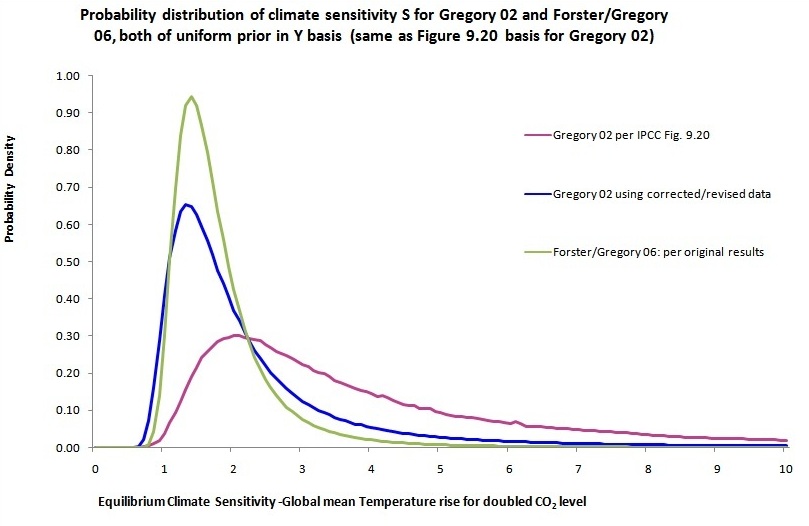
Figure 4
I look forward to hearing from you once you and your colleagues have investigated this matter. I appreciate that if you need to call in external statistical expertise, that may take some time.
Yours sincerely
Nicholas Lewis'
Source: http://judithcurry.com/2011/07/07/climate-sensitivity-follow-up/
Update 29 Feb 2012 http://www.worldclimatereport.com/index.php/2012/02/27/bigfoot-the-loch-ness-monster-and-high-climate-sensitivity/ As far as I know (but I have not been tracking this), Lewis' letter has not yet been answered.
Update 8 November 2012 His letter has now been answered. Lewis himself describes how here: http://www.bishop-hill.net/blog/2012/11/8/an-error-too-embarrassing-to-correct.html The IPCC was wrong to do what it did, and it was wrong in its first attempt to correct it. One admission of error was apparently so traumatic for the players involved that they could not bring themselves to issue an erratum for their follow-on error. 'Unimpressive' is too gentle a word for them.
2011 UK
'An open letter to Sir Paul Nurse
In your article in the FT today, you repeat remarks you have made in the past about scientists having to be open about their work:
Scientists have an obligation to communicate their work to the world, and to be open and transparent about doing it. “Trust me, I’m a scientist” is not a good enough answer to give to policymakers or the general public who are looking to make informed decisions on important topics.This is an area on which people on both sides of the global warming debate should be able to agree. However, it is clear that many in the climatological mainstream do not share this belief. The IPCC has indicated that drafts and review comments on its reports will not be published until after the main report and that, for Working Group I at least, the panel's new conflict of interest policy will not apply to the Fifth Assessment Report.
As I am sure you will agree, these decisions go against the principles of openness and transparency that you say you favour. This being the case, I am asking you, on behalf of the Royal Society, to make a public call for the IPCC to correct these issues.
I hope you can help.'
Details: http://www.bishop-hill.net/blog/2011/6/25/an-open-letter-to-sir-paul-nurse.html
2011 Australia An open letter to the Chief Scientist from John McLean
Extract:
'3 July 2011
Professor Ian Chubb,
Australian Chief Scientist,
GPO Box 9839
CANBERRA ACT 2601
Dear Professor Chubb,
When I read your article headlined "Beyond reasonable doubt: respecting the science" on the ABC's The Drum (see http://www.abc.net.au/unleashed/2777942.html) I was absolutely gobsmacked.
I appreciate that someone who comes from neuroscience and university administration may not be very conversant with climate science and the claims that surround it, so I suspect that you have been very poorly informed, take things at face value or are unaware of several crucial issues.
In this note I intend to address
(a) the position of the national science academies that you hold in some regard
(b) your apparent notion that consensus somehow determines scientific truth
(c) the nature and quality of evidence that you seem to think exists
(d) some empirical evidence for you to consider
and
(e) ask whether you deny the empirical evidence that I demonstrate, and if you
accept it then I ask what actions you will now take in regard to it.
My own background is an extensive investigation of climate issues for the last 6 years, with some emphasis on the history, workings and claims of the IPCC. I have written two published peer-reviewed papers on climate matters, numerous opinion pieces and various widely-cited documents published by different outlets, with some of those documents being cited on the floor of the US senate and in UK and Canadian news media.'
Of course, he has not had a reply - only an acknowledgement.
http://mclean.ch/climate/docs/Letter_to_ACS_public.pdf
2011 USA
Details: http://wattsupwiththat.com/2010/10/16/hal-lewis-my-resignation-from-the-american-physical-society/
Details: http://www.scoop.co.nz/stories/PO0911/S00214.htm
2009 USA ‘Dear Senator McCain, As a concerned citizen of the United States, I urge you to vote NO on the upcoming Cap-and-Trade (Control-and-Tax) bill, legislation purportedly designed to fight “global warming.”
What global warming? Senator McCain, are you aware that glaciers are growing in the United States?’
2009 USA ‘TO THE CONGRESS OF THE UNITED STATES: YOU ARE BEING DECEIVED ABOUT GLOBAL WARMING
You have recently received an Open Letter from the Woods Hole Research Center, exhorting you to act quickly to avoid global disaster. The letter purports to be from independent scientists, but that Center is the former den of the President's science advisor, John Holdren, and is far from independent. This is the same science advisor who has given us predictions of “almost certain” thermonuclear war or eco-catastrophe by the year 2000, and many other forecasts of doom that somehow never seem to arrive on time.
The facts are:
The sky is not falling; the Earth has been cooling for ten years, without help. The present cooling was NOT predicted by the alarmists' computer models, and has come as an embarrassment to them.’
Details: http://www.climatedepot.com/a/1745/Scientists-Write-Open-Letter-to-Congress-You-Are-Being-Deceived-About-Global-Warming--Earth-has-been-cooling-for-ten-years
Also here: http://www.globalclimatescam.com/uncategorized/open-letter-to-secretary-general-of-united-nations/
2008 USA ‘Open letter from The Viscount Monckton of Brenchley to Senator John McCain about Climate Science and Policy.
Resolving that scientific questions should be evaluated solely by the scientific method;
Affirming that global climate has always changed and always will, independent of the actions of humans, and that carbon dioxide (CO2) is not a pollutant but rather a necessity for all life;
Recognising that the causes and extent of recently-observed climatic change are the subject of intense debates in the climate science community and that oft-repeated assertions of a supposed ‘consensus’ among climate experts are false;’
2007 Global. A list of climate-sense petitions: http://www.populartechnology.net/2007/10/no-consensus-on-global-warming.html
Extract "It is not possible to stop climate change, a natural phenomenon that has affected humanity through the ages. Geological, archaeological, oral and written histories all attest to the dramatic challenges posed to past societies from unanticipated changes in temperature, precipitation, winds and other climatic variables. We therefore need to equip nations to become resilient to the full range of these natural phenomena by promoting economic growth and wealth generation.
The United Nations Intergovernmental Panel on Climate Change (IPCC) has issued increasingly alarming conclusions about the climatic influences of human-produced carbon dioxide (CO2), a non-polluting gas that is essential to plant photosynthesis. While we understand the evidence that has led them to view CO2 emissions as harmful, the IPCC's conclusions are quite inadequate as justification for implementing policies that will markedly diminish future prosperity. In particular, it is not established that it is possible to significantly alter global climate through cuts in human greenhouse gas emissions. On top of which, because attempts to cut emissions will slow development, the current UN approach of CO2 reduction is likely to increase human suffering from future climate change rather than to decrease it.
The IPCC Summaries for Policy Makers are the most widely read IPCC reports amongst politicians and non-scientists and are the basis for most climate change policy formulation. Yet these Summaries are prepared by a relatively small core writing team with the final drafts approved line-by-line by government representatives. The great majority of IPCC contributors and reviewers, and the tens of thousands of other scientists who are qualified to comment on these matters, are not involved in the preparation of these documents. The summaries therefore cannot properly be represented as a consensus view among experts...."
See: http://scienceandpublicpolicy.org/reprint/open_letter_to_un.html (note added 7 Feb 2019, this link no longer works. Here is another link leading to the full letter and list of signatories: http://www.middlebury.net/op-ed/un-signatories.html )
2007 South Africa ‘The attached open letter to the British High Commissioner is extremely important. It sets out the whole climate change issue. It exposes the political motivations that attempt to suppress all research that questions anthropogenic causes of global warming. On this basis attempts are being made to force developing countries to adopt economically damaging and fruitless measures to reduce greenhouse gas emissions. There is an urgent need for healthy discussions at national and international level, failing which the situation can only continue to deteriorate. I have made some constructive suggestions at the end of the letter. ‘
"Attempts to prevent global climate change from occurring are ultimately futile, and constitute a tragic misallocation of resources that would be better spent on humanity's real and pressing problems," the letter signed by the scientists read. ‘
Details: http://epw.senate.gov/public/index.cfm?FuseAction=Minority.Blogs&ContentRecord_id=d4b5fd23-802a-23ad-4565-3dce4095c360
Dear Professor Thompson,
I was in the audience on Monday night in Toronto, and witnessed a very disturbing lecture. I admit I went into the lecture with a great deal of scepticism because I had a premonition that your talk was a GW bandwagon talk. I was prepared to listen, however, to suspend my bias as much as necessary to accept your presentation and let it stand. I came away very disturbed that I had witnessed my worst nightmare realized. I saw the very real work of a well intentioned man corrupted to an immeasurable degree by pressures of big science. You have fallen in love with your own hypothesis. There is a crying need in science to present a balanced view. There are other opinions and there are other conclusions in the current literature that needed to be presented and discussed. That balance was completely lacking’
2001 USA Testimony of Richard S. Lindzen before the
Senate Environment and Public Works Committee on 2 May 2001.
I wish to thank Senator Voinovich, Senator Smith and the Environment and Public Works Committee for the opportunity to clarify the nature of consensus and skepticism in the Climate Debate. I have been involved in climate and climate related research for over thirty years duringwhich time I have held professorships at the University of Chicago, Harvard University and MIT. I am a member of the National Academy of Sciences, and the author or coauthor of over
200 papers and books. I have also been a participant in the proceedings of the IPCC (the United Nation’s Intergovernmental Panel on Climate Change). The questions I wish to address are the following: What can we agree on and what are the implications of this agreement? What are the critical areas of disagreement? What is the origin of popular perceptions? I hope it will become clear that the designation, ‘skeptic,’ simply confuses an issue where popular perceptions are
based in significant measure on misuse of language as well as misunderstanding of science. Indeed, the identification of some scientists as ‘skeptics’ permits others to appear ‘mainstream’ while denying views held by the so-called ‘skeptics’ even when these views represent the predominant views of the field.
Climate change is a complex issue where simplification tends to lead to confusion, and where understanding requires thought and effort. Judging from treatments of this issue in the press, the public has difficulty dealing with numerical magnitudes and focuses instead on signs (increasing
v. decreasing); science places crucial emphasis on both signs and magnitudes. To quote the great 19th Century English scientist, Lord Kelvin, “When you can measure what you are speaking about and express it in numbers, you know something about it; but when you cannot measure it, when you cannot express it in numbers, your knowledge is of a meager and unsatisfactory kind.”
As it turns out, much of what informed scientists agree upon is barely quantitative at all:
# that global mean temperature has probably increased over the past century,
# that CO2 in the atmosphere has increased over the same period,
# that the added CO2 is more likely to have caused global mean temperature to increase rather than decrease, and
# that man, like the butterfly, has some impact on climate.
Such statements have little relevance to policy, unless quantification shows significance.
The media and advocacy groups have, however, taken this agreement to mean that the same scientists must also agree that global warming “will lead to rising sea waters, droughts and agriculture disasters in the future if unchecked” (CNN). According to Deb Callahan, president of the League of Conservation Voters, “Science clearly shows that we are experiencing devastating impacts because of carbon dioxide pollution.” (Carbon dioxide, as a ‘pollutant’ is rather singular in that it is a natural product of respiration, non-toxic, and essential for life.) The accompanying cartoon suggests implications for severe weather, the ecosystem, and presumably plague, floods and droughts (as well as the profound politicization of the issue). Scientists who do not agree with the catastrophe scenarios are assumed to disagree with the basic statements. This is not only untrue, but absurdly stupid.
Indeed, the whole issue of consensus and skeptics is a bit of a red herring. If, as the news media regularly report, global warming is the increase in temperature caused by man’s emissions of CO2 that will give rise to rising sea levels, floods, droughts, weather extremes of all sorts, plagues, species elimination, and so on, then it is safe to say that global warming consists in so many aspects, that widespread agreement on all of them would be suspect ab initio. If it truly existed, it would be evidence of a thoroughly debased field. In truth, neither the full text of the IPCC documents nor even the summaries claim any such agreement. Those who insist that the science is settled should be required to state exactly what science they feel is settled. In all likelihood, it will turn out to be something trivial and without policy implications except to those who bizarrely subscribe to the so-called precautionary principle – a matter I will return to later. (Ian Bowles, former senior science advisor on environmental issues at the NSC, published such a remark on 22 April in the Boston Globe: “the basic link between carbon emissions, accumulation of greenhouse gases in the atmosphere, and the phenomenon of climate change is not seriously disputed in the scientific community.” I think it is fair to say that statements concerning matters of such complexity that are not disputed are also likely to be lacking in policy relevant content. However, some policymakers apparently think otherwise in a cultural split that may be worthy of the late C.P. Snow’s attention.)
The thought that there might be a central question, whose resolution would settle matters, is, of course, inviting, and there might, in fact, be some basis for optimism. While determining whether temperature has increased or not is not such a question, the determination of climate sensitivity might be. Rather little serious attention has been given to this matter (though I will mention some in the course of this testimony). However, even ignoring this central question, there actually is much that can be learned simply by sticking to matters where there is widespread agreement. For example, there is widespread agreement
# that CO2 levels have increased from about 280ppm to 360ppm over the past century, and, that combined with increases in other greenhouse gases, this brings us about half way to the radiative forcing associated with a doubling of CO2 without any evidence of enhanced human misery.
# that the increase in global mean temperature over the past century is about 1F which is smaller than the normal interannual variability for smaller regions like North America and Europe, and comparable to the interannual variability for the globe. Which is to say that temperature is always changing, which is why it has proven so difficult to demonstrate human agency.
# that doubling CO2 alone will only lead to about a 2F increase in global mean temperature. Predictions of greater warming due to doubling CO2 are based on positive feedbacks from poorly handled water vapor and clouds (the atmosphere’s main greenhouse substances) in current computer models. Such positive feedbacks have neither empirical nor theoretical foundations. Their existence, however, suggests a poorly designed earth which responds to perturbations by making things worse.
# that the most important energy source for extratropical storms is the temperature difference between the tropics and the poles which is predicted by computer models to decrease with global warming. This also implies reduced temperature variation associated with weather since such variations result from air moving from one latitude to another. Consistent with this, even the IPCC Policymakers Summary notes that no significant trends have been identified in tropical or extratropical storm intensity and frequence. Nor have trends been found in tornados, hail events or thunder days.
# that warming is likely to be concentrated in winters and at night. This is an empirical result based on data from the past century. It represents what is on the whole a beneficial pattern.
# that temperature increases observed thus far are less than what models have suggested should have occurred even if they were totally due to increasing greenhouse emissions. The invocation of very uncertain (and unmeasured) aerosol effects is frequently used to disguise this. Such an invocation makes it impossible to check models. Rather, one is reduced to the claim that it is possible that models are correct.
# that claims that man has contributed any of the observed warming (ie attribution) are based on the assumption that models correctly predict natural variability. Such claims, therefore, do not constitute independent verifications of models. Note that natural variability does not require any external forcing – natural or anthropogenic.
# that large computer climate models are unable to even simulate major features of past climate such as the 100 thousand year cycles of ice ages that have dominated climate for the past 700 thousand years, and the very warm climates of the Miocene, Eocene, and Cretaceous. Neither do they do well at accounting for shorter period and less dramatic phenomena like El Niños, quasi-biennial oscillations, or intraseasonal oscillations – all of which are well documented in the data.
# that major past climate changes were either uncorrelated with changes in CO2 or were characterized by temperature changes which preceded changes in CO2 by 100's to thousands of years.
# that increases in temperature on the order of 1F are not catastrophic and may be beneficial.
# that Kyoto, fully implemented, will have little detectable impact on climate regardless of what one expects for warming. This is partly due to the fact that Kyoto will apply only to developed nations. However, if one expected large global warming, even the extension of Kyoto to developing nations would still leave one with large warming.
None of the above points to catastrophic consequences from increasing CO2. Most point towards, and all are consistent with minimal impacts. Moreover, the last item provides a definitive disconnect between Kyoto and science. Should a catastrophic scenario prove correct, Kyoto will not prevent it. If we view Kyoto as an insurance policy, it is a policy where the premium appears to exceed the potential damages, and where the coverage extends to only a small fraction of the potential damages. Does anyone really want this? I suspect not. Given the rejection of the extensive US concessions at the Hague, it would appear that the Europeans do not want the treaty, but would prefer that the US take the blame for ending the foolishness. As a practical matter, a large part of the response to any climate change, natural or anthropogenic, will be adaptation, and that adaptation is best served by wealth.
Our own research suggests the presence of a major negative feedback involving clouds and water vapor, where models have completely failed to simulate observations (to the point of getting the sign wrong for crucial dependences). If we are right, then models are greatly exaggerating sensitivity to increasing CO2. Even if we are not right (which is always possible in science; for example, IPCC estimates of warming trends for the past twenty years were almost immediately acknowledged to be wrong – so too were claims for arctic ice thinning ), the failure of models to simulate observations makes it even less likely that models are a reliable tool for predicting climate.
This brings one to what is probably the major point of disagreement:
Can one trust computer climate models to correctly predict the response to increasing CO2?
As the accompanying cartoon suggests, our experience with weather forecasts is not particularly encouraging though it may be argued that the prediction of gross climate changes is not as demanding as predicting the detailed weather. Even here, the situation is nuanced. From the perspective of the precautionary principle, it suffices to believe that the existence of a computer prediction of an adverse situation means that such an outcome is possible rather than correct in order to take ‘action.’ The burden of proof has shifted to proving that the computer prediction is wrong. Such an approach effectively deprives society of science’s capacity to solve problems and answer questions. Unfortunately, the incentive structure in today’s scientific enterprise contributes to this impasse. Scientists associate public recognition of the relevance of their subject with support, and relevance has come to be identified with alarming the public. It is only human for scientists to wish for support and recognition, and the broad agreement among scientists that climate change is a serious issue must be viewed from this human perspective. Indeed, public perceptions have significantly influenced the science itself. Meteorologists, oceanographers, hydrologists and others at MIT have all been redesignated climate scientists – indicating the degree to which scientists have hitched their futures to this issue.
That said, it has become common to deal with the science by referring to the IPCC ‘scientific consensus.’ Claiming the agreement of thousands of scientists is certainly easier than trying to understand the issue or to respond to scientific questions; it also effectively intimidates most citizens. However, the invocation of the IPCC is more a mantra than a proper reflection on that flawed document. The following points should be kept in mind. (Note that almost all reading and coverage of the IPCC is restricted to the highly publicized Summaries for Policymakers which are written by representatives from governments, NGO’s and business; the full reports, written by participating scientists, are largely ignored.) In what follows, I will largely restrict myself to the report of Working Group I (on the science). Working Groups II and III dealt with impacts and responses.
Some problems with the IPCC would appear to stem from the media and advocacy groups.
# The media reports rarely reflect what is actually in the Summary. The media generally replace the IPCC range of ‘possible’ temperature increases with ‘as much as’ the maximum – despite the highly unlikely nature of the maximum. The range, itself, assumes, unjustifiably, that at least some of the computer models must be correct. However, there is evidence that even the bottom of the range is an overestimate. (A recent study at MIT found that the likelihood of actual change being smaller than the IPCC lower bound was 17 times more likely than that the upper range would even be reached, and even this study assumed natural variability to be what computer models predicted, thus exaggerating the role of anthropogenic forcing.) The media report storminess as a consequence despite the admission in the summary of no such observed relation. To be sure, the summary still claims that such a relation may emerge – despite the fact that the underlying physics suggests the opposite. The media’s emphasis on increased storminess, rising sea levels, etc. is based not on any science, but rather on the fact that such features have more graphic impact than the rather small increases in temperature. People who have experienced day and night and winter and summer have experienced far greater changes in temperature, and retirement to the sun belt rather than the Northwest Territory represents an overt preference for warmth.
The misuse of the IPCC summaries, however, is not entirely accidental. The IPCC does a number of things which encourage misuse.
# Use a summary to misrepresent what scientists say.
# Use language which conveys different meaning to laymen and scientists.
# Exploit public ignorance (and the embarrassment about this ignorance) over quantitative matters.
# Exploit what scientists can agree on in order to support one’s agenda.
# Exaggerate scientific accuracy and certainty.
# Exaggerate the authority of undistinguished scientists.
# Pose leading questions (WG II’s Impact Report).
With respect to the Summary for Policymakers, the following are more explicit examples.
# The summary does not reflect the full document (which still has not been released although it was basically completed last August). For example, I worked on Chapter 7, Physical Processes. This chapter dealt with the nature of the basic processes which determine the response of climate, and found numerous problems with model treatments – including those of clouds and water vapor. The chapter was summarized with the following sentence: “Understanding of climate processes and their incorporation in climate models have improved, including water vapour, sea-ice dynamics, and ocean heat transport.”
# The vast majority of participants played no role in preparing the summary, and were not asked for agreement.
# The draft of the Policymakers Summary was significantly modified at Shanghai. The IPCC, in response to the fact that the Policymakers Summary was not prepared by participating scientists, claimed that the draft of the Summary was prepared by a (selected) subset of the 14 coordinating lead authors. However, the final version of the summary differed significantly from the draft. For example the draft concluded the following concerning attribution:
From the body of evidence since IPCC (1996), we conclude that there has been a discernible human influence on global climate. Studies are beginning to separate the contributions to observed climate change attributable to individual external influences, both anthropogenic and natural. This work suggests that anthropogenic greenhouse gases are a substantial contributor to the observed warming, especially over the past 30 years. However, the accuracy of these estimates continues to be limited by uncertainties in estimates of internal variability, natural and anthropogenic forcing, and the climate response to external forcing.
The version that emerged from Shanghai concludes instead:
In the light of new evidence and taking into account the remaining uncertainties, most of the observed warming over the last 50 years is likely to have been due to the increase in greenhouse gas concentrations.
In point of fact, there may not have been any significant warming in the last 60 years. Moreover, such warming as may have occurred was associated with jumps that are inconsistent with greenhouse warming.
However, even the report, itself, is biased.
# The preparation of the report, itself, was subject to pressure. There were usually several people working on every few pages. Naturally there were disagreements, but these were usually hammered out in a civilized manner. However, throughout the drafting sessions, IPCC ‘coordinators’ would go around insisting that criticism of models be toned down, and that ‘motherhood’ statements be inserted to the effect that models might still be correct despite the cited faults. Refusals were occasionally met with ad hominem attacks. I personally witnessed coauthors forced to assert their ‘green’ credentials in defense of their statements.
# The full text can be modified long after the authors have signed off.
None of the above should be surprising. The IPCC was created to support the negotiations concerning CO2 emission reductions. Although the press frequently refers to the hundreds and even thousands of participants as the world’s leading climate scientists, such a claim is misleading on several grounds. First, climate science, itself, has traditionally been a scientific backwater. There is little question that the best science students traditionally went into physics, math and, more recently, computer science. Thus, speaking of ‘thousands’ of the world’s leading climate scientists is not especially meaningful. Even within climate science, most of the top researchers (at least in the US) avoid the IPCC because it is extremely time consuming and non-productive. Somewhat ashamedly I must admit to being the only active participant in my department. None of this matters a great deal to the IPCC. As a UN activity, it is far more important to have participants from a hundred countries – many of which have almost no active efforts in climate research. For most of these participants, involvement with the IPCC gains them prestige beyond what would normally be available, and these, not surprisingly, are likely to be particularly supportive of the IPCC. Finally, judging from the Citation Index, the leaders of the IPCC process like Sir John Houghton, Dr. Robert Watson, and Prof. Bert Bolin have never been major contributors to basic climate research. They are, however, enthusiasts for the
negotiating process without which there would be no IPCC, which is to say that the IPCC represents an interest in its own right. Of course, this hardly distinguishes the IPCC from other organizations.
The question of where do we go from here is an obvious and important one. From my provincial perspective, an important priority should be given to figuring out how to support and encourage science (and basic science underlying climate in particular) while removing incentives to promote alarmism. The benefits of leaving future generations a better understanding of nature would far outweigh the benefits (if any) of ill thought out attempts to regulate nature in the absence of such understanding. With respect to any policy, the advice given in the 1992 report of the NRC, Policy Implications of Greenhouse Warming, remains relevant: carry out only those actions which can be justified independently of any putative anthropogenic global warming. Here, I would urge that even such actions not be identified with climate unless they can be
shown to significantly impact the radiative forcing of climate. On neither ground – independent justification or climatic relevance – is Kyoto appropriate.
Energy is essential for economic growth. In a world in which poverty is the greatest social pollutant, any restriction on energy use that inhibits economic growth should be viewed with caution. We understand the motivation to eliminate what are perceived to be the driving forces behind a potential climate change; but we believe the Kyoto Protocol -- to curtail carbon dioxide emissions from only part of the world community -- is dangerously simplistic, quite ineffective, and economically destructive to jobs and standards-of-living.
More to the point, we consider the scientific basis of the 1992 Global Climate Treaty to be flawed and its goal to be unrealistic.’ (extract from the Leipzig Declaration)
Details: http://www.freerepublic.com/focus/f-news/996295/posts
Heidelberg Appeal
Addressed to the chiefs of state and governmentsHeidelberg, April 14, 1992
“We want to make our full contribution to the preservation of our common heritage, the Earth.
“We are, however, worried at the dawn of the twenty-first century, at the emergence of an irrational ideology which is opposed to scientific and industrial progress and impedes economic and social development.
“We contend that a Natural State, sometimes idealized by movements with a tendency to look towards the past, does not exist and has probably never existed since man’s first appearance in the biosphere, insofar as humanity has always progressed by increasingly harnessing Nature to its needs and not the reverse.
“We fully subscribe to the objectives of a scientific ecology for a universe whose resources must be taken stock of, monitored and preserved. But we herewith demand that this stock-taking, monitoring and preservation be founded on scientific criteria and not on irrational pre-conceptions.
“We stress that many essential human activities are carried out either by manipulating hazardous substances or in their proximity, and that progress and development have always involved increasing control over hostile forces, to the benefit of mankind. We therefore consider that scientific ecology is no more than an extension of this continual progress toward the improved life of future generations. We intend to assert science’s responsibility and duty towards society as a whole. We do however forewarn the authorities in charge of our planet’s destiny against decisions which are supported by pseudo-scientific arguments or false and non-relevant data.
“We draw everybody’s attention to the absolute necessity of helping poor countries attain a level of sustainable development which matches that of the rest of the planet, protecting them from troubles and dangers stemming from developed nations, and avoiding their entanglement in a web of unrealistic obligations which would compromise both their independence and their dignity.
“The greatest evils which stalk our Earth are ignorance and oppression, and not Science, Technology and Industry whose instruments, when adequately managed, are indispensable tools of a future shaped by Humanity, by itself and for itself, overcoming major problems like overpopulation, starvation and worldwide diseases.”
According to Wikipedia: 'A version of the Heidelberg Appeal was published in the June 1, 1992, Wall Street Journal over the signatures of 46 prominent scientists and other intellectuals. It has subsequently been endorsed by some 4,000 scientists, including 72 Nobel Prize winners. The Appeal was for an anthropocentric assessment of the world's resources and a utilitarian as opposed to abolitionist approach to hazardous substances used or created by technology. It targeted as irrational, by implication, if not explicitly, both a vision of a "Natural State" with intrinsic rights to impede the activities of man, and hysterical fears of environmental poisons, disproportionate to the threat and dismissive of their associated benefits.'
http://en.wikipedia.org/wiki/Heidelberg_Appeal#_note-1
Such policy initiatives derive from highly uncertain scientific theories. They are based on the unsupported assumption that catastrophic global warming follows from the burning of fossil fuels and requires immediate action. We do not agree.
A survey of U.S. atmospheric scientists, conducted in the summer of 1991, confirms that there is no consensus about the cause of the slight warming observed during the past century. A recently published research paper even suggests that sunspot variability, rather than a rise in greenhouse gases, is responsible for the global temperature increases and decreases recorded since about 1880.
Furthermore, the majority of scientific participants in the survey agreed that the theoretical climate models used to predict a future warming cannot be relied upon and are not validated by the existing climate record. Yet all predictions are based on such theoretical models.’
Details: http://www.propertyrightsresearch.org/statement_by_atmospheric_scienti.htm


